Wild Carrot
Basic Information
Scientific Name: Daucus carota subsp. carota
Plant Family: Apiaceae
Conservation / Invasive Status: Naturalized (Common in Northern New England)
Geographic Range: Eastern North America, North America, Northeast US, Northern New England
Safety Level: Use with Caution
Harvest Season: Fall, Summer
Parts Used: Aerial Parts, Flowers, Roots, Seeds
Scientific & Botanical Information
Botanical Classification
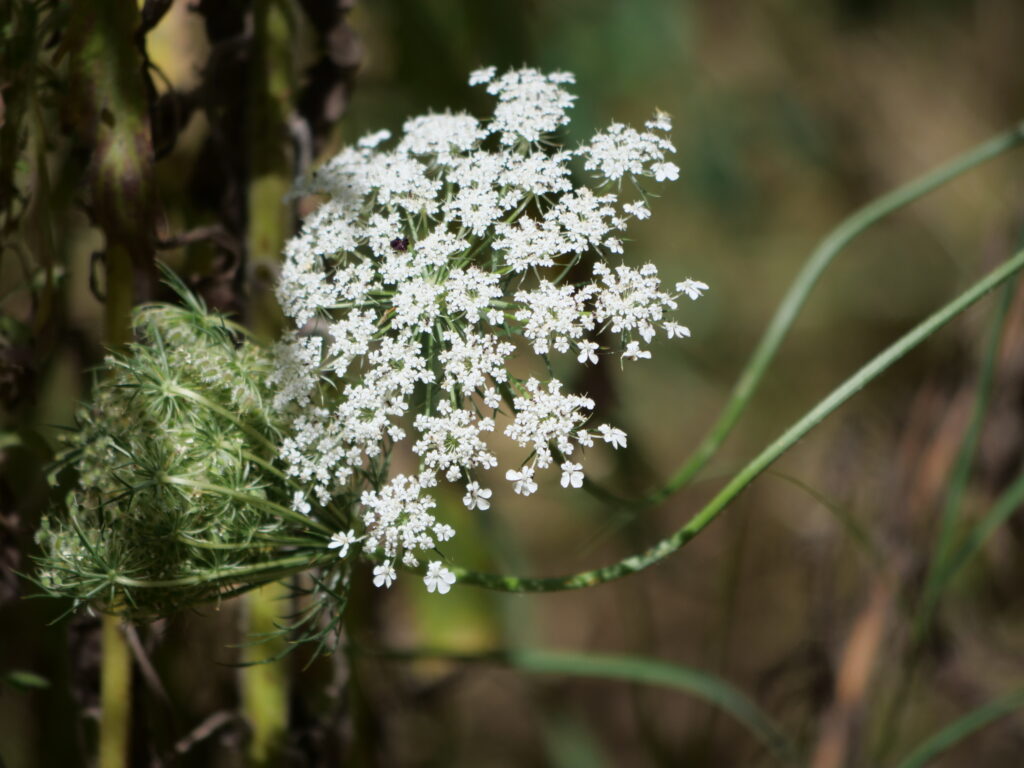
Wild carrot belongs to the Apiaceae family and was introduced to North America from Europe. It is now widely naturalized in disturbed areas, fields, and grasslands. The biennial plant produces flat white or pink flower clusters (the subspecies D. carota subsp. carota is the form typically encountered in North America).
Phytochemistry
Daucus carota contains flavonoids, furanocoumarins, and volatile oil components. The seeds are particularly rich in volatile oil. Carotenoid content varies with cultivar and growing conditions. Furanocoumarins in wild carrot can create phototoxic reactions on skin contact combined with sun exposure (similar to other Apiaceae members including parsnip and parsley).
Pharmacological Research and Traditional Use
Traditional use documentation records wild carrot seed tea as a diuretic and contraceptive agent. Ethnobotanical records particularly document use by indigenous peoples for fertility regulation. Some pharmacological research suggests antifertility effects, particularly related to the seed. However, the mechanism of action and the reliability of this traditional application remain incompletely understood, and clinical validation is limited.
Important Safety Concern: Look-alike Confusion
Wild carrot is frequently confused with poison hemlock (Conium maculatum) and other toxic Apiaceae members. This confusion presents serious safety concerns for foragers and herbalists. The plants can be distinguished by detailed botanical observation, but misidentification risk is substantial, particularly for inexperienced foragers.
Botanical Relationships
The Apiaceae family contains both culinary herbs and highly toxic plants. Accurate species identification is essential for safe use of any wild Apiaceae member.
Pharmacological Actions: Anthelmintic, Anti-inflammatory, Antimicrobial, Antioxidant, Antispasmodic, Carminative, Diuretic, Emmenagogue, Hepatoprotective, Reproductive Modulator
Traditional Herbalism Information
Historical Diuretic and Contraceptive Use
Wild carrot has a documented history of traditional use as both a diuretic and as a fertility-regulating agent. The seed was the primary plant part employed. Ethnobotanical records document its use by indigenous peoples for pregnancy prevention and menstrual regulation.
Preparation and Dosage
Traditional preparation involved seed tea, created by steeping or decocting the dried seeds. The dose and frequency of use in historical practice varied, and standardized protocols are not well-documented in modern herbalism literature.
Contemporary Herbalism
Modern herbalists engage cautiously with wild carrot for fertility support. The plant is sometimes included in fertility-regulating herbal formulas, though practitioners typically seek out other plants with more clearly documented mechanisms of action and more extensive clinical validation.
Antifertility Research
Limited pharmacological research suggests potential antifertility effects, but the clinical significance and reliability of these effects remain unclear. Some studies suggest effects on hormonal or reproductive function, but human clinical trials are lacking.
Safety and Documentation Limitations
The combination of limited clinical validation, incomplete understanding of mechanism, and significant toxicity risk from look-alike plants makes wild carrot a plant to approach with considerable caution. Contemporary practitioners emphasize the availability of safer alternatives for fertility support.
Traditional Uses: Contraceptive (seeds), Digestive Support, Diuretic, Liver Support, Parasitic Support, Reproductive Support, Urinary Support
Magical Correspondences Information
Planetary Association
Wild carrot is traditionally assigned to Mercury, reflecting its seeds, its role in communication between fertility and barrenness, and its association with movement and change. Mercury rules seed-bearing plants and the movement of vital force through cycles.
Elemental Correspondence
Air is the primary elemental association, reflecting the plant’s airy flower heads and the traditional use of the light, buoyant seeds. Secondary Fire association relates to the warming, stimulating action attributed to the seeds.
Fertility Magic
In magical herbalism, wild carrot is employed for fertility work, both to promote conception and to regulate or prevent it. The plant’s traditional use in both directions makes it important in magical work involving reproductive choice and autonomy.
Planetary Rulers: Mercury, Venus
Magical Intentions: Clarity, Divination, Feminine Power, Fertility, Grounding, Healing, Love, Protection, Transformation
Elemental Associations: Air, Earth, Water
[1] Moerman, D. E. (1998). Native American ethnobotany. Timber Press. [Documented traditional use for fertility regulation]
[2] Hoffmann, D. (2003). Medical herbalism: The science and practice of herbal medicine. Healing Arts Press.
[3] Mills, S. Y., & Bone, K. (2005). The essential guide to herbal safety. Elsevier. [Look-alike safety information]
[4] Grieve, M. (1971). A modern herbal. Dover. [Historical diuretic and contraceptive applications]
[5] Antifertility research: Limited pharmacological studies on reproductive effects; clinical validation incomplete.
[6] USDA PLANTS Database. (n.d.). Daucus carota. https://plants.usda.gov/
[7] Poison hemlock toxicity: FDA and USDA toxicity warnings regarding Apiaceae look-alikes.