Sessile Bellwort
Basic Information
Scientific Name: Uvularia sessilifolia
Plant Family: Colchicaceae
Conservation / Invasive Status: Stable; common within range
Geographic Range: Eastern North America, Northeast US, Northern New England
Safety Level: Generally Safe
Harvest Season: Fall, Spring, Summer
Parts Used: Aerial Parts, Rhizome, Roots
Scientific & Botanical Information
Active Compounds
Sessile bellwort contains steroidal alkaloids and saponins similar to those in other Uvularia species. The rhizome is the primary storage organ for these compounds. The plant also contains glycosides and other secondary metabolites typical of plants in the Colchicaceae family (formerly Liliaceae), which is known for alkaloid production.
What Science Shows
Modern pharmacological research on sessile bellwort is very limited. The plant appears in ethnobotanical records but has not been the subject of extensive clinical trials or phytochemical studies in contemporary literature. Chemical analysis suggests presence of bioactive compounds, but specific pharmacological effects have not been thoroughly documented in modern scientific literature. The plant remains primarily known through traditional use and ethnobotanical documentation rather than clinical evidence.
Growing in New England
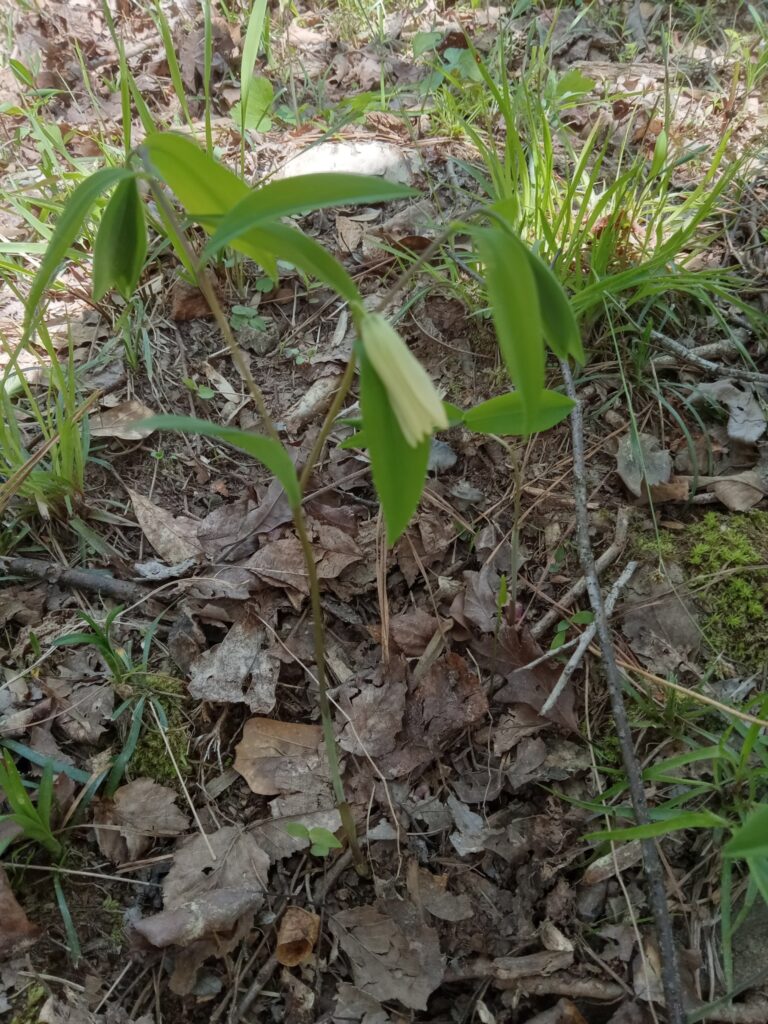
Native throughout New England in rich, moist, deciduous woodlands. Perennial herb with sessile (stalkless) leaves and drooping yellow flowers in spring. Grows 12-20 inches tall. Spreads via rhizomes, forming small colonies. Prefers shade and well-drained, humus-rich soil. Blooms in mid to late spring. Often found alongside trillium and other woodland spring ephemerals.
Safety & Interactions
Limited modern safety documentation exists due to minimal clinical research. The alkaloid content suggests potential toxicity; traditionally used in very small doses. Not recommended in pregnancy due to potential effects on reproduction (related to the Colchicaceae family’s known effects). Use with caution and only under guidance of knowledgeable practitioners. Better-documented alternatives exist for most traditional applications.
New England Specific
Indigenous peoples throughout New England and the Northeast used sessile bellwort medicinally, particularly for throat and respiratory conditions. The plant’s scarcity documentation reflects both limited modern research and the plant’s relative rarity in traditional herbal practice outside of specific regional traditions. Contemporary New England herbalists encounter the plant more as a woodland wildflower than as a regularly used medicine.
Pharmacological Actions: Analgesic, Anti-inflammatory, Astringent, Diuretic, Vulnerary
Traditional Herbalism Information
Parts Used & Their Applications
The rhizome is the primary medicinal part, harvested in autumn after aerial parts have died back or in early spring before growth resumes. The entire plant above ground can be used but is less potent than the rhizome. Fresh rhizome is used traditionally; dried material maintains some potency for 1-2 years.
Preparation Methods
Decoction: very small amounts of dried rhizome (1/4 to 1/2 teaspoon) per cup water, simmered briefly, used sparingly. Tincture: dried rhizome in alcohol in very dilute form (1:5 or 1:10 ratio), taken in drops rather than teaspoons. Traditional preparations emphasize small doses and caution. No standardized modern preparation exists.
Traditional Applications
Primarily used for sore throats and throat irritation. Applied to wounds and skin conditions as a vulnerary (wound-healing) herb. Some traditional use for general immune support. Employed by indigenous peoples for respiratory complaints. The traditional name “bellwort” relates to its shape but also to traditional use for throat conditions (bell = throat in some folk linguistic traditions). Often combined with other throat-healing plants rather than used alone.
Modern Adaptations
Very limited use in contemporary herbalism. Most modern practitioners choose better-documented alternatives for throat and wound support, such as sage, thyme, or plantain. Sessile bellwort appears occasionally in ethnobotanical texts and bioregional herbal practices but is not a standard herbal medicine in contemporary practice. Interest is largely educational and focused on reviving traditional knowledge of native plants.
New England Specific
The plant’s traditional use by New England indigenous peoples is documented in ethnobotanical records (Moerman). Contemporary New England herbalists may encounter the plant in the woods and appreciate its historical use, but it rarely appears in modern practice. The plant remains more significant culturally and ecologically than medicinally in contemporary herbalism.
Harvest Notes
If harvesting is undertaken, do so respectfully and sustainably. Best time is autumn after aerial parts die back (September-October in New England). Dig carefully to avoid damaging the rhizome network; divide rhizomes rather than removing entire plant. Dry thoroughly on screens in shade. Alternatively, appreciate this plant in its native habitat rather than harvesting, as it is increasingly recognized as ecologically important and aesthetically valuable.
Traditional Uses: Anti-inflammatory, Bone Support, Diuretic Support, Wound Healing
Magical Correspondences Information
Magical Correspondences
Planetary: Mercury (communication, clarity, the throat center). Element: Air. Associated with throat chakra work, clear communication, and the power of the spoken word. Connected to healing through voice and expression.
Magical Intentions
Used in magic for clear communication and authentic expression. Employed in throat chakra work and voice reclaiming. Associated with healing from silencing and finding one’s voice. Used in magic to speak truth and empower communication. Connected to wisdom of silence and knowing when not to speak.
Ritual Uses
Bellwort flowers are included in throat chakra meditations and healing work. The plant is honored in rituals focused on finding voice and reclaiming power of speech. Used in teas or infusions before important speaking events. Included in altar arrangements supporting communication and expression. Some practitioners use bellwort in magic work to strengthen the throat and resolve communication blocks.
Color Correspondences
Yellow flowers (Mercury, communication, clarity, sun energy), green foliage (healing, growth), the drooping bell shape (receptive listening, awareness, balance). The delicate appearance reflects the vulnerability of authentic expression.
Sabbat Associations
Imbolc (finding voice, speaking intentions into being), Beltane (threshold, the courage to speak), Lughnasadh (sharing knowledge and stories), Spring Equinox (communication and new growth).
Traditional Lore & Folk Magic
The drooping bell shape naturally associates with throat and vocal work. Some folk traditions connected yellow spring flowers to healing and renewal. Indigenous traditions understood bellwort as a helper for throat conditions through both physical and energetic pathways. The plant’s growth in woodland understory connects it to hidden knowledge and the wisdom of listening.
Combining with Other Plants
Works with mugwort for throat-centered dream work and finding voice in dreams. Pairs with sage for clearing throat and vocal communication. Combines with thyme for comprehensive throat support. Works alongside rose for emotional expression and heart-voice alignment. Uses with mint for clear communication that flows easily.
Planetary Rulers: Venus
Magical Intentions: Fertility, Healing, Love, Protection
Elemental Associations: Earth, Water
1. PFAF Plant Database – Uvularia sessilifolia https://pfaf.org/user/Plant.aspx?LatinName=Uvularia+sessilifolia
2. Natural Medicinal Herbs – Bellwort (Uvularia sessilifolia) http://naturalmedicinalherbs.net/herbs/u/uvularia-sessilifolia=bellwort.php
3. GoBotany – Uvularia sessilifolia https://gobotany.nativeplanttrust.org/species/uvularia/sessilifolia/
4. North Carolina Extension – Uvularia sessilifolia https://plants.ces.ncsu.edu/plants/uvularia-sessilifolia/
5. Native Plant Trust – Uvularia sessilifolia https://www.wildflower.org/plants/result.php?id_plant=uvse
6. Royal Horticultural Society – Uvularia sessilifolia https://www.rhs.org.uk/plants/20668/uvularia-sessilifolia/details
7. PMC – Antibacterial activity of traditional medicinal plants used by Haudenosaunee peoples https://pmc.ncbi.nlm.nih.gov/articles/PMC2989932/
8. ScienceDirect – Colchicaceae Alkaloids Review https://www.sciencedirect.com/science/article/pii/S0304423819305242