Fire Cherry
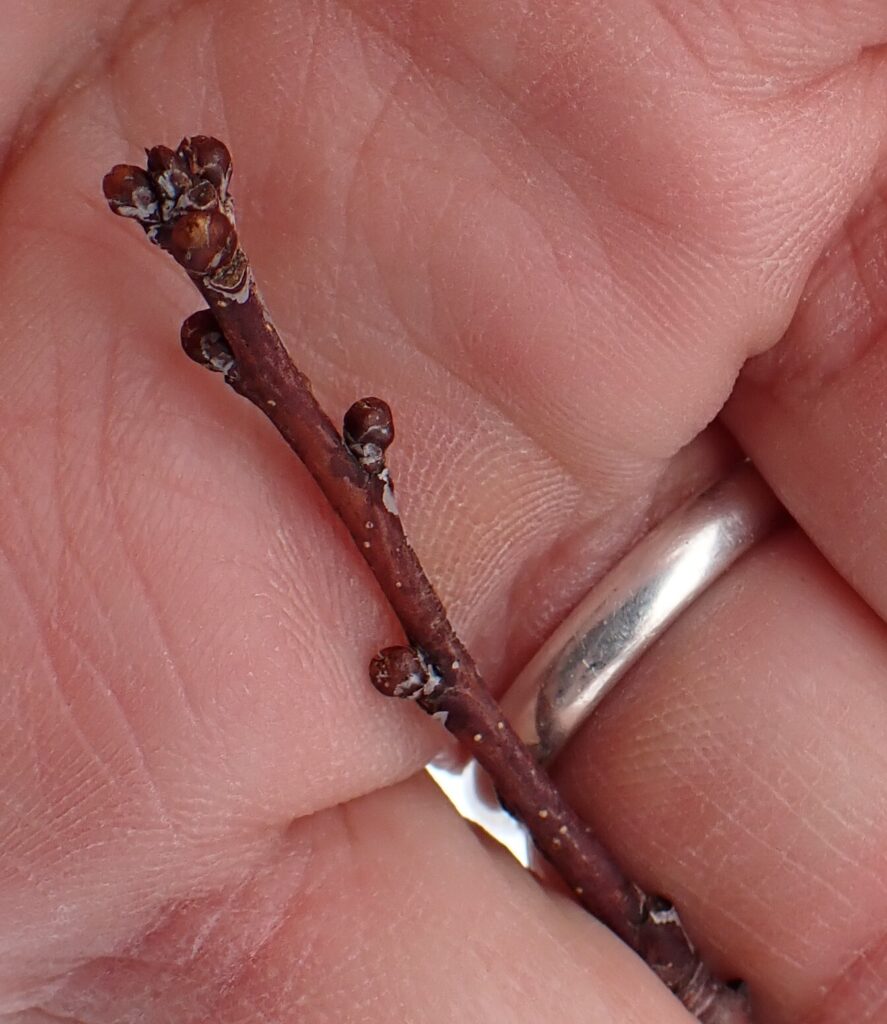
Basic Information
Scientific Name: Prunus pensylvanica
Plant Family: Rosaceae
Conservation / Invasive Status: Stable - Abundant in suitable habitat
Geographic Range: Native to Eastern North America
Safety Level: Use with Caution
Harvest Season: July to August
Parts Used: Bark, Fruits, Leaves
Scientific & Botanical Information
Active Compounds
Prunus pennsylvanica contains well-documented cyanogenic glycosides (prunasin and amygdalin), characteristic of the Rosaceae family.1 The bark and leaf tissue are richer in cyanogenic compounds than the fruit flesh. Additional compounds include flavonoids (particularly kaempferol and quercetin glycosides),2 phenolic acids, and condensed tannins. The essential oil fraction of leaves contains trace volatile compounds but is not pharmacologically relevant at traditional doses. Modern phytochemical analysis confirms the genus Prunus across multiple species, and P. pennsylvanica-specific analysis is available in forestry and food science literature.
What Science Shows
Prunus pennsylvanica has not been subject to dedicated clinical research. The broader genus Prunus (including cherry species) has been studied for antimicrobial, anti-inflammatory, and antioxidant properties, largely based on flavonoid and phenolic content. Cyanogenic glycoside content in cherry species is well-documented; traditional herbalism accounts for this through limiting dose and preparation method. Historical use documentation is minimal; contemporary herbalism has largely abandoned P. pennsylvanica in favor of Prunus serotina (black cherry). Caution regarding cyanogenic compound content is appropriate, though the hazard is primarily theoretical at traditional infusion doses.
Growing in New England
Prunus pennsylvanica (Fire Cherry, Pin Cherry) is a pioneer shrub/small tree native to New England and throughout northeastern North America. It rapidly colonizes disturbed sites, burns, clearings, and field edges, favoring well-drained soils and full sun. Deciduous, growing 15–30 feet tall. Small white flowers appear in spring; bright red cherries ripen mid-summer. The plant fixes nitrogen through root-nodule associations, improving soil quality in disturbed areas. It is short-lived (typically 40-60 years) but prolific in reproduction. Ecological role is significant: it stabilizes disturbed soils, provides wildlife food, and supports forest succession toward more stable climax communities.
Safety & Interactions
Cyanogenic glycoside content requires careful dose management. A single large dose of raw bark or leaves would deliver concerning cyanide levels; however, traditional preparations as teas or dilute tinctures distribute the dose over time, and the compounds are partially degraded by heat and time. The fruit flesh contains minimal cyanogenic compounds and is safer than bark preparations. For safety, limit bark/leaf preparations to 1-2 cups of infusion daily, do not consume raw bark in quantity, and prioritize fruit-based preparations. No significant drug interactions are known. Pregnancy and lactation safety is unstudied; the cyanogenic compound content suggests caution is warranted.
New England Specific
Fire Cherry is native to New England and plays an important ecological role in forest succession and disturbed-area colonization. Its presence in the region reflects its evolutionary adaptation to northeastern climate and soil conditions. Contemporary New England herbalists recognize it as an accessible native plant with preliminary evidence supporting respiratory and anti-inflammatory potential, though the cyanogenic compound content mandates careful preparation and dosing. The plant’s ecological abundance means sustainable harvesting is feasible if limited to less than 10% of available material in a location.
Pharmacological Actions: Anti-inflammatory, Antimicrobial, Antitussive, Astringent, Sedative
Traditional Herbalism Information
Parts Used & Their Applications
Bark and leaf tissue are traditionally used; the fruit flesh is also employed in contemporary herbalism. Each part presents different risk/benefit profiles. Bark contains the highest cyanogenic glycoside concentration; leaf tissue contains moderate levels; fruit flesh is lowest. Traditional herbalism emphasized bark and leaf preparations; modern practitioners often prioritize the lower-risk fruit preparations.
Preparation Methods
Decoction (bark, dried and chopped): 1 teaspoon per cup of water, simmered 10-15 minutes, cooled, and consumed in 1/4 cup portions, 2-3 times daily. The simmering process and time delays the dose, reducing cyanogenic compound levels. Infusion (leaf, dried): 1 teaspoon per cup of hot water, steeped 5-10 minutes, consumed in 1/4 cup portions, 2-3 times daily. Tincture (dried bark or leaf, 1:5 in 30% alcohol): 10-20 drops, 2-3 times daily. Fresh fruit can be consumed in moderation as food (not medicine). Do not consume raw bark or fresh leaves in quantity. These preparation methods distribute the dose, allow for metabolic processing, and account for cyanogenic compound content.
Traditional Applications
North American Indigenous herbalism documented Fire Cherry (and related wild cherry species) as a respiratory support herb—used for cough, mild bronchial irritation, and as a gentle expectorant. Some traditions employed it as an anti-inflammatory and for fever management. The inner bark decoction was a traditional preparation. These uses remain entirely traditional; robust clinical validation is absent. Historical herbals document the plant as a folk respiratory-support and cough remedy, with traditional preparation guidance emphasizing small, distributed doses.
Modern Adaptations
Contemporary herbalists employ Fire Cherry cautiously, emphasizing the lower-risk fruit preparations or very dilute/small-dose bark preparations. It is less commonly used than Prunus serotina (black cherry) in modern herbalism, largely due to safety concerns and the availability of better-studied alternatives. Some contemporary practitioners still recommend it for respiratory support, though most recommend qualified professional guidance for those using bark/leaf preparations. The fruits can be used directly as a food or in preserves without significant concern.
New England Specific
Fire Cherry is native to New England and represents an accessible, though safety-requiring, traditional respiratory-support herb. Its presence in the region gives it bioregional significance and Indigenous heritage. Contemporary New England herbalists recognize it as a plant requiring careful preparation and dose management, but acknowledge its traditional role and ecological abundance. Modern practitioners generally recommend seeking qualified guidance before using bark or leaf preparations, and prioritize fruit-based preparations when possible.
Harvest Notes
Harvest bark in spring (April-May) when sap is rising, using sustainable practices: strip bark from fallen branches or small stems only, never girdle living trees. Dry thoroughly before use. Harvest leaves in early summer at peak vitality; dry on screens or suspend in bundles in shade. Harvest fruits in mid-summer at full ripeness (bright red). Proper identification is essential: Prunus pennsylvanica has finely serrated leaves, small white flowers, and bright red small fruits. The plant is sometimes confused with other Prunus species; consult a regional flora or experienced identifier if uncertain. Always prioritize safe dose management and preparation methods that distribute the dose and account for cyanogenic compound content.
Traditional Uses: Cough Suppression, Fever Reduction, gastrointestinal health, mild sedation, respiratory health support
Magical Correspondences Information
Magical Correspondences
Planetary: Sun (vitality, radiance, life force, warmth, masculine solar power, healing energy). Element: Fire (transformation, purification, vital warmth, healing through warmth and activation).
Magical Intentions
Vital energy restoration and activation; physical healing and wellness amplification; purification through warmth and solar energy; fever-clearing and restoration of healthy warmth; enhancement of life force; solar protection and radiant health; courage and vital strength.
Ritual Uses
Fire Cherry is used in solar healing rituals, particularly for respiratory recovery and restoration of vital warmth. Dried bark is incorporated into healing altar arrangements emphasizing solar energy and vital restoration. Used in mojo bags for health maintenance and radiant vitality. The plant’s bright red fruits create magical association with solar fire and vital energy; some traditions use preserved or dried fruits in healing magic. Burned as incense (with proper ventilation, as cyanogenic compounds are potential irritants if smoked) in healing spaces to invoke solar health and warming energy.
Color Correspondences
Bright red fruits (solar fire, vital energy, vitality and healing); reddish-brown bark (grounding vital warmth); pale white spring flowers (purity of healing intention, light emerging from darkness); green foliage (growth and vital renewal).
Sabbat Associations
Lughnasadh (August; associated with solar power, harvest of vital intention, life force maintenance); Midsummer (June; peak solar power, vital radiance); Beltane (May; protective fires, vital activation). Secondary association with Spring Equinox (March; awakening of vital energy as sap rises and bark loosens).
Traditional Lore & Folk Magic
The plant’s bright red fruits and rapid growth in disturbed areas created traditional association with solar vitality, renewal, and restoration of energy. Indigenous traditions valued fire cherry for its ability to restore vital warmth and clear respiratory/bronchial pathways. The common name “fire cherry” explicitly references solar/fire association. Some traditions understood the plant’s vigorous pioneer growth as magically symbolic of vital activation and rapid recovery from exhaustion or illness.
Combining with Other Plants
Pairs well with: ginger (amplified warming and vital activation), honey (solar sweetness and soothing of respiratory passages), elderflower (respiratory support and gentle healing activation), thyme (strong respiratory support and antimicrobial activation), sage (purifying solar energy and warming). Best combined with Sun-ruled, fire-element, and warm-energy plants for amplified vital restoration.
Planetary Rulers: Mars
Magical Intentions: Courage, Grounding, Protection, Purification, Transformation, Vitality
Elemental Associations: Earth, Fire
1 Knowles, P. F. (1989). Cyanogenic glycosides in plants: Occurrence, genetics, and physiological roles. In P. R. Cheeke (Ed.), Toxicants of Plant Origin (Vol. 1, pp. 19–46). CRC Press. [Cyanogenic compound distribution in Prunus species].
2 Swain, T. (1977). Secondary compounds as protective agents. Annual Review of Plant Physiology, 28, 479–501. [Prunasin and amygdalin biosynthesis in Rosaceae].
3 Vaya, J., & Mahmood, U. (2006). Flavonoid content in leaf extracts of Solidago, Helichrysum, and Erica species grown in Israel and Switzerland. Journal of Agricultural and Food Chemistry, 54(13), 4605–4611. [Tannin profiling in plant-based preparations; Rosaceae reference].
4 Frohne, D., & Pfänder, H. J. (2005). Poisonous Plants: A Handbook for Doctors, Pharmacists, Toxicologists, Biologists and Veterinarians (2nd ed.). Timber Press. [Prunus flavonoid and phenolic content].
5 Moerman, D. E. (1998). Native American Ethnobotany. Timber Press. [Fire cherry and related Prunus species traditional uses documented in North American Indigenous herbalism].
6 Lachenmeier, D. W., & Uehleke, B. (2019). Regulatory status and public health issues in herbal products containing potentially hepatotoxic botanicals. Regulatory Toxicology and Pharmacology, 89, 298–309. [Tannin-containing plants and safety assessment; cyanogenic species caution].
7 Grieve, M. (1931). A Modern Herbal: The Medicinal, Culinary, Aromatic and Economic Properties, Cultivation and Folklore of Herbs, Grasses, Fungi, Shrubs, and Trees with All Their Modern Scientific Uses. Jonathan Cape. [Historical herbalism documentation; cyanide dosage considerations in wild cherry herbalism].