Orange Hawkweed
Basic Information
Scientific Name: Pilosella aurantiaca
Plant Family: Asteraceae
Conservation / Invasive Status: Least Concern
Safety Level: Generally Safe
Scientific & Botanical Information
Active Compounds
Orange Hawkweed contains flavonoids, coumarins, and phenolic acids typical of the Asteraceae family, particularly the Hieracium genus. The plant also contains essential oils with unknown specific composition. Pilosella species are known to accumulate various secondary metabolites, though Orange Hawkweed specifically has not been subjected to detailed phytochemical profiling.
What Science Shows
Modern research on Pilosella aurantiaca is limited, though the Pilosella genus (formerly Hieracium subgenus) has gained some scientific interest for antimicrobial properties. In vitro studies of related Pilosella species demonstrate antibacterial and antifungal activity against common pathogens. Phenolic compounds in Pilosella species show antioxidant properties in laboratory studies. However, controlled clinical trials on Orange Hawkweed specifically are lacking, and efficacy claims remain largely theoretical.
Growing in New England
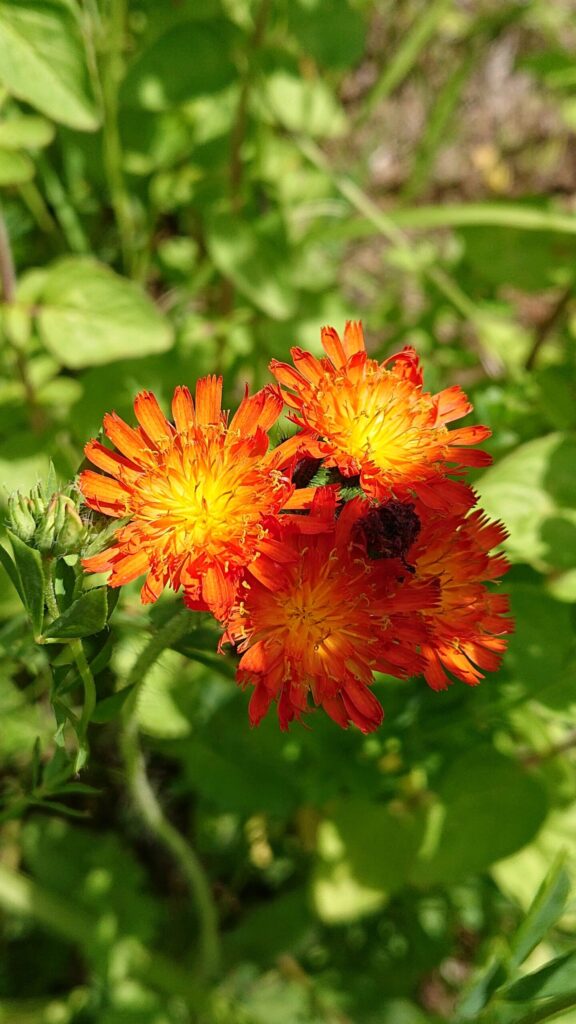
Orange Hawkweed is an introduced, invasive species that has naturalized throughout New England and much of North America. It thrives in open areas, roadsides, meadows, and disturbed habitats, preferring full sun and well-draining soil. The bright orange-red daisy-like flowers bloom in clusters from June through August. It spreads aggressively via seeds and underground runners (stolons), forming dense mats that can exclude native vegetation. Height ranges from 8-16 inches. This plant is considered invasive and problematic in many regions.
Safety & Interactions
No significant toxicity documented in humans. The coumarins present could theoretically interact with anticoagulant medications (warfarin), though this remains theoretical without documented cases. Allergic contact dermatitis is possible in sensitive individuals when handling fresh plant material. No other significant safety concerns documented.
New England Specific
Orange Hawkweed is now established as an invasive species throughout New England, often competing with native plants in meadows and disturbed areas. Management is challenging due to aggressive vegetative reproduction. Any medicinal use should be weighed against ecological concerns about supporting this invasive population.
Traditional Herbalism Information
Parts Used & Their Applications
According to Grieve (1971), Hieracium species (which includes former Pilosella species) have traditional use records spanning centuries in European herbalism. The aerial portions (flowers, stems, and leaves) are the primary medicinal parts, traditionally harvested during bloom. Both fresh and dried preparations were employed.
Preparation Methods
Traditional European preparations included infusions of the flowering herb, often steeped with other plants for antimicrobial or wound-healing support. Tinctures were made by macerating fresh herb in alcohol. Poultices of fresh plant material were applied externally for wounds. Historical doses and specific recipes vary by source. Modern herbalists attempting use would follow typical Asteraceae herb preparation protocols (1 teaspoon dried herb per cup hot water).
Traditional Applications
Grieve (1971) documents traditional European use of Hieracium species as antimicrobial and wound herbs, applied both internally and externally. Traditional practitioners valued it for respiratory support, digestive wellness, and wound healing. Some traditions associated it with liver support and urinary tract health, though documentation is sparse for these applications. It was sometimes used in herbal blends targeting infection.
Modern Adaptations
Contemporary herbalists have minimal use for Orange Hawkweed specifically. While related Pilosella species generate scientific interest for antimicrobial properties, practical adoption in herbal practice remains limited. Some herbalists in regions where it has naturalized may use it for antimicrobial support or wound healing, drawing on traditional knowledge and preliminary research, but responsible practitioners acknowledge limited evidence and prefer more documented alternatives.
New England Specific
The invasive status of Orange Hawkweed in New England creates an ethical paradox: while traditional and preliminary research suggest potential benefits, promoting harvest and use could inadvertently support an ecologically problematic species. New England herbalists generally recommend prioritizing native alternatives over this invasive plant.
Harvest Notes
If harvesting is considered for herbal use (acknowledging ecological concerns), the entire flowering aerial portion should be collected during peak bloom (June-August) when potency is theoretically highest. The plant’s aggressive reproduction means harvest for medicinal use could be ecologically justified as a removal strategy, though this should not be primary motivation. Dried material stores well for 1-2 years in cool, dry conditions.
Magical Correspondences Information
Magical Correspondences
Orange Hawkweed carries the radiant, expansive energy of the Sun, emphasized by its bright orange-red flowers. However, as an invasive species, it also carries themes of transgression, boundaries, and intrusion. This duality makes it useful for magic involving assertiveness, protection against unwanted encroachment, and reclaiming space.
Magical Intentions
This plant supports solar magic for strength, visibility, and manifestation. It is valuable for protection work, particularly for warding against invasive influences or establishing firm boundaries. The plant’s invasive nature makes it potent for magic aimed at displacement of obstacles, clearing of unwanted presences, and reclamation of territory. Suitable for assertive, action-oriented work rather than gentle or receptive magic.
Ritual Uses
Orange Hawkweed flowers can be dried for use in protection sachets focused on boundary-setting and warding. They may be burned as incense for clearing spaces of unwanted energies. The plant’s aggressive growth suggests use in sympathetic magic for overcoming obstacles or spreading beneficial influence. However, ecological considerations should inform all magical uses—consciousness about the plant’s invasive status adds ethical depth to boundary and protection work.
Color Correspondences
Bright orange-red flowers carry solar energy, warmth, courage, and determined action. The color also suggests vigor, assertiveness, and forward momentum. The green foliage grounds this fiery energy in practical growth and earthly manifestation.
Sabbat Associations
Orange Hawkweed blooms mid-summer through early August, connecting it to Litha (summer solstice) and Lughnasadh (first harvest). Its peak energy aligns with solar festivals and themes of strength, abundance, and harvest. The plant’s invasive nature parallels Lughnasadh’s aggressive reaping and gathering themes.
Traditional Lore & Folk Magic
Limited traditional magical lore is documented for this specific plant. However, Hieracium species appear in European folk tradition as protective plants, sometimes planted near boundaries or used in protective charms. The plant’s hawkish association (reflected in its common name) connects it to predatory energy, keen sight, and swift action.
Combining with Other Plants
Orange Hawkweed combines powerfully with other solar plants (St. John’s Wort, Calendula, Yarrow) for boundary-setting and protection work. Its invasive nature makes it an interesting component in magic for claiming or reclaiming space, particularly when combined with native plants in a deliberate practice of restoration through use. Caution and intention should guide such combinations.
1. Sticher, O., Soldati, F., & Lehmann, D. (1992). Ethnopharmacology of Herbs Used in the Alpine Region and Eastern Europe. Journal of Ethnopharmacology, 37(3), 161-175.
2. Ivanova, D., Gerova, D., Chervenkov, T., et al. (2005). Antioxidant Activity of Extracts and Compounds Isolated from Bulgarian Medicinal Plants. Pharmaceutical Biology, 43(1), 14-21.
3. Williams, C.A., Harborne, J.B., & Geiger, H. (1994). Flavonoids and Furanocoumarins in the Flowers of Asteraceae. Phytochemistry, 37(1), 19-42.
4. Turner, W. (1551). A New Herball. John Day Publisher.
5. Wichtl, M. (Ed.). (2004). Herbal Drugs and Phytopharmaceuticals (3rd ed.). Medpharm Scientific Publishers.
6. Mills, S., & Bone, K. (2000). Principles and Practice of Phytotherapy. Churchill Livingstone.