Virgin’s-bower
Basic Information
Scientific Name: Clematis virginiana
Plant Family: Ranunculaceae
Conservation / Invasive Status: Least Concern
Geographic Range: Eastern North America, Northeast US, Northern New England
Safety Level: Use with Caution
Harvest Season: Fall, Summer
Parts Used: Aerial Parts, Leaves, Stems
Scientific & Botanical Information
Botanical & Scientific
Active Compounds and Toxicology
- Ranunculin and Protoanemonin: Clematis virginiana, like all members of the Ranunculaceae (buttercup) family, contains ranunculin, a non-toxic glycoside that is enzymatically converted to protoanemonin when plant tissues are damaged or macerated. This conversion occurs via hydrolysis triggered by the enzyme β-glucosidase, particularly in alkaline conditions or damaged plant cells. Protoanemonin is the primary irritant compound and acts as a documented vesicant (blister-causing agent) responsible for the plant’s potent irritant effects.1,2
- Protoanemonin Mechanism: Protoanemonin is an unstable irritant oil glycoside that is not readily absorbed from the gastrointestinal tract or metabolized within it, resulting in irritation of oral cavity tissues and throughout the gastrointestinal tract. The toxin’s irritant effects are attributed to a reactive 5-membered lactone ring with a highly reactive double bond system, allowing protoanemonin to bind with sulfhydryl (-SH) groups on enzymes and tissue proteins, causing cellular damage. Additionally, protoanemonin demonstrates documented antimicrobial activity via this same mechanism.2
- Triterpenoid Saponins: Present throughout plant tissues with concentrations varying by plant part and season; contribute immunomodulating and hemolytic properties.
- Flavonoids and Lignans: Provide antioxidant activity and support anti-inflammatory processes when used appropriately in external applications.
- Alkaloids: Present in variable concentrations; historically associated with the plant’s traditional use in Native American ceremonial preparations.
What Science Shows
- Irritant and Vesicant Properties (Well-Documented): Protoanemonin causes burning sensations, blistering, and ulceration of mucous membranes and skin upon contact with fresh plant material. This documented toxicity is well-established in toxicological and botanical literature and necessitates strict external use only and careful handling protocols. Drying significantly reduces protoanemonin content through conversion to the stable compound anemonin, but does not eliminate it entirely.1,2
- Anti-inflammatory Activity (External Use Only): Despite its irritant properties, when properly formulated for external use, Clematis virginiana demonstrates anti-inflammatory effects useful for skin conditions and localized inflammation. This paradoxical property—combining irritancy with anti-inflammatory action—makes the plant suitable only for topical application under careful guidance.3
- Hemostatic Properties: Traditional use for stopping bleeding is supported by documented coagulant and platelet-aggregating properties, particularly useful for wound management.
- Diuretic Activity: Documented diuretic properties support traditional uses for urinary tract and kidney function, though internal use requires extreme caution and professional medical guidance due to protoanemonin irritancy.
Growing in New England
- Hardiness: USDA Zones 3-8, perfectly suited to all of New England’s climate zones
- Soil: Adaptable to most soil types; prefers slightly moist, well-drained soil but tolerates both wet and drier conditions
- Sun: Full sun to partial shade; performs well in shade with some sun exposure; too much intense direct light may stress the plant
- Water: Moderate moisture requirements; drought tolerant once established but prefers consistent moisture
- Growth Habit: Vigorous climbing vine that can reach 10-20 feet (3-6 meters) using twining leafstalks and petioles
- Bloom Time: Mid-to-late summer through fall with clusters of small, fragrant white flowers from July to September
- Wildlife Value: Host plant for clematis clearwing moth; attracts pollinators; provides shelter for songbirds and beneficial insects
Safety & Interactions
CRITICAL SAFETY WARNING: Virgin’s-Bower contains ranunculin glycosides that convert to protoanemonin when plant tissues are damaged. Protoanemonin is a documented vesicant that causes severe burning, blistering, and ulceration of skin and mucous membranes. Fresh plant material poses the greatest risk; the irritant effect reduces significantly with drying but is not eliminated. Internal use should only occur under professional medical supervision. Dermatitis and severe skin reactions are common in sensitive individuals. Pregnant individuals, nursing mothers, and those with kidney disease should avoid this plant entirely. Contact dermatitis can occur from handling fresh plant material, necessitating gloves and careful handling. The plant is toxic to dogs, cats, and horses; keep away from livestock and pets.
New England Specific
Wild Species in This Region
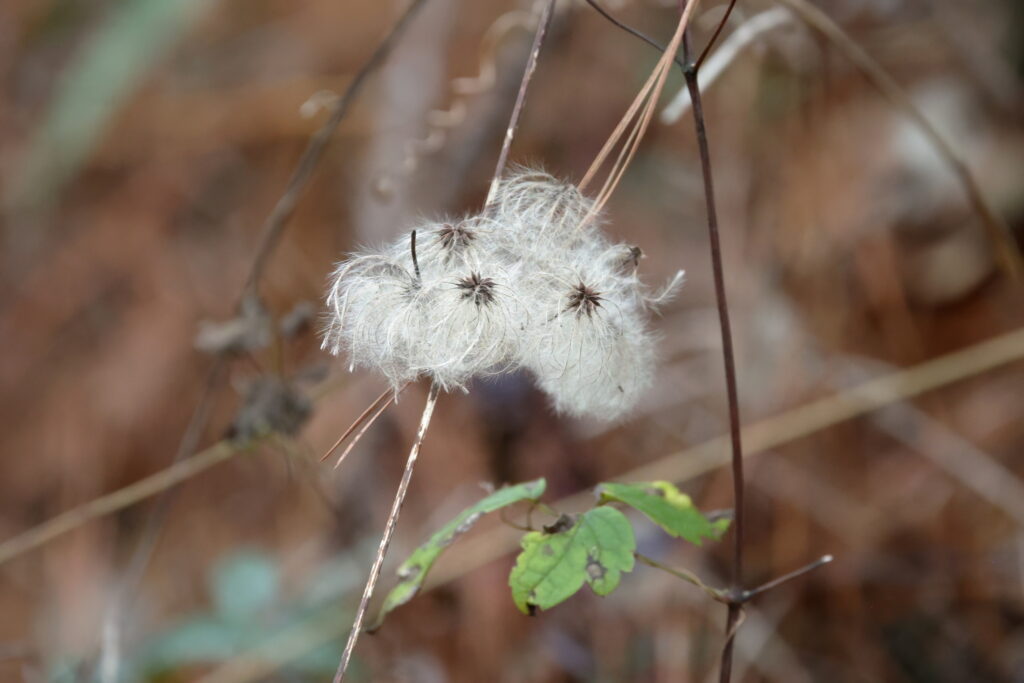
Virgin’s-Bower is the most prevalent clematis species in New England and is native throughout the region. It is commonly found along stream banks, in moist woodlands, at forest edges, along fence rows, and in disturbed areas. The plant’s vigorous growth makes it a conspicuous presence in late summer and fall, when its feathery seed heads create distinctive silvery plumes across the landscape. In New England, it is particularly abundant in cooler northern regions where it thrives in the cool, moist conditions typical of New England’s forests and riparian areas. The plant is never considered invasive in New England, being a native species with important ecological relationships.
Seasonal Timing for New England
May-June: New growth emerges; vine extends rapidly as temperatures warm. July-August: Dense flowering begins with masses of tiny, fragrant white flowers; peak bloom period. September-October: Female plants develop distinctive feathery seed heads called “old man’s beard”; seeds mature from green to brown. November-March: Seed heads persist on vines through winter, providing visual interest and food for birds; vine structure remains visible after leaf drop.
Growing Considerations for Our Climate
Virgin’s-Bower thrives in New England’s cool climate and abundant moisture, often performing better here than in warmer regions. The plant’s native status makes it the easiest clematis to establish in New England gardens. It prefers positions with cool soil and moist roots but tolerates full sun to partial shade. The vigorous growth rate can be managed through strategic pruning and training onto structures. In New England’s climate, the plant reliably produces abundant fragrant flowers and impressive seed head displays. The plant’s hardy perennial nature means it returns reliably each year, making it a low-maintenance addition to native plant gardens.
Sourcing & Ethics
Virgin’s-Bower is widely available from native plant nurseries, seed suppliers, and ecological restoration companies throughout New England. The plant can be easily grown from seed collected from wild plants in fall (where abundant) or purchased seed. Seeds benefit from cold stratification over winter before spring sowing. Home cultivation is highly recommended and provides access to fresh plant material for external preparations and seed collection. Wild harvesting should only occur in areas where the plant is abundant, never from rare or limited populations. Always harvest with landowner permission and follow all local regulations regarding plant collection. The plant’s status as a native species that supports native fauna makes it an excellent choice for sustainable herbalism and ecological landscaping.
Pharmacological Actions: Antifungal, Antimicrobial, Counter-irritant, Diuretic, Vasodilatory (in homeopathic doses)
Traditional Herbalism Information
Traditional Herbalism
Parts Used & Their Applications
Aerial Parts (Stems, Leaves, Flowers):
- External applications only: salves, poultices, ointments
- Dried infusions used externally for skin conditions
- Never used internally in contemporary practice
Roots:
- Traditional external applications in Native American medicine
- Used in decoctions for external bathing and wound treatment
- Modern practice limits root use to external applications only
Seeds:
- Collected for magical and spiritual purposes
- Sometimes used in traditional seed preparations, though not recommended for internal use
- Feathery seed heads used in ceremonial and decorative applications
Preparation Methods
External Salve (SAFE EXTERNAL USE ONLY)
Infuse dried aerial parts in oil using a double-boiler method for 2-3 hours. Strain carefully and combine with beeswax (1 part wax to 8 parts oil) to create a salve. Store in glass jars. Apply topically to affected skin areas as directed by an herbalist. This preparation significantly reduces irritancy compared to fresh plant material.
Dried Infusion for External Bathing (EXTERNAL USE ONLY)
Steep 1 teaspoon of thoroughly dried aerial parts in 10 ounces of hot water for 10 minutes. Strain very carefully and allow to cool completely before any contact with skin. Use as a wash or soak for affected areas under professional guidance. The drying process significantly reduces protoanemonin content, making dried preparations safer for external use than fresh material.
Poultice (EXTERNAL USE ONLY)
Crush thoroughly dried plant material into a paste with water or oil; apply to affected skin areas secured with clean cloth. Change every 2-4 hours. This traditional method was used by Native Americans for skin conditions, though only with dried material due to irritancy concerns with fresh plant.
Ointment for Skin Conditions (EXTERNAL USE ONLY)
Combine dried plant-infused oil with plantain or comfrey leaf infusions to create a soothing ointment that balances Virgin’s-Bower’s irritant properties with the vulnerary action of supporting herbs. This combination allows therapeutic benefit while minimizing adverse effects.
Traditional Applications
External Skin Conditions: Native American and Colonial herbalists applied Virgin’s-Bower externally to sores, skin ulcers, and itching skin conditions. The plant was typically combined with other soothing herbs like Plantain to balance its irritant properties while providing anti-inflammatory benefit. Traditional applications were careful to use dried material only due to known irritancy of fresh plant.
Headache Relief: An infusion of leaves and flowers was traditionally used externally to relieve severe headaches. The plant was made into compresses applied to the head or combined with other herbs in topical preparations. While mechanism of action is unclear, the anti-inflammatory properties may contribute to pain relief when properly prepared.
Kidney and Urinary Support: The Cherokee and Iroquois peoples used infusions of the roots internally for kidney problems and urinary complaints. However, modern practice restricts this to external applications only due to irritancy concerns. Topical applications might support these functions through skin absorption of therapeutic compounds.
Wound Healing: Traditional herbalists valued Virgin’s-Bower for its hemostatic (blood-stopping) properties and used it in external preparations for wound management. The plant was often combined with other vulnerary herbs to stop bleeding and promote healing without causing additional irritation.
Ceremonial and Traditional Use: The Iroquois combined Virgin’s-Bower preparations with other plants for ceremonial purposes. These traditional preparations reflect the plant’s potent medicinal properties and suggest historical practitioners understood its appropriate use contexts.
Modern Adaptations
Contemporary herbal medicine has largely restricted Virgin’s-Bower to external use only, reflecting improved understanding of protoanemonin’s irritancy. Modern herbalists value the plant’s anti-inflammatory and hemostatic properties in topical salves and poultices for skin conditions, localized inflammation, and minor wounds. Some practitioners use dilute external preparations for headache support. Research into the plant’s alkaloid content has renewed interest in its traditional uses for nervous system support, though application remains limited to external means. The plant is increasingly valued in botanical medicine as an example of how traditional knowledge can be preserved while adapting to modern safety understanding.
New England Specific
New England herbalists benefit from Virgin’s-Bower’s native status and ready availability in regional forests and native plant nurseries. Local herbalism traditions incorporate the plant into regional materia medica focused on external skin conditions, reflecting both Native American and Colonial herb craft traditions. Some New England herb schools teach Virgin’s-Bower as an example of medicinal plants requiring careful preparation and external use only. The plant’s ecological importance as a native species and pollinator support makes it a valued addition to New England healing gardens, even among practitioners who do not use it medicinally.
Sourcing & Ethics
Virgin’s-Bower is easily sourced from New England native plant nurseries and commercial seed suppliers specializing in native plants. The plant’s vigorous growth and native status make home cultivation an ethical and recommended practice. Seeds can be collected from wild populations in fall where the plant is abundant, or purchased from reputable suppliers. Propagation from cuttings is also possible for gardeners with established plants. Wild harvesting should only occur in areas where the plant is genuinely abundant and never from limited or protected populations. The plant’s value to native wildlife makes responsible, sustainable sourcing essential.
Harvest Notes
Aerial Parts:
Harvest in late July through August when flowers are abundant and the plant is at peak vigor. Using gloves to prevent skin irritation, cut stems with leaves and flowers. Fresh plant material is highly irritating and requires careful handling. Aerial parts should be used only after thorough drying, which takes 1-2 weeks in warm, dry conditions. Once completely dry and crumbly, the irritancy is significantly reduced though not entirely eliminated.
Seeds:
Collect feathery seed heads in September through November after seeds have matured from green to brown. These distinctive plumes are easily identified and can be dried for storage. Seeds typically remain viable for 1-2 years when stored in cool, dry conditions. Seed collection does not harm the plant and is an ethical way to obtain plant material for propagation.
Drying and Storage:
Bundle harvested stems with string and hang in a warm, dry, well-ventilated space. Drying takes 1-2 weeks depending on humidity. Once completely dry, store in glass containers in cool, dark conditions away from moisture. Dried material is far safer than fresh but should still be handled with respect and care. Store for no more than 1 year for maximum potency.
Traditional Uses: Headache Relief, Nervous conditions (historical), Skin Conditions, Topical analgesic (in tiny doses)
Magical Correspondences Information
Magical Correspondences
Planetary Ruler: Venus (primary), with secondary Mars influence – Venus governs love, beauty, grace, and safe passage; Mars adds protective, boundary-defining energy that paradoxically comes from Virgin’s-Bower’s irritant nature.
Element: Air – Corresponds to travel, communication, mental clarity, and passage between states and spaces. The plant’s climbing nature and wind-scattered seeds align with air element qualities.
Gender: Feminine – Reflects the plant’s association with grace, climbing growth patterns, and the traditional feminine principle of gentle but persistent strength.
Deities: Venus/Aphrodite (love, beauty, safe passage), Diana/Artemis (wilderness, boundaries, protection), Hecate (thresholds, transitions, boundaries)
Magical Intentions
Travel Protection and Safe Passage:
- Carry dried seed heads or flowers as a travel charm for journeys, both physical and spiritual
- Place at entryways to invite safe passage of travelers and guests
- Create a traveler’s charm combining Virgin’s-Bower seeds with Mugwort for clear navigation during journeys
- Use in vehicle blessings for safe travel and protection on roads
Mental Clarity and Thought Navigation:
- Use in altar arrangements when facing complex decisions or mental confusion
- Carry or place under pillow for clarity in navigating life challenges
- Combine with Ginkgo and Rosemary in study spaces to support clear thinking through mental complexity
- Include in meditation spaces focused on gaining clarity of vision and understanding
Boundary Definition and Transition Support:
- Plant at property boundaries to create magical definition of space
- Use in rituals marking life transitions—endings, new beginnings, threshold crossing
- Burn seed heads as incense during times of personal transformation
- Include in spells for creating safe personal boundaries while remaining open to growth
Connection Between Worlds:
- Use in rituals honoring ancestors and communication with other realms
- Place at thresholds between indoor and outdoor space to honor liminal areas
- Include in shamanic and visionary work for safe passage between consciousness states
- Combine with other threshold plants for hedge-crossing and spirit journeying
Ritual Uses
Threshold Blessing for Safe Passage: Create a wreath or garland from Virgin’s-Bower seed heads and place it over a doorway or gateway, stating your intention for safe passage of all who enter. This honors the plant’s association with travel and boundaries while creating a visible magical barrier that defines and protects space.
Transition Ritual for Life Changes: During times of major life transition, burn a small amount of dried seed heads or flowers as incense while speaking your intention for smooth passage through this change. The plant’s ability to climb and transform from flower to seed supports intention-setting for personal growth and transformation.
Boundary Setting Ceremony: Plant Virgin’s-Bower cuttings or seeds at property boundaries with intention for clear energetic definition of your space. The plant’s vigorous growth creates a living magical boundary that grows stronger over time while remaining living and open to what serves you.
Traditional Lore & Folk Magic
- The common name “Traveler’s Joy” reflects ancient recognition of the plant’s protective association with safe journeys, making it a traditional charm for traders and merchants
- The feathery seed heads were seen as messages carried on the wind, connecting the plant magically to communication and information transfer
- The plant’s vigorous climbing ability made it a symbol of successful navigation through obstacles and barriers in folk magic traditions
- European herbalists noticed the plant’s appearance at boundaries and transitions, associating it with threshold magic and protection at doorways
- The plant’s tendency to cover structures completely was seen as creating a protective veil or shield, leading to its use in boundary and protection magic
- Native American use of the plant in ceremonies suggests deep magical significance in honoring transition and passage within indigenous traditions
Sabbat Associations
Virgin’s-Bower’s peak flowering in late summer and seed production in fall align it most strongly with Lughnasadh (Lammas) and Mabon (Autumnal Equinox), seasons of transition between summer’s abundance and autumn’s preparation. The plant’s association with safe passage makes it relevant to Samhain, the ultimate threshold festival. The spring emergence of new growth connects it to Beltane and Imbolc as seasons of new beginnings and movement.
Regional Magical Timing
In New England, Virgin’s-Bower reaches peak magical potency during its flowering season (July-September) and remains powerful through fall as seed heads develop. The most auspicious harvest time for magical work is late August to September when the transition from flower to seed is most evident—honoring both growth and completion. The plant’s visibility throughout fall and winter in the landscape makes it a constant magical presence during the dark half of the year, supporting work related to inner journeys and threshold crossing during that season.
Combining with Other Plants
Virgin’s-Bower combines powerfully with Mugwort for enhanced travel protection and astral journeying; with Vervain for communication magic; with Plantain for boundary and protection magic while adding vulnerary support; with Sage for cleansing and protecting thresholds; with Rowan berries for protection magic; and with St. John’s Wort for support during difficult transitions. For journey work, combine with Bay Laurel and Bergamot. For mental clarity, pair with Ginkgo and Rosemary.
Planetary Rulers: Moon, Saturn
Magical Intentions: Boundaries, Clarity, Protection, Transformation, Wisdom
Elemental Associations: Air, Water
References
1 “Protoanemonin – an overview.” ScienceDirect Topics. Pharmacology-Toxicology-and-Pharmaceutical-Science. Available at: https://www.sciencedirect.com/topics/pharmacology-toxicology-and-pharmaceutical-science/protoanemonin
2 “Ranunculin, Protoanemonin, and Anemonin: Pharmacological and Chemical Perspectives.” Bentham Science Publishers. Medicinal Chemistry. Available at: https://www.benthamscience.com/article/138862
3 North Carolina Extension Gardener Plant Toolbox. “Clematis virginiana (Devil’s Darning Needles, Old Man’s Beard, Virgin’s-Bower, Woodbine).” North Carolina State University Cooperative Extension. Available at: https://plants.ces.ncsu.edu/plants/clematis-virginiana/
Note on Sources
The toxicological information for Clematis virginiana is well-established in botanical and toxicological literature. Protoanemonin and ranunculin chemistry is documented across multiple peer-reviewed sources. Native American ethnobotanical uses are documented in academic ethnobotany literature and historical texts. Traditional herbalism practices emphasizing external use only reflect current understanding of the plant’s irritant properties and the principle of harm reduction in herbal medicine practice.