Early Goldenrod
Basic Information
Scientific Name: Solidago juncea
Plant Family: Asteraceae
Conservation / Invasive Status: Least Concern
Geographic Range: Eastern North America, Northeast US, Northern New England
Safety Level: Generally Safe
Harvest Season: Fall, Late Summer
Parts Used: Aerial Parts, Flowers, Leaves
Scientific & Botanical Information
Botanical Overview
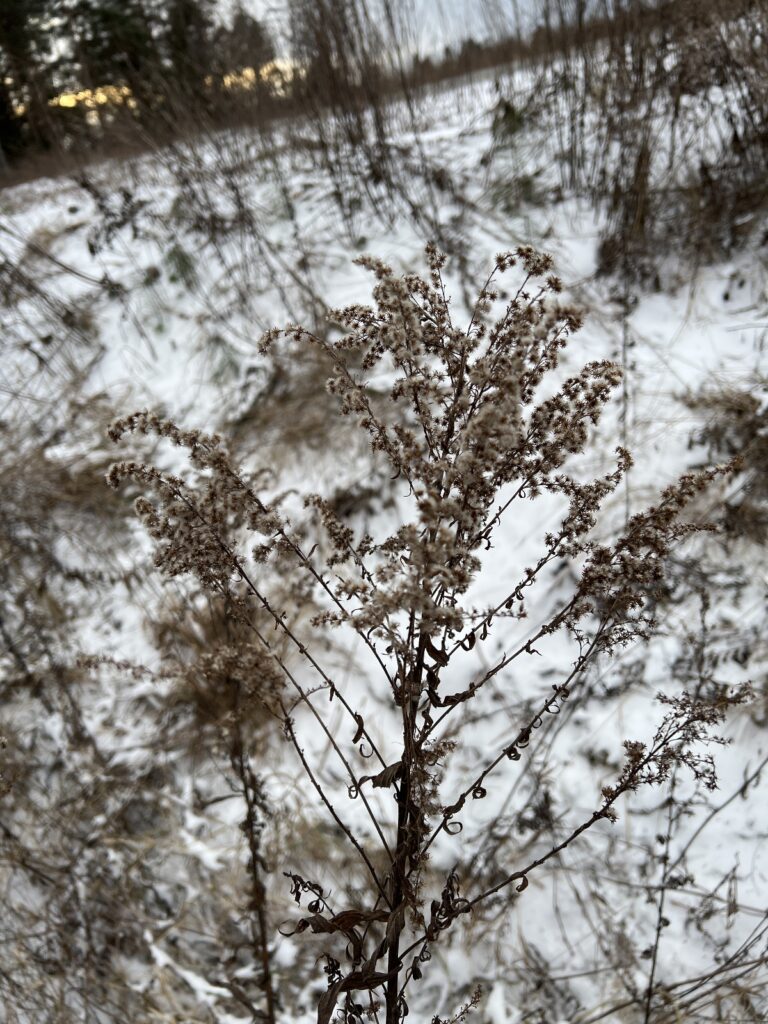
Solidago juncea, commonly known as early goldenrod, is one of the earliest Solidago species to bloom in the Northern New England region, flowering from August through October. As a member of the Asteraceae (daisy) family, it stands approximately 1-3 feet tall with narrow, smooth-edged basal leaves and upper leaves becoming progressively smaller. The characteristic bright yellow flowers are densely clustered in a pyramidal or plume-like arrangement at the stem apex, which gives it the alternate common name plume goldenrod.1
Phytochemical Composition
Early goldenrod contains a complex mixture of secondary metabolites with significant bioactive potential. Flavonoids represent one of the major constituent classes, with quercetin, kaempferol, rutin, hyperoside, and astragalin identified as key components.2 These flavonoids contribute substantially to the plant's antioxidant and anti-inflammatory properties through their ability to scavenge free radicals and inhibit inflammatory signaling pathways.
Saponins constitute another important class of compounds in S. juncea. Triterpenoid saponins, including virgaureasaponins and solidagosaponins, have been isolated from related Solidago species and likely occur in S. juncea as well.3 These saponins exhibit diverse biological activities including immune stimulation, antimicrobial effects, and potential antifungal properties. The plant also contains phenolic acids, volatile oils with terpenes and diterpenes (such as solidagolactones and elongatolides), tannins, and polysaccharides that work synergistically to produce its therapeutic effects.4
Pharmacological Actions
The most well-documented pharmacological action of goldenrod species is diuretic activity. Ethnopharmacological evidence combined with modern phytochemical analysis suggests that S. juncea promotes urine flow through mechanisms involving flavonoid compounds and saponins that affect renal tubular function.2 Clinical studies on related European species (Solidago virgaurea) have demonstrated effectiveness in treating infectious cystitis and functional urinary tract conditions within 2-4 weeks of treatment.5
Beyond diuretic effects, early goldenrod demonstrates potent anti-inflammatory and antispasmodic actions. The flavonoid content inhibits cyclooxygenase enzymes and nuclear factor-kappa-B signaling, reducing inflammatory cytokine production in affected tissues. Antispasmodic effects likely derive from a combination of compounds that relax smooth muscle tissue in the urinary tract and gastrointestinal system. Additionally, the antimicrobial and antifungal activities of saponins and phenolic compounds make goldenrod a valuable ally in treating infections, particularly those affecting the urinary and respiratory systems.3
Analgesic properties support traditional use for pain relief associated with urinary tract inflammation and kidney stones. Immunomodulatory effects enhance the body's natural defense mechanisms, while gastroprotective and ulcer-healing activities suggest benefit in gastrointestinal inflammation conditions.4
Geographic Distribution and Habitat
Solidago juncea is native to Northern New England and throughout eastern North America, ranging from Nova Scotia to North Carolina and west to Manitoba and Arizona. In its native habitat, early goldenrod thrives in open woods, meadows, prairies, roadsides, and disturbed areas. It prefers well-drained soils and is notably more drought-tolerant than many other Solidago species, making it well-suited to the variable moisture conditions of New England's transitional ecosystems.
Traditional Knowledge and Historical Use
Native American tribes throughout the northeastern United States utilized goldenrod preparations to address fever, nausea, and diarrhea. European herbalists later recognized its diuretic properties and incorporated it into herbal formulations for urinary system support. The plant earned the colloquial name "dyer's goldenrod" because its flowers yield yellow dyes for textiles, highlighting its cultural and economic significance beyond medicinal applications.1
Pharmacological Actions: Anti-inflammatory, Antifungal, Antimicrobial, Antioxidant, Antispasmodic, Diuretic, Expectorant
Traditional Herbalism Information
Herbal Tradition and Folk Medicine
Early goldenrod occupies a distinguished position in traditional herbalism, particularly within North American indigenous medicine systems and European herbal pharmacopeias. Native peoples developed sophisticated understanding of this plant's application to urinary system complaints, with preparations of aerial parts used to promote healing from cystitis, kidney stones, and chronic urinary retention. This traditional knowledge has been validated through contemporary phytochemical analysis and pharmacological research.5
Preparation Methods and Traditional Dosage
Herbalists traditionally prepared early goldenrod as infusions, tinctures, and decoctions of the aerial parts (flowers, leaves, and stems). A standard infusion calls for one ounce of dried aerial parts steeped in one quart of hot water for 10-15 minutes, with three cups consumed daily. Tincture formulations use a 1:5 ratio of dried herb to 50% alcohol, with traditional dosages of 2-4 milliliters three times daily. The flowers alone were sometimes used for a milder tea suitable for children and sensitive individuals.2
Herbal Combinations and Synergies
Traditional herbalists frequently combined early goldenrod with other urinary system-supporting herbs to enhance therapeutic outcomes. Common combinations included goldenrod with uva ursi (bearberry) for acute cystitis, with gravel root for kidney stone passage, and with horsetail for urinary system strength and mineral content. These traditional formulations recognized that synergistic combinations of plant compounds often provided superior results compared to single-herb treatments.
Women's Health Applications
In traditional herbalism, goldenrod appeared in remedies addressing women's reproductive health concerns. The astringent properties and immune-supporting actions made it valuable in herbal preparations addressing excessive menstrual bleeding and supporting overall reproductive system health. However, herbalists recommended avoidance during pregnancy due to the plant's diuretic strength and potential uterine stimulation from saponin content.3
Respiratory System Support
Beyond urinary applications, traditional herbalists recognized goldenrod's benefit for upper respiratory allergies and hay fever complaints. The anti-inflammatory and antihistaminic properties (likely derived from flavonoid compounds) made it a valuable addition to seasonal allergy formulations. Herbalists prepared respiratory formulas by combining goldenrod with nettles, elecampane, and plantain for synergistic anti-allergenic effects. Inhalation of goldenrod flower steam was historically used for sinus congestion relief.4
Wound Healing and Topical Applications
The antimicrobial and anti-inflammatory properties of goldenrod made it valuable for topical wound healing applications in traditional practice. Infused oils were prepared by steeping flowers in carrier oils, then applied to slow-healing wounds and minor cuts. Herbal salves combined goldenrod infused oil with beeswax and other healing herbs for enhanced antimicrobial and regenerative effects on damaged tissue.4
Traditional Uses: Anti-inflammatory, Digestive Support, Kidney Support, Respiratory Support, Urinary Support, Wound Healing
Magical Correspondences Information
Planetary and Elemental Correspondences
Early goldenrod aligns with Venus, the planet of love, beauty, attraction, and material increase, reflecting its golden color and abundant flowering. The Air element predominates, connecting goldenrod to communication, clarity, and manifestation of intentions. Some herbalists also associate goldenrod with Fire element for its warming properties and capacity to ignite prosperity and good fortune. The plant's bright solar color further links it to solar magic, abundance, and illumination of hidden truths.6
Prosperity and Abundance Magic
The most prominent magical use of early goldenrod centers on prosperity manifestation and abundance attraction. The vibrant yellow flowers symbolize wealth, gold, and material increase, making goldenrod a powerful ally in prosperity rituals and spellwork. Herbalists and practitioners traditionally carry dried goldenrod flowers as prosperity talismans, incorporating them into prosperity mojo bags alongside other abundance-attracting herbs. Goldenrod flower bundles placed on altars during money magic rituals amplify intentions for financial increase and business success. The plant's association with Venus connects it to material manifestation through the planet governing values and resources.6
Divination and Intuitive Work
Traditional magical lore credits goldenrod with dowsing and divinatory properties. Historic accounts describe dowsing practitioners using goldenrod stems as divining rods, with the flexible stems allegedly bobbing or bending when positioned over water sources or sought-for objects. This association with revelation and discovery extends metaphorically to inner divination work'mdash;using goldenrod in meditation practices or carrying it during tarot reading sessions may enhance intuitive clarity and access to hidden knowledge. The plant's early flowering, before other goldenrods, symbolizes the "early knowing" that divination seeks.7
Luck and Protective Magic
Herbalists incorporate goldenrod into luck-drawing formulas, placing it in amulets designed to attract favorable circumstances and divine synchronicity. The plant's bright golden hue and robust flowering capacity suggest resilience and favorable outcomes. In protective magic, goldenrod serves as a barrier herb, with bundles hung above doorways to prevent negative energy entry and misfortune. The plant's association with the Air element connects it to protection through clarity and awareness, helping practitioners recognize and avoid hazardous situations before they manifest.6
Communication and Clarity Enhancement
The Air elemental connection links goldenrod to enhanced communication, persuasion, and clarity of expression. Practitioners incorporate goldenrod into spellwork designed to improve public speaking abilities, business negotiations, and difficult conversations. Carrying dried flowers or wearing goldenrod-infused oils when engaging in important communication may enhance the likelihood of successful outcomes and mutual understanding. The plant's tendency to stand upright and tall in meadows symbolically relates to standing firm in one's truth and speaking with authentic clarity.7
Love Magic and Attraction
Though less common than prosperity applications, Venus alignment connects goldenrod to love magic, particularly for attracting compatible romantic relationships. Traditional lore suggests that wearing goldenrod flowers, according to one account, ensures you will "cross paths the following day with your future lover." The plant's cheerful golden appearance and abundant flowers symbolize the joy and abundance of loving relationships. Goldenrod-infused oils worn as perfume or added to bath water may attract potential romantic partners and enhance personal magnetism.6
Planetary Rulers: Sun, Venus
Magical Intentions: Confidence, Divination, Healing, Prosperity, Protection, Solar Magic
Elemental Associations: Air, Fire
1. Native Plant Trust. (2024). Solidago juncea (Early goldenrod). Go Botany. Retrieved from https://gobotany.nativeplanttrust.org/species/solidago/juncea/
2. Fursenco, C., Calalb, T., et al. (2020). Solidago virgaurea L.: A review of its ethnomedicinal uses, phytochemistry, and pharmacological activities. Biomolecules, 10(12), 1619. https://doi.org/10.3390/biom10121619
3. Arlene, K., Beatrice, G., et al. (2013). Triterpenoid saponins from the aerial parts of Solidago virgaurea alpestris with inhibiting activity of Candida albicans yeast-hyphal conversion. Phytochemistry, 95, 428-438. https://pubmed.ncbi.nlm.nih.gov/23137724/
4. Kreis, W., Schoop, R., et al. (2006). Goldenrod (Solidago virgaurea L.): Benefits, safety, uses. Herbal Reality. Retrieved from https://www.herbalreality.com/herb/goldenrod/
5. Wichtl, M. (2004). Goldenrod-a classical exponent in the urological phytotherapy. Urology, 63(1), 1-5. https://pubmed.ncbi.nlm.nih.gov/15638071/
6. Salem Supply Co. (2024). Magical properties of goldenrod for your witchcraft practice. Retrieved from https://www.salemsupplyco.com/magical-uses-of-goldenrod
7. Outdoor Apothecary. (2024). Goldenrod plant: Magic, medicine, and ecology. Retrieved from https://www.outdoorapothecary.com/magic-and-medicine-of-goldenrod-plant/