Lychee
Basic Information
Scientific Name: Litchi chinensis
Plant Family: Sapindaceae
Conservation / Invasive Status: Least Concern
Geographic Range: Native to Asia
Safety Level: Use with Caution
Parts Used: Fruit, Seeds
Scientific & Botanical Information
Botanical Description
Litchi chinensis Sonn. is an evergreen tree in the family Sapindaceae, typically reaching 10 to 15 meters in cultivation and occasionally up to 28 meters in favorable conditions. The tree develops a dense, rounded canopy with glossy, leathery pinnate leaves 12.5 to 20 cm long bearing four to eight alternate leaflets. Young leaves emerge coppery-red before maturing to dark green. The bark is grey-brown and somewhat rough, and the branching pattern is spreading with a tendency toward drooping in mature specimens.1
Flowers are small, greenish-yellow to white, borne in terminal panicles 10 to 40 cm long. The species is functionally dioecious within a single panicle, producing three flower types: male flowers with functional stamens, female flowers with a functional pistil, and hermaphrodite flowers. This complex flowering biology promotes cross-pollination by insects, particularly bees and flies.1
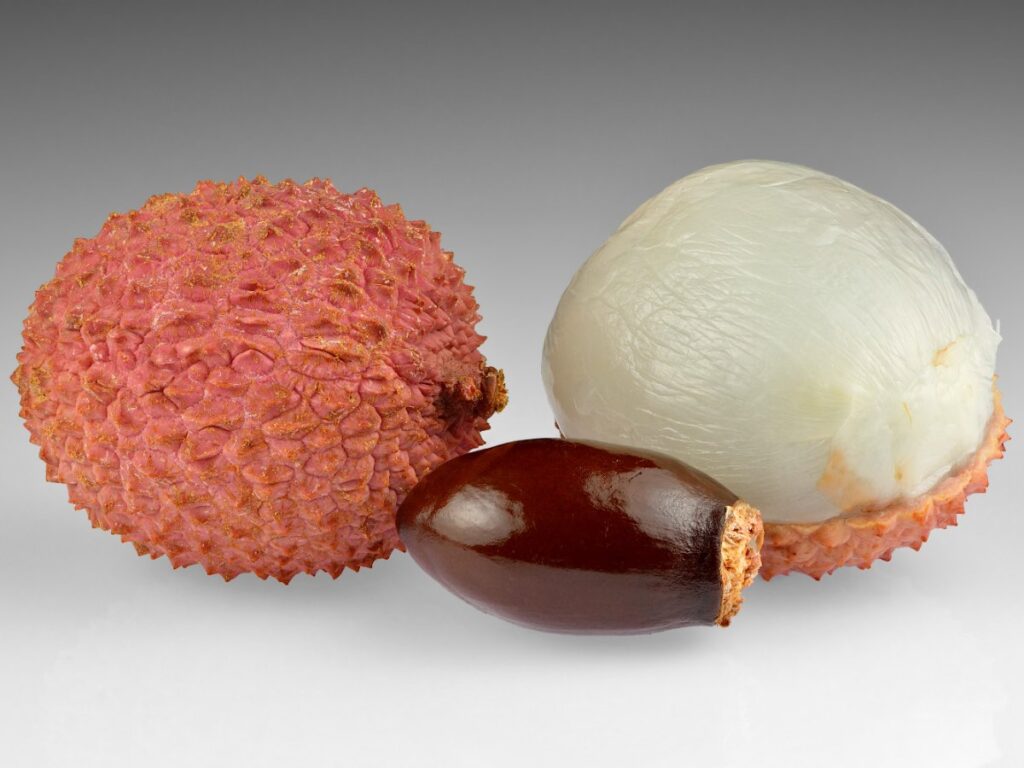
The fruit is the tree’s most distinctive feature: an ovoid to nearly round drupe approximately 2.5 to 3.5 cm in diameter, covered by a thin, leathery pericarp with characteristic rough, raised protuberances. The pericarp is bright red to pinkish-red at maturity, fading to brown after harvest. Beneath the pericarp lies the edible aril, a translucent white to cream-colored fleshy structure surrounding a single glossy dark brown seed. The aril is sweet, fragrant, and juicy, composing roughly 60 to 70 percent of the fruit’s weight. The seed varies in size among cultivars, with commercially preferred varieties producing smaller seeds and proportionally larger arils.2
Geographic Distribution and Habitat
Litchi chinensis originated in the lowland rainforests of southern China, with the center of origin located in Guangdong, Fujian, and neighboring provinces between approximately 23 and 27 degrees north latitude. Archaeological and literary evidence places lychee cultivation in China for at least two thousand years, with the fruit featured prominently in Tang Dynasty poetry and imperial culture.1 From this center of origin, cultivation spread throughout Southeast Asia, India, and eventually to Madagascar, South Africa, Australia, Brazil, and limited areas of the southern United States including Florida and Hawaii.
The species requires a distinctly subtropical climate with cool, dry winters and warm, humid summers. A period of low temperatures (below 20 degrees Celsius for several weeks, but above freezing) during winter is essential for flower induction, while warm, moist conditions during summer support fruit development and maturation. Annual rainfall of 1,250 to 1,500 mm is optimal, ideally distributed with a drier winter period. The tree prefers well-drained, slightly acidic soils rich in organic matter. Major commercial production occurs in China (the world’s largest producer), India, Vietnam, Thailand, and Madagascar.2
Active Compounds
Lychee produces a complex array of bioactive compounds distributed across its tissues, with the pericarp and seed containing the highest concentrations of phenolic compounds while the aril is prized for its vitamin and mineral content.
Polyphenols: The pericarp is exceptionally rich in proanthocyanidins, including novel A-type proanthocyanidins (litchitannin A1, A2) that demonstrate antioxidant potency exceeding that of ascorbic acid in comparative assays. Epicatechin, procyanidin B2, and oligomeric proanthocyanidins are present throughout the fruit tissues.3 Oligonol, a commercially developed low-molecular-weight polyphenol derived from lychee pericarp, represents a concentrated form of these flavanol monomers and dimers with enhanced bioavailability.4
Anthocyanins: Cyanidin-3-rutinoside is the dominant anthocyanin responsible for the pericarp’s characteristic red coloration. Additional cyanidins and anthocyanin glycosides contribute to the fruit’s visual appeal and antioxidant capacity.2
Flavonoids: Seven flavonoid glycosides have been isolated from lychee seeds, including quercetin, kaempferol, tamarixetin, taxifolin, and pinocembrin derivatives. The seed also contains saponins, polysaccharides, and fatty acids.5
Vitamins and minerals: The aril provides 71 to 72 mg of vitamin C per 100 grams, along with significant B-complex vitamins, potassium, copper, and phosphorus. The high sugar content (glucose, sucrose, and fructose comprising over 70 percent of dry weight) accounts for the fruit’s intensely sweet flavor.2
Toxins in unripe fruit: Unripe lychees contain hypoglycin A (12.4 to 152.0 micrograms per gram) and methylenecyclopropylglycine (MCPG, 44.9 to 220.0 micrograms per gram), compounds that inhibit fatty acid beta-oxidation and gluconeogenesis. These compounds decrease dramatically as the fruit ripens and are present at negligible levels in mature fruit.6
Pharmacological Actions
Antioxidant activity: Lychee pericarp extracts demonstrate exceptional antioxidant capacity, with FRAP values ranging from 3.71 to 24.18 mmol per gram. The A-type proanthocyanidins unique to lychee show radical scavenging activity superior to ascorbic acid in DPPH and ABTS assays.3 Oligonol has demonstrated significant protection against oxidative stress in multiple in vivo models.4
Anti-inflammatory activity: Oligonol suppresses NF-kB activation and reduces production of pro-inflammatory cytokines including IL-6 and TNF-alpha in activated monocytes. Lychee seed extracts also demonstrate anti-inflammatory effects through inhibition of cyclooxygenase and lipoxygenase pathways.1
Hepatoprotective activity: Lychee polyphenols protect hepatocytes against oxidative damage through both antioxidant and anti-apoptotic mechanisms. Seed and pericarp extracts reduce liver enzyme elevation in chemically induced hepatotoxicity models.1
Anticancer and cytotoxic activity: Epicatechin and procyanidin B2 from lychee induce cell cycle arrest and apoptosis in MCF-7 breast cancer cells. Lychee pericarp extracts show cytotoxic activity against multiple cancer cell lines in vitro, though human clinical data remain limited.2
Cardioprotective activity: Proanthocyanidins from lychee support cardiovascular function through antioxidant protection of endothelial cells and modulation of blood lipid profiles. Oligonol has shown benefits for peripheral circulation in human studies.4
Hypoglycemic effects: Oligonol protects pancreatic beta cells from oxidative damage and apoptosis in streptozotocin-induced diabetic rat models, suggesting potential for metabolic health support. However, paradoxically, unripe fruit causes dangerous hypoglycemia through an entirely different mechanism (see Safety section).4
Safety and Interactions
Ripe fruit safety: Ripe lychee is safe for consumption with an extensive history of dietary use spanning millennia in Chinese and Southeast Asian cultures. The fruit does not appear in the Botanical Safety Handbook, as it is classified primarily as a food plant. No clinically significant drug interactions have been documented with ripe lychee consumption. Consumption of 10 to 12 ripe lychees daily is considered safe for healthy adults.2
Unripe fruit toxicity (critical): Unripe and partially ripe lychees contain hypoglycin A and MCPG, toxins that disrupt fatty acid beta-oxidation and gluconeogenesis, causing severe hypoglycemia. These compounds were identified as the causative agents in outbreaks of acute encephalopathy affecting malnourished children in Muzaffarpur, India, and parts of Vietnam, where children consumed unripe fruit on empty stomachs after prolonged fasting. The mechanism involves depletion of glucose reserves in individuals with already compromised glycogen stores, leading to hypoglycemic encephalopathy with a significant mortality rate.6 These toxins decrease to negligible levels as the fruit fully ripens, and the condition has not been documented in well-nourished populations consuming ripe fruit.
Allergy: Lychee allergy is rare but documented, with reported cases including anaphylaxis, oral angioedema, and urticaria. The allergens appear to be heat-stable proteins concentrated more in the pericarp than the aril. Cross-reactivity with other Sapindaceae family members and with latex has been suggested but not conclusively established.2
Growing in New England
Litchi chinensis cannot be grown outdoors in Northern New England. The species is frost-sensitive and requires a subtropical climate with mild winters for flower induction and warm, humid summers for fruiting. New England’s winter temperatures far exceed the tree’s cold tolerance. Fresh ripe lychees are seasonally available at Asian grocery stores and specialty markets during the peak harvest months of June and July, with canned, dried, and frozen lychee available year-round.
Folk Wisdom
The most celebrated lychee legend involves Yang Guifei, the favorite consort of Tang Dynasty Emperor Xuanzong in the eighth century. So great was her love for fresh lychees that the emperor established a system of express horseback relay stations to transport the fruit from southern China to the imperial capital in Chang’an, a distance of over a thousand kilometers. The extraordinary expense and effort inspired the Tang poet Du Mu to write his famous couplet preserved in Chinese literary tradition. A popular variety grown today, Fei Zi Xiao, is still named “the lychee that made the concubine smile.” Beyond romantic legend, this story has genuine historical basis in the imperial courier system, and the fruit’s association with devotion and luxury has persisted in Chinese culture for over twelve centuries.1
Pharmacological Actions: Anti-inflammatory, Antioxidant, Cytotoxic, Hepatoprotective, Immunomodulatory
Traditional Herbalism Information
Energetics and Actions
In Traditional Chinese Medicine, lychee fruit is classified as warm in nature with a sweet and slightly sour taste, entering the Spleen, Liver, and Heart meridians. This warm, sweet profile gives it a primary action of tonifying Qi and Blood, warming the Middle Jiao (the digestive center), and nourishing Heart blood to support the Shen (consciousness and spirit).7 The warming quality makes lychee therapeutically valuable for patterns of cold and deficiency but also means it must be used with awareness of its potential to generate excess internal heat.
The lychee seed (Li Zhi He) carries a different energetic signature: bitter and sweet in taste, warm in nature, with a primary action of promoting Qi circulation and dispersing cold stagnation. This makes the seed a distinctly different medicine from the fruit, used for pain conditions rather than tonification.8
In Western herbal terms, lychee acts as a nutritive tonic, providing concentrated sugars, vitamin C, and minerals in a highly bioavailable form. The seed functions as an astringent and analgesic. The pericarp is strongly astringent, reflecting its high tannin and proanthocyanidin content.9
Parts Used and Their Applications
Fruit aril (flesh): The translucent white aril is the primary edible and medicinal portion, consumed fresh as a nutritive tonic that tonifies Qi and Blood. In TCM, it is used for fatigue, weakness, poor appetite, and blood deficiency patterns including pallor and insomnia. The aril can be consumed fresh during the summer season or preserved by drying for year-round use.7
Seed (Li Zhi He): The seed is the most pharmacologically significant part in formal TCM practice. Classified as a Qi-regulating herb, Li Zhi He is used for hernia with cold sensation, orchitis (testicular inflammation), gastric and abdominal pain from Qi stagnation with cold, dysmenorrhea, and postpartum abdominal pain. Seeds are typically dried, crushed, and decocted. For hernia with cold, they are combined with fennel (Xiao Hui Xiang), tangerine peel (Qing Pi), and lindera root (Wu Yao).8
Pericarp (Li Zhi Ke): The red outer shell is used for its strong astringent properties, primarily to stop diarrhea and control bleeding. It is prepared as a decoction and used in patterns of Spleen deficiency with loose stools.7
Traditional Uses
Digestive support: Lychee’s warm, sweet nature makes it a classical remedy for cold in the stomach and weak digestion. The fruit tonifies the Spleen, improving appetite and nutrient absorption. For chronic digestive weakness, dried lychee is decocted with rice in a medicinal congee (10 grams dried lychee with 100 grams rice) taken once daily. The seed addresses more acute digestive pain from Qi stagnation.7
Blood and constitutional tonification: Fresh and dried lychee are used for Heart blood deficiency presenting as insomnia, anxiety, palpitations, and poor memory. The fruit’s ability to tonify both Qi and Blood simultaneously makes it valuable for conditions of general deficiency with fatigue, pallor, and weakness. A traditional preparation combines 30 grams dried lychee with 30 grams jujubes (Chinese dates) in soup for enhanced blood-building effect.7
Reproductive and gynecological conditions: Li Zhi He (lychee seed) is one of TCM’s primary herbs for hernia pain, particularly shan qi (hernial conditions with cold sensation). It is also indicated for orchitis, menstrual cramps with cold sensation, and postpartum abdominal pain. The seed’s ability to warm and move Qi through the lower abdomen accounts for its effectiveness in these conditions.8
Pain management: The seed’s Qi-moving and cold-dispersing actions make it useful for abdominal pain, periumbilical colic from cold, and neuralgia. Standard decoction dosage is 6 to 15 grams, with up to 24 grams used for severe pain conditions.8
Preparations and Dosage
Fresh fruit: Consumed directly as food-medicine. Adults may eat up to 300 grams daily (approximately 20 to 30 fruits), though traditional wisdom advises moderation due to the warming nature. Children and elderly individuals should consume smaller quantities.
Dried lychee: Five to ten fruits decocted, or 30 grams in soups and congees. Dried lychee retains the tonifying properties of fresh fruit with reduced moisture content, making it suitable for year-round use and traditional preparations.
Lychee seed (Li Zhi He): Standard decoction dose of 6 to 15 grams, with seeds crushed before decocting to improve extraction. For severe abdominal pain, doses up to 24 grams may be used under practitioner guidance. Seeds may also be dried and ground into powder for administration.8
Pericarp decoction: The dried shells are decocted by standard method for astringent applications. Dosage follows practitioner guidance based on the specific pattern being treated.
Lychee congee: A gentle preparation combining 10 grams dried lychee (seeds removed) with 100 grams rice, cooked into porridge and eaten once daily for Qi and Blood tonification.
Modern Adaptations
Oligonol, a patented low-molecular-weight polyphenol extract derived from lychee pericarp combined with green tea extract, represents the most significant modern development in lychee-based therapeutics. With over 30 human clinical trials and FDA GRAS status, Oligonol has been studied for cardiovascular support, anti-inflammatory effects, athletic performance enhancement, and metabolic health. Lychee extract has also entered the skincare industry, where its antioxidant polyphenols are incorporated into anti-aging formulations, reflecting the traditional use noted in the Kai Bao Ben Cao for improving skin color. Fresh-pressed lychee juice, freeze-dried lychee powder, and lychee-based functional beverages represent additional modern adaptations of this traditional fruit medicine.9
New England Specific
Lychee cannot be cultivated in New England under traditional methods, as the tree requires frost-free subtropical conditions with specific cool-winter dormancy requirements that the region’s climate cannot provide. Fresh ripe lychees are seasonally available at Asian grocery stores and some specialty markets during June and July, when the primary harvest occurs in China and Southeast Asia. Dried lychee, canned lychee in syrup, and frozen lychee are available year-round at Asian markets throughout New England. Oligonol supplements and lychee-based skincare products can be sourced through online retailers and specialty health food stores.
Sourcing and Ethics
The global lychee supply originates primarily from China, India, Vietnam, Thailand, and Madagascar. As with many tropical fruit crops, conventional lychee farming in some regions involves significant pesticide use, and labor practice concerns have been documented in certain producing areas. Choosing organic-certified lychee when available reduces pesticide exposure and supports more sustainable farming practices. Fair trade certification for lychee is less established than for some tropical crops, but sourcing from smaller cooperative growers and brands with transparent supply chains supports more equitable production. Madagascar’s emerging lychee industry offers a potentially more sustainable alternative source.9
Folk Wisdom
Traditional Chinese food therapy holds that eating too many lychees causes shanghuo, a condition of accumulated internal heat manifesting as nosebleeds, mouth ulcers, acne, and sore throat. The traditional saying warns that eating a pound of lychee raises one’s body temperature by three degrees. This wisdom aligns with lychee’s TCM classification as a warming food and reflects centuries of empirical observation about the consequences of overconsumption. The traditional remedy is to balance lychee intake with cooling foods such as winter melon or chrysanthemum tea, a practice that remains part of everyday dietary awareness in southern Chinese households.
Traditional Uses: Analgesic, Astringent, Digestive Support, general tonic, Immune Support
Magical Correspondences Information
Planetary Rulers and Elemental Association
Lychee does not appear in standard Western magical herbals such as Cunningham’s Encyclopedia of Magical Herbs, as it is a subtropical Asian fruit outside the European herbal tradition. However, its correspondences can be established through its energetic properties, cultural symbolism, and traditional associations. Venus is the primary planetary ruler, reflecting lychee’s deep connections to love, beauty, romance, and feminine power in Chinese culture, particularly through the Yang Guifei legend. Mars serves as a secondary influence, expressed in the fruit’s red color and its warm, stimulating thermal nature in Traditional Chinese Medicine.10
The primary elemental association is Fire, consistent with lychee’s warming nature in TCM, its red coloration, its summer ripening season, and its associations with passion and desire. A secondary Water influence is present in the fruit’s juicy, fluid-generating qualities and its connection to emotional depth and intuition. These correspondences draw from Chinese five-element theory as much as Western magical tradition, reflecting lychee’s origins in Eastern rather than European magical practice.11
Magical Intentions and Uses
Love and romance: Lychee’s most potent magical application is love magic, rooted in the Yang Guifei legend that has symbolized romantic devotion in Chinese culture for over twelve centuries. The fruit’s sweetness, its sensual translucent flesh, and its association with beauty and desire make it a natural component of attraction and romance workings. Presenting lychee to a beloved follows the imperial tradition of offering the most precious fruit as an expression of devotion.10
Beauty and glamour: Through its connection to Yang Guifei, one of the Four Great Beauties of Chinese history, lychee carries powerful beauty magic. It is used in workings to enhance personal attractiveness, confidence, and inner radiance.10
Prosperity and abundance: In Chinese feng shui tradition, lychee is ranked among the most auspicious fruits. The Chinese character for lychee contains a near-homophone for “profit” and “male heir,” making the fruit magically significant for both financial success and fertility. Paintings of lychee trees bearing one hundred fruits are displayed in offices to attract business prosperity.12
Fertility: Lychee is traditionally placed on newlyweds’ beds alongside lotus seeds, jujubes, and peanuts to invoke the blessing of children. This fertility symbolism extends to any new venture or creative project that one wishes to bring to fruition.12
Joy and celebration: The fruit’s sweetness and its association with summer abundance connect it to workings for happiness, positive energy, and the celebration of life’s pleasures.
Deity Associations
Lychee’s primary cultural association is with Yang Guifei (Yang Yuhuan), the beloved consort of Tang Dynasty Emperor Xuanzong. While a historical figure rather than a deity, Yang Guifei has achieved semi-legendary status in Chinese folk tradition as an embodiment of beauty, feminine power, and the transformative force of romantic love. She is sometimes invoked in Chinese folk practice as a spirit of beauty and desire.10
The fruit also connects to broader Chinese divine principles: the feminine yin aspect of the Dao, particularly as expressed through beauty, nourishment, and sensual pleasure; and general prosperity spirits honored in feng shui practice and Chinese folk religion. In cross-cultural magical practice, lychee’s Venus correspondence links it to Aphrodite and her equivalents in traditions that work with love and beauty deities.
Ritual and Spellwork Applications
Fresh lychee serves as a potent offering in love and prosperity workings, placed on altars dedicated to romance, beauty, or abundance. The act of peeling lychee, revealing the luminous white aril beneath the rough red skin, carries its own symbolic power: beauty hidden beneath a protective exterior, the sweetness within that must be sought and discovered. This peeling can be incorporated into ritual as a meditative act of revelation and intention-setting.
In kitchen witchcraft, preparing lychee-based dishes or beverages with focused romantic intention follows the Yang Guifei tradition of offering the most precious fruit as an act of love. Dried lychee can be combined with rose petals and jasmine in love sachets, or layered into spell jars with cinnamon and honey for attraction workings. Lychee tea, prepared from dried fruit steeped in hot water with rose petals and honey, makes an effective pre-ritual beverage for love spell work.11
For prosperity magic, lychee is displayed alongside other auspicious fruits during Lunar New Year celebrations and harvest festivals. Specific Chinese combinations amplify particular intentions: lychee with longans and walnuts for scholarly and examination success; lychee with water chestnuts for business cleverness; lychee with persimmons for commercial profits.12
In wedding and fertility blessings, dried lychees are placed on the marriage bed or altar alongside lotus seeds, lily bulbs, red dates, and peanuts, each ingredient carrying its own fertility symbolism that compounds with lychee’s abundant, seed-bearing nature.
Traditional Lore and Folk Magic
The Yang Guifei legend is the cornerstone of lychee’s magical identity. During the Tang Dynasty, Emperor Xuanzong established a system of express horseback relay stations spanning over a thousand kilometers to transport fresh lychees from southern China to the imperial capital in Chang’an for his beloved consort. The extraordinary cost in human and animal effort, the ephemerality of the fruit that spoiled within days, and the emperor’s willingness to bear any price for his beloved’s smile have made this story the defining narrative of lychee’s magical symbolism. The tale was immortalized by Tang Dynasty poets and continues to resonate as a parable of devotion and the precious nature of beauty.10
Chinese linguistic magic (homophone symbolism) gives lychee additional layers of meaning. The character for lychee sounds similar to words meaning “profit,” “sharp intelligence,” and “male heir,” making the fruit an auspicious symbol in contexts ranging from business openings to wedding celebrations. In feng shui, the red color of the pericarp represents happiness, good fortune, and joy, while the abundant clustering of fruits on the branch symbolizes plentiful blessings.12
In Vietnamese and broader Southeast Asian folk tradition, lychee carries similar auspicious associations, connecting prosperity, fertility, and romantic sweetness. The fruit transcends national boundaries in the region as a symbol of summer abundance and the good things in life.
Timing
Lychee magic is most potent during the fruit’s natural harvest season of June and July, when fresh specimens carry peak vitality and energetic charge. Friday, Venus’s day, is the optimal day for love, beauty, and romance workings with lychee. The waxing moon supports attraction and drawing magic, while the full moon amplifies manifestation of prosperity and love intentions. Lunar New Year (Chinese New Year) is a particularly powerful time for lychee-based prosperity magic, when the fruit’s auspicious symbolism is culturally activated throughout East Asian communities. Summer solstice workings also align well with lychee’s peak-season fire energy.
Working with Lychee in Practice
Fresh lychee, when available, is the most energetically potent form for magical work. The fruit should be displayed on altars for no more than two to three days before replacement to maintain freshness and energetic integrity. Dried lychee offers a practical year-round alternative, maintaining much of the fruit’s symbolic and magical associations while allowing storage for off-season use. Dried lychee can be purchased at Asian grocery stores and kept in airtight containers.
In kitchen witchcraft, preparing lychee-based desserts or beverages with romantic intention transforms cooking into ritual. The traditional practice of combining lychee with jujubes in soup creates a preparation that is both a TCM blood tonic and a magical working for nourishment and vitality. Offering fresh lychee to a partner or beloved as a deliberate act of affection consciously echoes the Yang Guifei tradition.
For beauty ritual work, lychee can be incorporated into self-care practices: eating the fruit mindfully while affirming beauty and confidence, or using lychee-infused water as a symbolic beauty wash.
Combining with Other Plants
Rose amplifies lychee’s romantic associations, creating a potent love magic combination whether used in sachets, altar arrangements, or ritual beverages. Jasmine deepens the sensuality and beauty aspects of lychee workings, adding lunar receptivity to lychee’s Venusian warmth. Cinnamon intensifies the passionate and heating qualities, creating fast-acting attraction magic. Longan and jujube, lychee’s traditional TCM companions, create powerful abundance and vitality blends that work on both herbal and magical levels simultaneously.
For prosperity magic, combining lychee with pomegranate amplifies fertility and abundance symbolism, drawing on both Chinese and Mediterranean magical traditions. Orange peel or mandarin adds solar prosperity energy that complements lychee’s Venusian sweetness. Bay leaf provides a protective and success-drawing foundation for lychee-centered abundance workings.
Cautions for Magical Use
Lychee’s deepest magical associations originate in Chinese folk tradition, and practitioners should approach these cultural contexts with respect and awareness. The Yang Guifei legend, feng shui fruit symbolism, and homophone magic are rooted in specific cultural knowledge systems that deserve acknowledgment rather than casual appropriation. Learning about the cultural origins of lychee magic enriches practice and honors the traditions that developed these associations over centuries.10
The fruit’s warming thermal nature in TCM translates to an energetically heating quality in magical work. Practitioners should use lychee with intention clarity, particularly in love magic, ensuring that workings respect the autonomy and boundaries of all involved parties. Lychee’s passionate energy is best directed toward self-love, existing relationships with mutual consent, and general attraction rather than targeted manipulation.
Folk Wisdom
The Tang Dynasty poet Du Mu captured lychee’s romantic essence in what may be the most famous couplet in Chinese fruit poetry: a single rider dashing through clouds of red dust as the imperial concubine smiles, with none knowing that lychees are the cause. This image, over twelve hundred years old, continues to inform how Chinese culture understands the fruit: as something so precious and ephemeral that extraordinary effort is justified in its pursuit, and so sweet that it can bring joy to the most refined and demanding palate. The saying endures because it speaks to a universal truth about devotion, beauty, and the fleeting nature of perfect sweetness.
Planetary Rulers: Mars, Venus
Magical Intentions: Beauty, Fertility, Love, Prosperity
Elemental Associations: Fire
- Ibrahim, S.R. & Mohamed, G.A. (2015). Litchi chinensis: Medicinal uses, phytochemistry, and pharmacology. Journal of Ethnopharmacology, 174, 492-513.
- Zhao, Z., et al. (2020). Nutrient components, health benefits, and safety of litchi (Litchi chinensis Sonn.): A review. Comprehensive Reviews in Food Science and Food Safety, 19(6), 2932-2958.
- Tan, S.P., et al. (2010). A-Type Proanthocyanidins from Lychee Seeds and Their Antioxidant and Antiviral Activities. Journal of Agricultural and Food Chemistry, 58(22), 11667-11672.
- Song, J., et al. (2016). Oligonol, a low-molecular-weight polyphenol derived from lychee fruit, protects the pancreas from apoptosis and proliferation via oxidative stress in streptozotocin-induced diabetic rats. Food & Function, 7(2), 1062-1071.
- Gu, L., et al. (2011). Flavonoid Glycosides from the Seeds of Litchi chinensis. Journal of Agricultural and Food Chemistry, 59(4), 1205-1209.
- Shrivastava, A., et al. (2017). Association of acute toxic encephalopathy with litchi consumption in an outbreak in Muzaffarpur, India, 2014: a case-control study. The Lancet Global Health, 5(4), e464-e475.
- Chen, J.K. & Chen, T.T. (2004). Chinese Medical Herbology and Pharmacology. Art of Medicine Press.
- Bensky, D., Clavey, S., & Stoger, E. (2004). Chinese Herbal Medicine: Materia Medica. 3rd ed. Eastland Press.
- Chukwuma, C.I., et al. (2021). A review on the medicinal potential, toxicology, and phytochemistry of litchi fruit peel and seed. Journal of Food Biochemistry, 45(12), e13997.
- Saigoneer (2018). The Wild, Wondrous History of Lychee. Saigoneer Media.
- FengShuied (n.d.). Symbolism of Lychee Fruit. FengShuied.com.
- Red Lotus Letter (n.d.). The 8 Feng Shui Fruits of Good Fortune. Red Lotus Letter.