Recipe Links | Magical Intention: New Beginnings
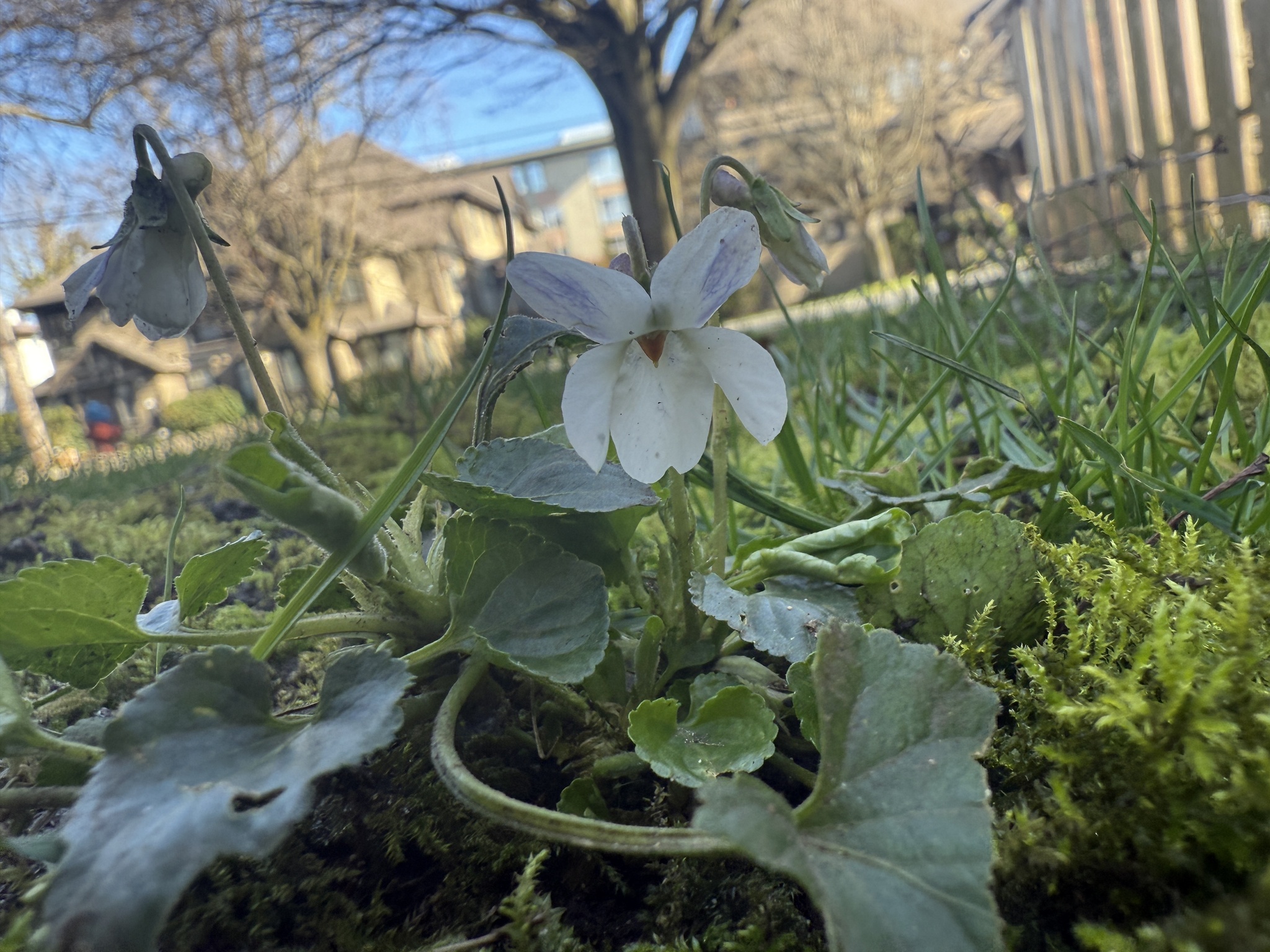
Violets are one of the first edible plants up in Northern New England — mid-April into May, showing up in lawns and along paths before most people think to look for them. They’re easy to identify, don’t have dangerous look-alikes when in flower, and both the leaves and flowers are edible. That combination makes them a good first forage if you’re just getting started.
The new beginnings intention isn’t arbitrary. Violet is among the earliest spring plants, your body has been running low on vitamin C all winter, and the plant shows up exactly when that deficit is real. Traditional herbalism calls that doctrine of signatures. Nutritional science calls it good timing. The magical tradition has been working with violet for new beginnings, protection, and love for centuries. All three land in the same place.
Before You Forage
For raw eating, go for the slightly unfurled lighter-green leaves — they’re sweet and mild without any bitterness. Flowers are edible too and worth including. Only forage from unsprayed areas — a lawn that gets treated is not a salad ingredient. Violets contain saponin, which can upset your stomach in large quantities, but it’s the same compound found in peas, quinoa, and yams, so don’t avoid them — just don’t build an entire meal from nothing but violet leaves.
The Recipes
The base: a foraged spring salad
Forager Chef’s Wild Green Salad — Alan Bergo is a James Beard Award-winning chef who has been writing about wild food for over a decade. This is the foundational template: mixed wild greens, violet flowers as garnish, dressed simply with oil and acid. Solid technique, scales to whatever you find that day.
Make the dressing from the plant itself
Wild Violet Vinaigrette, The Sophisticated Caveman — Violet flowers steeped in vinegar for 5–10 days turn it a vibrant purple, then whisked with wild garlic, sweetener, and olive oil into a vinaigrette. Swap honey for maple syrup. The color is genuinely striking and the wild garlic adds something the flowers alone don’t.
If you want something more structured
Herb Salad with Edible Flowers, Art of Natural Living — Spring mix base with tender herbs and violet flowers as garnish, maple syrup in the dressing. A reasonable entry point if you’re not ready to build entirely from foraged greens.
The slow project: candied violets
Vegan Candied Violets, Fare Isle — Aquafaba works just as well as egg whites here. Candied violets are time-consuming — you paint each flower individually. Use them to finish a salad, a dessert, anything you’re making with some intention behind it. The process is worth doing at least once.
Violet is in the plant database if you want the full scientific profile, herbalism applications, and magical correspondences: Violet →
Leave a Reply