Apple
Basic Information
Scientific Name: Malus domestica Borkh.
Plant Family: Rosaceae
Conservation / Invasive Status: Least Concern
Geographic Range: Cultivated in Northern New England
Safety Level: Generally Safe
Harvest Season: Fall, Summer
Parts Used: Bark, Fruit, Leaves
Scientific & Botanical Information
Botanical Description
Malus domestica Borkh. is a medium-sized deciduous tree in the family Rosaceae, typically reaching 3-9 m in height under cultivation, though ungrafted seedlings and heritage specimens may attain 12 m or more. The crown is broad and spreading, with gnarled, interlacing branches in mature trees. Bark is gray-brown, scaly, and furrowed with age. Leaves are alternate, simple, and ovate to elliptic, measuring 6-12 cm in length, with finely serrated margins and soft pubescence on the lower surface when young; they turn yellow to orange in autumn.1
Flowers appear in spring (April-May in Northern New England), borne in corymbs of 3-7 per cluster, emerging from mixed buds formed during the previous growing season. Each flower is approximately 3-4 cm in diameter, with five white to pale pink petals, five sepals, and numerous stamens. Apple is largely self-incompatible and requires cross-pollination by bees — primarily honey bees (Apis mellifera) and native pollinators — for reliable and abundant fruit production.2
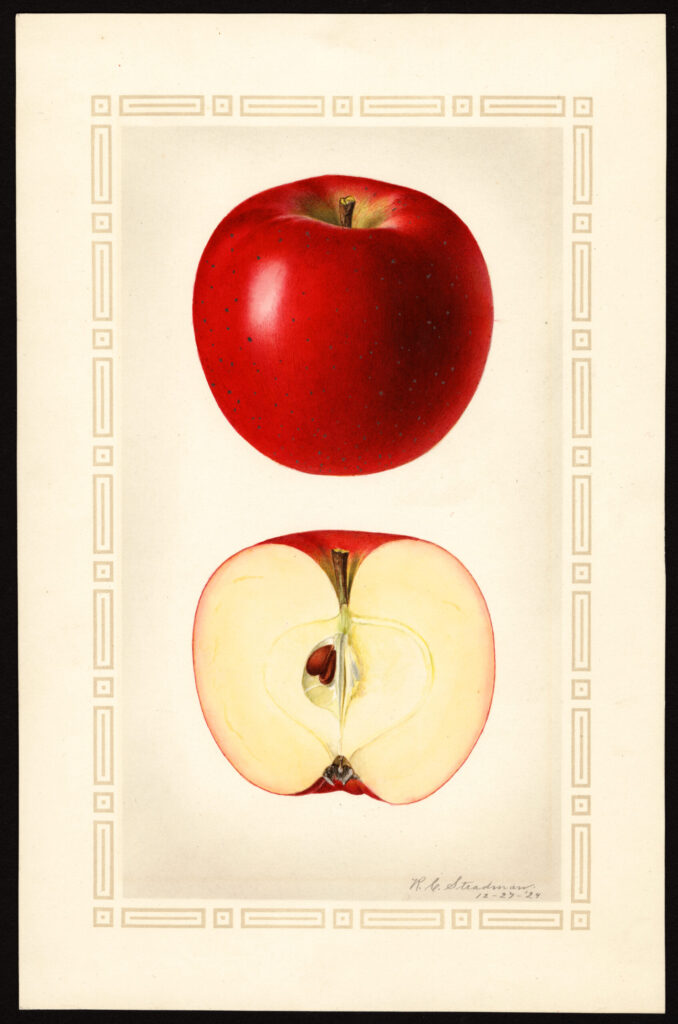
The fruit is a pome: a fleshy accessory fruit formed primarily from the enlarged receptacle and hypanthium rather than the ovary alone. Fruits vary widely in size (5-10 cm diameter), shape, color (green, yellow, red, or striped), and flavor depending on cultivar. Each fruit contains a core with 5 carpels, each holding 1-2 seeds. The seeds are brown, ovoid, and contain amygdalin, a cyanogenic glycoside present in small but measurable amounts.2
The domestic apple is the product of millennia of selection and hybridization. DNA analysis has confirmed its primary progenitor as Malus sieversii, native to the forests of Central Asia (Tian Shan mountains, modern Kazakhstan), with additional genomic contributions from Malus sylvestris (European crabapple) and other wild Malus species.2
Geographic Distribution & Habitat
Malus domestica is cultivated throughout the temperate world, with major commercial production in China, the United States, Poland, Turkey, and Italy. The tree thrives in cool temperate climates with defined seasons, requiring approximately 900-1,000 chilling hours (below 7 degrees C) annually to break dormancy and flower reliably. It grows best in moist, well-drained, slightly acidic soil (pH 6.0-7.0) in full sun.2
In Northern New England, apple cultivation dates to the earliest European colonial settlements of the early 1600s. By the 18th and 19th centuries, apple orchards were central to the agricultural economy of Maine, New Hampshire, and Vermont, with the region producing dozens of locally adapted cultivars suited to cold winters and abbreviated growing seasons.3
Wild and feral apple trees are now widespread throughout Northern New England, growing along woodland edges, stone walls, old roadsides, abandoned homesteads, and at the margins of old orchard clearings where they regenerate freely from seed dispersed by wildlife. These naturalized populations provide critical seasonal habitat and food for white-tailed deer, black bear, ruffed grouse, wild turkey, numerous songbirds, and small mammals. The wild apple has been described as among the most valuable wildlife food trees in the state of Maine and across the broader region.3
Active Compounds
The phytochemical profile of Malus domestica is dominated by polyphenols, with additional contributions from organic acids, pectin, phytosterols, and pentacyclic triterpenes.1
The major polyphenolic classes are: flavanols (including (-)-epicatechin and oligomeric procyanidins B1, B2, and C1, found primarily in the flesh and peel); hydroxycinnamic acids (primarily chlorogenic acid, the dominant phenolic in apple flesh); flavonol glycosides (quercetin-3-glucoside, quercetin-3-galactoside, quercetin-3-arabinoside, and quercetin-3-rutinoside, concentrated almost exclusively in the peel at 4-6 times the concentration found in the flesh); and dihydrochalcones, particularly phloridzin (phloretin-2′-O-glucoside), a compound unique to the genus Malus that serves as a taxonomic marker for the apple tribe and is found in highest concentrations in the bark, leaves, and peel.1
Additional key constituents include: malic acid (responsible for the characteristic tartness of apple), ursolic acid and oleanolic acid (pentacyclic triterpenes concentrated in the waxy cuticle), anthocyanins including cyanidin-3-galactoside and cyanidin-3-arabinoside in red-skinned cultivars, beta-sitosterol, pectin (a soluble dietary fiber comprising approximately 50% of the apple’s total dietary fiber content by dry weight), vitamin C, potassium, and B-complex vitamins.2
Pharmacological Actions
Antioxidant activity: Apple polyphenols demonstrate potent free-radical scavenging capacity, estimated at approximately 83 micromol vitamin C equivalents per 100 g fresh weight. The peel is markedly more bioactive than the flesh, with 2-6 times higher total phenolic content. Quercetin glycosides and procyanidins are the primary contributors to this activity.1
Anti-inflammatory and metabolic effects: A comprehensive review of 33 controlled trials documented that apple and its derivatives consistently exhibit anti-inflammatory and antioxidant actions, improving blood pressure, body fat distribution, insulin resistance, and dyslipidemia while reducing key cardiovascular risk markers.4 A 2022 systematic review and meta-analysis of randomized controlled trials confirmed significant improvements in total cholesterol, LDL cholesterol, triglycerides, and fasting blood glucose with regular apple consumption, with effects attributed to the synergistic activity of procyanidins, quercetin glycosides, and chlorogenic acid.3
Antidiabetic effects: Phloridzin inhibits sodium-coupled glucose transporter 1 (SGLT1) in the intestinal epithelium, reducing postprandial glucose absorption. This mechanism was confirmed in both in vitro studies and a human clinical trial in which apple extract administered before an oral glucose tolerance test significantly reduced postprandial blood glucose and plasma insulin levels.6 Quercetin further improves glycemic control through enhanced insulin sensitivity and inhibition of alpha-glucosidase activity.
Antitumor activity: Apple procyanidins induce apoptosis in multiple cancer cell lines via the mitochondrial pathway, increasing cytochrome c release from mitochondria and activating caspase-3 and caspase-9 within tumor cells.5 Ursolic acid shows cytotoxic activity against breast, colon, and liver cancer cells in vitro, and pentacyclic triterpenes from apple peel have demonstrated anti-breast-cancer activity in preclinical models.
Respiratory protection: Population-based studies associate higher apple intake with reduced asthma incidence and better pulmonary function, with individuals consuming five or more apples per week demonstrating significantly greater forced expiratory volume in some cohorts.7 Phloretin demonstrates antibacterial and anti-biofilm activity against key COPD-associated respiratory pathogens including nontypeable Haemophilus influenzae, Moraxella catarrhalis, and Streptococcus pneumoniae.8
Gastrointestinal effects: Pectin from apple acts as a prebiotic fiber, selectively feeding beneficial gut bacteria including Lachnospiraceae and Bifidobacterium, improving gut barrier function, and attenuating metabolic endotoxemia. Raw apple’s tannin content provides astringency useful in acute diarrhea management, while its soluble fiber supports intestinal regularity.
Safety & Interactions
Malus domestica consumed as whole fruit is broadly safe for the vast majority of adults and children. The American Herbal Products Association’s Botanical Safety Handbook (2nd ed.) classifies the edible fruit as Safety Class 1 — safely consumed when used appropriately, with no significant contraindications for the general population.9
The primary safety consideration involves apple seeds, which contain amygdalin, a cyanogenic glycoside that releases hydrogen cyanide upon metabolic cleavage. The incidental consumption of a few seeds from a normally eaten apple poses no meaningful risk; however, concentrated or deliberately crushed seed preparations are inadvisable and should be avoided.2
Oral allergy syndrome (OAS) may affect individuals sensitized to birch pollen (Bet v 1 cross-reactive proteins), who experience oral tingling or mild mucosal reactions after eating raw apple. Cooking typically eliminates this reaction by denaturing the cross-reactive proteins. Apple is among the most heavily pesticide-treated commercial produce crops in the United States (consistently listed on the Environmental Working Group’s “Dirty Dozen”), making organic or home-grown sourcing strongly preferable for any therapeutic use. No significant drug interactions are documented at normal dietary intake levels, though high-dose isolated phloridzin extracts could theoretically potentiate antidiabetic medications.
Growing in New England
Apple is among the most important cultivated fruit trees in Northern New England, well adapted to USDA Hardiness Zones 4-7. Full sun (minimum 6-8 hours daily), moderately fertile well-drained soil (pH 6.0-7.0), and cross-pollination from a compatible variety planted within 30-50 m are essential for productive fruiting. Harvest times in the region range from early August (ultra-early ripening cultivars) through late October (storage varieties).
Heritage cultivars with deep historical connections to New England include ‘Roxbury Russet’ (arguably the oldest surviving American apple cultivar, originating in Roxbury, Massachusetts, ca. 1635), ‘Baldwin,’ ‘Northern Spy,’ ‘Cortland,’ and ‘Macoun.’ For organic production in the region, disease-resistant cultivars such as ‘Liberty,’ ‘Freedom,’ ‘Enterprise,’ and ‘Redfree’ are particularly well-suited, offering natural resistance to apple scab (Venturia inaequalis), fire blight (Erwinia amylovora), and cedar-apple rust.3
Feral populations established from seed dispersed by wildlife and from discarded fruit persist widely throughout the region — particularly at abandoned homestead sites, along old stone walls, and at forest margins. These ungrafted wild trees often develop remarkable longevity and disease resistance through natural selection and can produce abundant fruit for wildlife and foragers with little or no human care.3
Folk Wisdom
The saying “An apple a day keeps the doctor away” traces directly to a Pembrokeshire, Wales proverb first documented in the Bradford Observer on 1 March 1866 as “Eat an apple on going to bed, and you’ll keep the doctor from earning his bread,” and first compiled in print by legal author William Carew Hazlitt in 1869.10 The modern phrasing emerged by the end of the 19th century. While no single clinical trial has validated the proverb absolutely, population-based research consistently supports its sentiment: regular apple consumption is associated with reduced risk of cardiovascular disease, type 2 diabetes, respiratory illness, and certain cancers.3 A 2015 cross-sectional analysis found that daily apple eaters were modestly more likely to avoid prescription medication use. The polyphenol content of traditional and heirloom apple varieties is typically higher than that of modern commercial cultivars — lending some credence to the suggestion that our ancestors’ apples may indeed have been more medicinal than today’s conventionally bred fruit.
Pharmacological Actions: Anti-inflammatory, Antimicrobial, Antioxidant, Antitumor, Astringent, Hypotensive, Immunomodulatory, Vulnerary
Traditional Herbalism Information
Energetics & Actions
In traditional Western herbalism, apple is classified as cooling and moistening in energetic quality. The sweet flesh of a ripe apple clears heat, tonifies the stomach, and gently moistens dry tissues. Sour or unripe apple carries a stronger astringent quality, classified as cool and dry in Galenic systems, with its higher tannin content making it more appropriate for conditions of excess dampness or acute diarrhea.
Matthew Wood, in The Earthwise Herbal: A Complete Guide to Old World Medicinal Plants (2008), notes apple’s particular affinity for the heart and digestive system and its historical role as a “cordial” — a term applied to plants that strengthen and regulate the heart and restorative functions.11 Maud Grieve, in A Modern Herbal (1931), provides the most systematic early English account of apple’s medicinal range, documenting uses spanning fever management, digestive regulation, and wound care across multiple body systems.12 Nicholas Culpeper, in Culpeper’s Complete Herbal (1653), placed apple under Venus, ascribed to it cooling and moistening properties, and prescribed roasted apple for sore throats and hot-tempered digestive complaints.13
Primary herbal actions: astringent (tannins), demulcent (pectin), digestive tonic and amphoteric, mild laxative (soluble fiber), nutritive tonic, febrifuge (bark), vulnerary (poultice application).
Parts Used & Their Applications
The ripe fruit is the primary part used in all traditions, consumed raw, lightly cooked, juiced, or fermented into cider and vinegar. The bark carries particular significance in traditional American herbal medicine, where a decoction of apple tree bark was employed as a febrifuge in intermittent and bilious fevers. Grieve notes explicitly that “in the United States the infusion of the bark is given in intermittent and bilious fevers,” a practice reflecting the bark’s high phloridzin and bitter triterpene content.12
Leaves have historical applications in folk medicine as an astringent and topical anti-inflammatory preparation, though they are far less commonly used than the fruit or bark. Apple seeds are never used medicinally due to their amygdalin content, and should be kept out of all therapeutic preparations.
Traditional Uses
Digestive system: Apple’s most enduring folk application is as a digestive regulator. Raw grated apple treats both diarrhea (via astringent procyanidins and tannins in unripe fruit) and constipation (via soluble pectin fiber in ripe fruit), making it one of the classical digestive amphoterics. Grieve documents its use for gastric catarrh, heartburn, and flatulence, and notes the value of a light diet of ripe apple for convalescent digestive recovery.12 Unsweetened cooked apple and fresh applesauce remain instinctive household remedies for upset digestion from childhood through old age.
Cardiovascular system: Historical apple syrup preparations — known as “Rob of Apple,” produced by reducing fresh apple juice to a thick syrup over gentle heat — were used to strengthen a weak heart, relieve palpitations, and moderate cardiovascular excess.12 Wood discusses apple’s role as a genuine cardiac tonic, noting that its cordial reputation in European medicine was well-founded in its ability to nourish and regulate rather than stimulate the cardiovascular system.11
Wound healing and external use: A poultice of raw or overripe apple applied to wounds involving delicate tissues was a well-established household remedy. Grieve documents the application of rotten apple poultice to sore or poorly healing eyes and skin wounds, where malic acid, pectin, and tannins work cooperatively as drawing, astringent, and antimicrobial agents.12 A slice of raw apple held against a cut lip or inflamed mouth tissue remains a practical and effective first-aid application available to anyone with an apple at hand.
Fever management: Decoctions of apple bark were used in 18th and 19th century American herbal and eclectic practice as a substitute febrifuge in intermittent fevers, at a time when access to cinchona and quinine was limited. The bark’s bitterness and its concentrated dihydrochalcone content likely contributed to its antipyretic action.12
Detoxification and gut protection: Pectin’s capacity to bind and facilitate gastrointestinal removal of heavy metals, bile acids, and toxins was recognized in traditional practice and later documented in a clinical context when apple pectin was administered to children affected by the Chernobyl nuclear disaster, demonstrating significant reduction in cesium-137 body burden over a sustained treatment period — a modern validation of traditional intuition about the plant’s drawing and clearing capacities.11
Respiratory: Roasted apple with honey was a classic English household remedy for colds, sore throats, and dry coughs, with the hot, moist, demulcent fruit soothing inflamed upper respiratory mucous membranes. Combined with honey and sometimes ginger, roasted apple was commonly given to children and elders during respiratory illness.
Preparations & Dosage
Raw fruit: 1-3 medium apples daily as a general nutritive tonic, digestive support, and preventive medicine. Eaten with the peel intact for maximum polyphenol benefit when organically grown. Grated raw apple (one half to one whole medium apple) taken as a simple for acute diarrhea (use slightly unripe apple) or as a digestive regulator (ripe apple).
Raw poultice: A slice or small amount of grated raw apple applied directly to minor wounds, irritated eyes, or inflamed skin. Replace with fresh apple every 15-30 minutes as the applied portion warms and dries.
Cooked apple and applesauce: Lightly cooked apple without added sugar is appropriate for infants, convalescents, and those with digestive inflammation or acute gastric upset. Well tolerated by most people in conditions of nausea, mild constipation, or intestinal cramping.
Apple cider vinegar (ACV): Raw, unfiltered ACV (1-2 teaspoons diluted thoroughly in a full glass of water before meals) is used as a digestive stimulant, mild antimicrobial, and general metabolic tonic. Rosemary Gladstar employs ACV as a primary menstruum for herbal tinctures — particularly for tonic and mineral-rich herbs — and as the base of the traditional Fire Cider immune tonic (horseradish, ginger, garlic, onion, and cayenne macerated in raw ACV for 3-4 weeks, finished with honey).14
Apple bark decoction (historical): 15-30 g dried bark simmered in 500 ml water for 20 minutes; strained and taken in divided doses as a febrifuge or digestive bitter tonic. Largely of historical interest in contemporary practice.
Fresh-pressed juice: 250-500 ml freshly pressed, unfiltered apple juice daily as a laxative and digestive tonic. Commercial pasteurized and clarified juice retains limited therapeutic polyphenol content compared to fresh-pressed cloudy juice, which preserves procyanidins and pectin.
Modern Adaptations
Contemporary clinical herbalists continue to employ whole apples and apple cider vinegar as first-line digestive support, consistent with both traditional use and growing clinical evidence. The use of dilute ACV before meals is supported by small clinical studies showing improved postprandial glycemic response, almost certainly mediated by phloridzin’s SGLT1 inhibitory activity and acetic acid’s slowing of gastric emptying.
Apple pectin supplements are incorporated by naturopathic practitioners in gut microbiome support protocols, heavy metal chelation programs, and as a demulcent and barrier-supporting agent in inflammatory bowel conditions. Concentrated apple polyphenol extracts are under active clinical investigation for cardiometabolic and metabolic syndrome applications. The importance of sourcing organic apples for any therapeutic preparation cannot be overstated, as conventional commercial apples are among the most heavily pesticide-treated produce items in U.S. commerce.
New England Specific
Apple is among the most culturally embedded plants in New England’s agricultural, culinary, and medical heritage. Hard cider was the dominant daily beverage of colonial New England households throughout the 17th, 18th, and into the 19th century — safer than untreated well water and produced in abundance from every farm’s orchard. Apple-pressing traditions, fall harvest festivals, and the active preservation of heritage orchards containing varieties more than 150 years old are all living aspects of New England’s herbal and agricultural culture.
Organizations including the Maine Organic Farmers and Gardeners Association maintain active heritage orchard preservation programs specifically to document and protect old New England cultivars with distinctive medicinal, culinary, and genetic value. For the Northern New England herbalist, apple is a supremely accessible local medicine: the fall harvest provides raw fruit, dried apple rings, sauce, cider vinegar, and freshly pressed juice as year-round medicine with minimal effort. The polyphenol-rich peel of organically grown apples should never be discarded when preparing apple for therapeutic use.
Sourcing & Ethics
Apple is among the most widely available medicinal plants in Northern New England. Preferred sourcing options, in descending order: (1) growing your own, even a single dwarf or semi-dwarf tree in a home garden or large container; (2) purchasing from certified organic regional orchards, of which Maine, Vermont, and New Hampshire have robust communities; (3) harvesting from wild or feral trees at abandoned homestead sites, old orchard clearings, and forest edges, which are abundant throughout the region and typically free from pesticide application.
Conventionally grown commercial apples should not be used for medicinal preparations when organic or wild-harvested alternatives are available. For wild harvest, obtain landowner permission where the land is private, take no more than the tree can spare without diminishing critical wildlife food availability, and approach the tree with the acknowledgment appropriate for any long-lived, productive plant sharing the landscape. Old feral apple trees at the edge of New England meadows and pastures — many of them a century or more in age — deserve recognition and respectful engagement.
Folk Wisdom
A deep tradition of kitchen herbalism surrounds the apple in New England homes: raw apple cider vinegar kept in every farmhouse pantry as a household cure-all for heartburn, sore throats, and skin complaints; unsweetened applesauce for unsettled infant stomachs; the grandmother’s insistence on eating the peel; and the instinctive reach for a fresh apple over the medicine cabinet for minor digestive upsets. These accumulated domestic traditions encode genuine phytochemical wisdom about the virtues of the whole, unprocessed fruit.
Traditional Uses: Astringent, Cardiovascular Support, Digestive Support, Respiratory Support, Tonic, Wound Healing
Magical Correspondences Information
Planetary Ruler(s) & Elemental Association
Apple is ruled by Venus and associated with the element of Water in Western magical herbalism. Scott Cunningham, in Cunningham’s Encyclopedia of Magical Herbs (Llewellyn Publications, 1985), classifies apple under Venus and Water, connecting it with love, beauty, healing, and the feminine divine.15 Paul Beyerl, in The Master Book of Herbalism (Phoenix Publishing, 1984), confirms Venus rulership and places apple within the category of plants worked with for love, healing, and immortality magic.16 Nicholas Culpeper, in his planetary system of 1653, likewise assigns apple to Venus, connecting it with the heart, the relational life, and the sensory pleasures of beauty and harmony.13 The Venus-Water double association reflects apple’s sensory qualities — sweet, yielding, moist, and generative — and its mythological connections to love, beauty, and the divine feminine across Celtic, Norse, Greek, and Roman traditions.
Magical Intentions & Uses
Love and attraction are apple’s primary magical domains across virtually every tradition in which the plant appears. The offering of an apple has served as a declaration of love in Celtic, Greek, Roman, Norse, and later European folk traditions. Apple is worked with in love spells, love divination (especially at Samhain), and workings to attract romantic partnership, deepen existing bonds, and invite Venusian qualities — beauty, harmony, sensuality, and grace — into one’s life and home.15
Healing is apple’s second great magical domain, particularly for ailments of the heart and for recovery from illness rooted in depletion or lack of vitality. The mythological association of apple with divine renewal — Idunn’s golden apples restoring the gods; Avalon as the isle of healing and eternal life — makes apple highly appropriate for healing rites involving long-term recovery, life force restoration, and heart-centered work.16
Immortality, ancestral work, and Otherworld passage: Through its deep mythological connections to Avalon, Idunn, and the golden apples of the Hesperides, apple carries potent associations with the continuation of life, spiritual longevity, and access to the Otherworld. It is particularly appropriate for Samhain rituals, ancestral altars, and rites honoring the beloved dead.
Divination: Apples have extensive documented use in love and fate divination, particularly at Samhain — historically called the Feast of Apples in Celtic tradition — where apple bobbing, apple-peel casting, and seed counting were practiced to discern future partners, coming fortunes, and the identities of those not yet met.15
Fertility and abundance round out apple’s magical portfolio, reflecting its role as a generous, annually productive tree intimately associated with Venusian life-force energies and the fecundity of the earth at harvest.15
Deity Associations
Aphrodite / Venus (Greek/Roman): The golden apples of the Hesperides — tended by the daughters of the evening and guarded by the dragon Ladon — were Hera’s wedding gift from Gaia and became permanently entwined with Aphrodite’s domain when the goddess of strife, Eris, hurled a golden apple inscribed “for the most beautiful” at the wedding of Peleus and Thetis, setting in motion the chain of events that led to the Trojan War. Aphrodite also gave three golden apples to Hippomenes to win the love of Atalanta, establishing apple as the love-gift of the goddess of beauty and desire par excellence.
Idunn / Ithun (Norse): Idunn (Old Norse: the Rejuvenating One) is described in both the Poetic Edda and the Prose Edda of Snorri Sturluson (13th century) as the keeper of the wooden chest containing the apples that maintain the youth and vitality of the Aesir gods.17 When the giant Thiazi abducted Idunn and her apples, the gods immediately began to age, confirming her — and her fruit — as the axis of divine renewal in the Norse cosmological order.
Pomona (Roman): The Roman goddess of orchards and cultivated fruit, Pomona presided over apple and all fruit-bearing trees. Her festival, incorporated into the celebration of Samhain after Rome’s conquest of Britain in the 1st century CE, contributed apple-centered elements — particularly love divination and apple games — that have persisted through Halloween tradition to the present day.
Aine (Celtic Irish): The Irish goddess of summer, sovereignty, and fertile love is associated with apple orchards and their abundance. Her blessing was invoked at Midsummer and at harvest to protect orchards and ensure generous fruiting; her imagery links apple directly with the fullness of earthly love and the sovereignty of the feminine divine.
Morgan le Fay and the Healing Queens (Arthurian): The Arthurian Otherworld of Avalon — from Old Welsh abal, apple — is the Isle of Apples, realm of Morgan le Fay and the nine healing queens. The mortally wounded Arthur is borne to Avalon for healing and renewal, connecting apple with death-and-rebirth mysteries, the healing power of the feminine divine, and the permeable threshold between worlds.
Ritual & Spellwork Applications
Apple is incorporated into magical practice in multiple forms: the whole fruit, fresh juice or cider, dried apple slices, apple blossoms (for spring love and fertility magic), apple wood and bark (for wands, altar tools, and incense), and apple cider vinegar (as a ritual wash, offering base, or menstruum for magical preparations infused with Venusian intent).
Apple wood is prized for fashioning wands associated with Venus, love, and healing. It burns with a sweet, fragrant smoke and is traditionally blended with rose and sandalwood in love and beauty incenses. Apple wands are particularly suited to heart healing, fertility work, and rites working with feminine deities.
A classic Western love spell calls for carving the names of two individuals into a red apple, anointing it with honey and rose water, and burying it at a crossroads or beneath an apple tree during the waxing moon in Venus’s hour on a Friday.15
Splitting an apple crosswise to reveal the five-pointed star (pentagram) formed by its seed chambers is a widely practiced act of magical recognition — the hidden pentagram understood as Venus’s signature encoded in the fruit’s own geometry. This gesture is commonly performed at the opening of Samhain rituals to acknowledge the apple’s sacred nature and Otherworld associations.15
Traditional Lore & Folk Magic
Wassailing — from the Anglo-Saxon waes hael, “be well” or “be in good health” — is an orchard blessing tradition documented in England’s West Country and Somerset from at least the 13th century. On Twelfth Night (January 6th), the community gathered in the orchards, made deliberate noise to rouse the trees and drive out malevolent spirits, poured cider over the roots of the oldest tree, sang blessing songs, and hung cider-soaked toast or bread in the branches as offerings to the tree’s spirit. The ritual’s purpose was to honor the apple tree’s animating presence, bless the orchard for the coming year, and invoke a generous harvest. Wassailing traditions have been actively revived in New England orchards in the 21st century, reconnecting practitioners to this place-based seasonal practice.
Apple bobbing (called “apple dooking” in Scotland) has its documented roots in Celtic Samhain love divination. Each participant’s apple was marked with an identifying sign and placed in a tub of water; the apple one retrieved revealed the mark of a prospective match. The custom merged with Roman Pomona Festival games after the Roman conquest of Britain and was eventually domesticated into the Victorian parlor game familiar today.
In Irish and Scottish folk magic, peeling an apple in a single unbroken spiral and casting the peel over one’s left shoulder was believed to reveal the first letter of a future partner’s name in the shape where it fell. Apple seeds were also used for divination: two seeds pressed to the closed eyelids, each named for a different potential lover, with the seed that adhered the longer indicating the truer attachment.
Timing
Venus rules Fridays, and Friday is the most auspicious day for apple magic of all kinds. Within the planetary hours system, Venus’s hours (the 1st and 8th hours after sunrise and after sunset on Fridays) are optimal for love, beauty, and healing work with apple. The waxing to full moon amplifies love, attraction, fertility, and growth workings; the waning moon or dark moon is more appropriate for releasing harmful relationships or facilitating deep internal healing.
Samhain (October 31 / November 1) is the great apple festival, and the autumn harvest season is the most traditionally appropriate time for apple-centered divination, ancestral work, Otherworld magic, and the deeper soul-oriented dimensions of love work. Apple blossom season (May in Northern New England) corresponds to Beltane and May Day energies and is the ideal time for magic related to new love, fertility, and new beginnings. Wassailing at Twelfth Night (early January) carries the orchard blessing tradition through the dark months, honoring the sleeping tree’s spirit and invoking its return to fruitfulness.
Working with Apple in Practice
Apple is one of the most accessible and grounded magical plants for the Northern New England practitioner because it is local, seasonal, and deeply woven into the regional landscape and cultural memory. Simple acts are often the most potent: fresh-pressed cider poured as a Samhain offering beneath a wild apple tree at dusk, apple blossoms gathered at first opening for a Venus altar in May, or splitting an apple crosswise with full attention before eating it to acknowledge its hidden geometry and sacred lineage.
For practitioners developing a place-based magical practice rooted in New England, cultivating an ongoing relationship with one particular feral apple tree — visiting it through all four seasons, learning its fruiting rhythms, offering cider at its roots at Samhain — can serve as a profound anchor for Otherworld work, ancestral connection, and engagement with the living genius of the local land. The apple tree as threshold-keeper, mediator between the living and the dead, and keeper of the Otherworldly apple gardens, is one of the most powerful and locally available magical allies in the Northern New England landscape.
Combining with Other Plants
Apple combines effectively with rose (shared Venus rulership; amplified love and heart magic), hawthorn (both Rosaceae family members, with overlapping heart-protective, Otherworld, and threshold-guardian associations), rowan (Northern European protective and visionary traditions; both fruit trees with strong Otherworldly significance), and elder (fairy and Otherworld associations, Samhain rites, and ancestral healing). Apple wood smoke blends well with cedar and juniper for ancestral work and space purification. Apple cider vinegar serves as an excellent base for oxymels and vinegar tinctures combining apple with rosemary, thyme, or elderberry for seasonal support.
Cautions for Magical Use
Avoid incorporating apple seeds into any ritual preparation intended for ingestion. When crafting apple-based ceremonial foods — breads, cakes, ciders, drinks — core the fruit thoroughly and compost the seeds. The archetypal poisoned apple of fairy tale (Snow White and her numerous older counterparts across European folklore) is not mere fantasy: it reflects genuine awareness of the seeds’ toxic potential, and this ambivalence — the beautiful, deadly apple — carries real symbolic and ethical weight in working with this plant.
When harvesting from wild or cultivated trees, gather blossoms in modest amounts that do not visibly reduce the tree’s flowering capacity, and harvest fruit only when ripe or freely falling. A spoken acknowledgment of gratitude and a small offering of water or cider at the roots before harvesting is consistent with good animist practice across traditions and appropriate to a plant with such a long and reciprocal relationship with human beings.
Folk Wisdom
In British and Irish folk magic tradition, a red apple given freely and without solicitation was understood as a sincere declaration of love whose authenticity could not be doubted; to refuse the apple was to reject the giver outright. This custom appears in medieval ballads, fairy tales — echoed and darkened in Snow White’s poisoned apple and Sleeping Beauty’s enchanted fruit — and Victorian-era courtship traditions. The apple’s dual nature as both life-giving food and potential poison (the seeds’ cyanide, the witch’s gift in folklore) has made it a persistent and resonant symbol of the deep ambivalence at the heart of love itself: beautiful, nourishing, freely offered, and capable of sleeping the soul into enchantment.
Planetary Rulers: Venus
Magical Intentions: Ancestral Work, Divination, Fertility, Healing, Love
Elemental Associations: Water
- Boyer, J., & Liu, R.H. (2004). Apple phytochemicals and their health benefits. Nutrition Journal, 3, 5. doi:10.1186/1475-2891-3-5
- Patocka, J., Bhardwaj, K., Klimova, B., Nepovimova, E., Wu, Q., Landi, M., Kuca, K., Valis, M., & Wu, W. (2020). Malus domestica: A Review on Nutritional Features, Chemical Composition, Traditional and Medicinal Value. Plants, 9(11), 1408. doi:10.3390/plants9111408
- Kim, S.J., Anh, N.H., Jung, C.W., Long, N.P., Park, S., Cho, Y.H., Yoon, Y.C., Lee, E.G., Kim, M., Son, E.Y., Kim, T.H., Deng, Y., Lim, J., & Kwon, S.W. (2022). Metabolic and Cardiovascular Benefits of Apple and Apple-Derived Products: A Systematic Review and Meta-Analysis of Randomized Controlled Trials. Frontiers in Nutrition, 9, 766155. doi:10.3389/fnut.2022.766155
- Qi, H., Fu, W., Liu, Y., Bai, J., Wang, R., Zou, G., Shen, H., Cai, Y., & Luo, A. (2025). Effects of apples (Malus domestica) and their derivatives on metabolic conditions related to inflammation and oxidative stress and an overview of by-products use in food processing. Critical Reviews in Food Science and Nutrition, 65(19), 3785-3816. doi:10.1080/10408398.2024.2372690
- Miura, T., Chiba, M., Kasai, K., Nozaka, H., Nakamura, T., Shoji, T., Kanda, T., Ohtake, Y., & Sato, T. (2008). Apple procyanidins induce tumor cell apoptosis through mitochondrial pathway activation of caspase-3. Carcinogenesis, 29(3), 585-593. doi:10.1093/carcin/bgm234
- Schulze, C., Bangert, A., Kottra, G., Geillinger, K.E., Schwanck, B., Vollert, H., Blaschek, W., & Daniel, H. (2014). Inhibition of the intestinal sodium-coupled glucose transporter 1 (SGLT1) by extracts and polyphenols from apple reduces postprandial blood glucose levels in mice and humans. Molecular Nutrition & Food Research, 58(9), 1795-1808. doi:10.1002/mnfr.201400016
- Garcia, V., Arts, I.C.W., Sterne, J.A.C., Thompson, R.L., & Shaheen, S.O. (2005). Dietary intake of flavonoids and asthma in adults. European Respiratory Journal, 26(3), 449-452. doi:10.1183/09031936.05.00142104
- Birru, R.L., Bein, K., Bondarchuk, N., Wells, H., Lin, Q., Di, Y.P., & Leikauf, G.D. (2021). Antimicrobial and Anti-Inflammatory Activity of Apple Polyphenol Phloretin on Respiratory Pathogens Associated With Chronic Obstructive Pulmonary Disease. Frontiers in Cellular and Infection Microbiology, 11, 652944. doi:10.3389/fcimb.2021.652944
- Gardner, Z., & McGuffin, M. (Eds.). (2013). American Herbal Products Association’s Botanical Safety Handbook (2nd ed.). CRC Press.
- Hazlitt, W.C. (1869). English Proverbs and Proverbial Phrases. John Russell Smith. [Citing Bradford Observer, 1 March 1866: first recorded variant of “An apple a day” proverb.]
- Wood, M. (2008). The Earthwise Herbal, Volume I: A Complete Guide to Old World Medicinal Plants. North Atlantic Books.
- Grieve, M. (1931). A Modern Herbal. Dover Publications (1971 reprint). Apple entry.
- Culpeper, N. (1653). Culpeper’s Complete Herbal. Arcturus Publishing (2009 reprint).
- Gladstar, R. (2012). Rosemary Gladstar’s Medicinal Herbs: A Beginner’s Guide. Storey Publishing.
- Cunningham, S. (1985). Cunningham’s Encyclopedia of Magical Herbs. Llewellyn Publications.
- Beyerl, P. (1984). The Master Book of Herbalism. Phoenix Publishing.
- Sturluson, S. (13th century). Prose Edda. Translated by Brodeur, A.G. (1916). American-Scandinavian Foundation. [Skaldskaparmal: Idunn and the apples of immortality.]