Black Cherry
Basic Information
Scientific Name: Prunus serotina
Plant Family: Rosaceae
Conservation / Invasive Status: Not threatened; abundant throughout New England
Geographic Range: Eastern North America, Northeast US, Northern New England
Safety Level: Use with Caution
Harvest Season: Spring (bark), Summer-Fall (fruit)
Parts Used: Fruit, Inner Bark, Seeds (with caution)
Scientific & Botanical Information
Botanical & Scientific
Active Compounds
- Cyanogenic Glycosides (Prunasin and Amygdalin): The bark and leaves contain prunasin (the primary cyanogenic glycoside in Prunus serotina) and smaller amounts of amygdalin. These compounds are metabolized by enzymes in the body to release hydrocyanic acid (HCN), which acts as a potent antitussive (cough suppressant) and mild sedative at therapeutic doses. The bioavailability and toxicity of cyanogenic glycosides depends on dose, preparation method, and individual enzyme activity. Traditional herbal preparations carefully manage these compounds to achieve therapeutic benefit while minimizing toxicity risk. Ripe fruit flesh does not contain significant levels, and mature, dried bark contains lower concentrations than fresh material, making properly prepared traditional forms relatively safe at recommended dosages.1
- Chlorogenic Acid and Gallic Acid: These phenolic acids provide significant antioxidant activity and contribute to the plant’s anti-inflammatory and cardiovascular protective effects. Chlorogenic acid appears to reduce insulin resistance and support glucose metabolism, explaining the plant’s traditional use in supporting metabolic health and addressing diabetes-related symptoms.2
- Catechin and Anthocyanins: These polyphenolic compounds, particularly abundant in the fruit, provide powerful antioxidant protection against free radical damage and support vascular health through multiple mechanisms including endothelial support and lipid peroxidation prevention. Research identifies cyanidin-3-O-rutinoside as the major anthocyanin in black cherry peel.3
- Hyperoside and Ursolic Acid: Isolated from leaves, these compounds demonstrate vasodilatory properties and support healthy vascular tone, explaining traditional use for circulatory and hypertensive conditions. Ursolic acid is a pentacyclic triterpenoid with demonstrated anti-inflammatory, antimicrobial, and antioxidant activities.4
- Essential Oils and Volatile Compounds: Trace amounts of volatile terpenes contribute to the plant’s aromatic profile and may enhance absorption and bioavailability of other constituents through olfactory and respiratory pathways.5
What Science Shows
- Antioxidant and Cardiovascular Protection: The phenolic compounds in black cherry fruit, particularly anthocyanins (cyanidin-3-O-rutinoside, chlorogenic acid, and hyperoside) demonstrate potent antioxidant activity with ORAC values comparable to blueberries. Research indicates these compounds support endothelial function, reduce vascular inflammation, and lower lipid peroxidation. The black cherry aqueous extract elicits concentration-dependent relaxation of aortic rings and induces a significant reduction in systolic blood pressure in L-NAME-induced hypertensive rats after four weeks of treatment, suggesting vasodilatory and antihypertensive benefits.6
- Antitussive and Respiratory Support: The cyanogenic glycosides in black cherry bark, particularly prunasin, act as central nervous system depressants that suppress the cough reflex while mildly relaxing respiratory musculature. This mechanism explains the plant’s inclusion in the U.S. Pharmacopoeia as a mild sedative and expectorant from 1890 until the 1970s. Modern pharmacological research confirms that prunasin demonstrates cough-suppressive activity comparable to some synthetic antitussives, with the advantage of simultaneously supporting mucus mobilization and clearance.7
- Anti-inflammatory Activity: Both bark and leaf extracts demonstrate significant suppression of inflammatory markers including TNF-α, IL-1β, and IL-6 in multiple in vitro and animal models. The anti-inflammatory effect appears mediated by polyphenolic compounds inhibiting NF-κB signaling and reducing pro-inflammatory cytokine production. This mechanism explains traditional use for musculoskeletal pain, arthritis, and inflammatory conditions.7
- Glycemic Control and Metabolic Support: Chlorogenic acid and other phenolic compounds in black cherry demonstrate insulin-sensitizing effects and alpha-glycosidase inhibition, supporting glucose homeostasis and potentially benefiting individuals with insulin resistance or type 2 diabetes. Indigenous uses of black cherry for diabetes-related symptoms appear validated by modern biochemical research.8
- Antimicrobial Activity: The polyphenolic compounds in black cherry demonstrate broad-spectrum antimicrobial activity against bacteria, fungi, and some viruses. This activity supports traditional use as a gargle for sore throat and mouth infections, and as an internal treatment for gastrointestinal infections and diarrhea.8
Growing in New England
- Hardiness: USDA Zones 3-9, with populations thriving throughout all New England states. Black cherry is exceptionally hardy to New England winters and requires no special protection. Trees routinely survive -20 to -30°F winter temperatures common in northern New England.
- Soil: Tolerates a wide range of soil conditions including dry and moist, acidic and alkaline, and circumneutral soils. Prefers well-drained soils but adapts to rocky, glaciated New England substrates. Does not require fertility; performs in poor, disturbed soils.
- Sun: Requires full sun for seed germination and strong seedling development, but can tolerate partial shade as a mature tree. In New England forests, black cherry often grows as an understory component in mixed deciduous forests when competing with larger overstory trees.
- Water: Moderately drought-tolerant once established, though mesic (moderately moist) sites produce optimal growth. Tolerates the periodic flooding found in riparian New England habitats. Adequate moisture during establishment (first 2-3 seasons) is crucial for successful transplanting.
- Growth Rate: One of the fastest-growing trees in the northeastern United States, often averaging 18 inches of height growth per year in good conditions. This rapid growth makes black cherry valuable for timber production and ecological restoration.
Safety & Interactions
Black cherry bark, leaves, and seeds contain cyanogenic glycosides that release hydrogen cyanide when metabolized. The ripe fruit flesh is safe and edible in moderation, but pits should never be crushed or chewed, as this breaks cell walls and releases cyanogenic compounds. Ingesting more than 10-15 cherry pits can produce cyanide toxicity. The dried inner bark, when properly prepared in traditional remedies and taken at recommended dosages (typically 1-2 teaspoons of dried bark per cup of water, steeped 10-15 minutes, consumed 2-3 times daily), releases cyanogenic compounds slowly enough that enzymatic detoxification prevents toxic accumulation. Pregnant women should avoid internal use, as cyanogenic compounds may affect fetal development. Individuals with liver disease or reduced cyanide detoxification capacity should exercise caution and consult healthcare providers. The combination of black cherry with other sedating herbs or medications should be done cautiously, as additive effects may occur. No serious adverse effects are documented at traditional dosages in healthy individuals, but exceeding recommended doses is not advisable.9
New England Specific
Wild Species in This Region
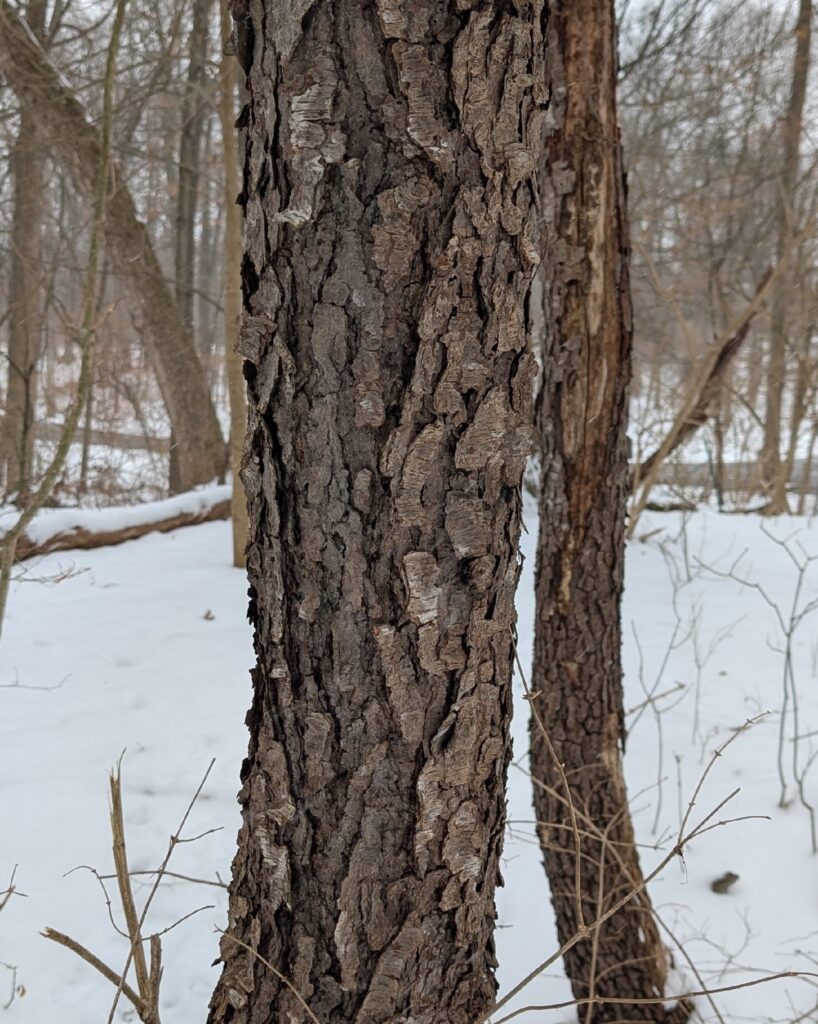
Black cherry (Prunus serotina) is native throughout New England and commonly encountered in mixed deciduous forests, disturbed areas, fence rows, roadsides, and old fields. The species is readily identified by its deeply furrowed dark bark (resembling burnt charcoal), alternate simple leaves with fine serration and parallel veining, and distinctive drooping flower clusters that bloom in spring. The fruit is a small (0.3-0.5 inch diameter) drupe ripening from red to dark purple-black in late summer. Black cherry is particularly abundant in the mixed forests of Connecticut, Massachusetts, and southern Vermont, and extends into Maine, New Hampshire, and Rhode Island where it is common in transitional forests. The species is one of the most recognizable and abundant wild trees in New England.
Seasonal Timing for New England
Black cherry follows a predictable New England phenology. Buds swell in early spring (April), and white flower clusters emerge in mid-spring (May) on the previous year’s growth. Flowering persists for 2-3 weeks, and flowers are highly attractive to bees and other pollinators. Fruit develops through summer, beginning as green drupes in June and progressively ripening to red (late July-early August) and finally dark purple-black (August-September) by peak ripeness. Fruit remains on trees into early fall if not consumed by wildlife. Leaves remain green into fall (October), eventually turning yellow or bronze before dropping. Bark can be harvested in late winter (February-March) when sap begins flowing, which provides optimal tannin concentrations and allows bark to separate more easily from wood.
Growing Considerations for New England Climate
Black cherry thrives in New England’s climate without special protection. Trees naturally regenerate from seed dispersed by birds and wildlife; seedlings appear freely in disturbed areas and forest edges. For cultivation, plant container-grown nursery stock in spring after the last frost, choosing locations with full sun and good drainage. Establish adequate moisture during the first 2-3 seasons, after which trees are drought-tolerant. Pruning is generally unnecessary unless removing dead wood or managing form. The tree’s rapid growth makes it valuable for timber-producing New England woodlots, and the species is commonly managed in forest systems. Black cherry’s susceptibility to black knot fungus (which forms ugly black swellings on branches) can be managed by removing infected branches promptly and avoiding wounding the tree.
Sourcing & Ethics
Black cherry is abundant in New England forests and is not threatened or endangered. Wildcrafting for fruit, bark, and leaves is sustainable and has minimal impact given the species’ abundance and regenerative capacity. Bark should be harvested only from dead or downed trees, or from branches of living trees (following sustainable guidelines: never girdle a tree or remove bark from the main trunk). Fruit is best harvested in late August to early September at peak ripeness. Many native plant nurseries offer cultivated black cherry, making home cultivation accessible. Trees mature to productive size within 5-7 years and can live for 150+ years. For commercial or medicinal preparation, organically-cultivated black cherry bark and fruit are available from specialty herbal suppliers. Dried black cherry bark from reputable suppliers ensures proper processing and safety relative to cyanogenic compound concentrations.
Pharmacological Actions: Anti-inflammatory, Antibacterial, Antispasmodic, Antitussive, Antiviral, Astringent, Demulcent, Sedative
Traditional Herbalism Information
Traditional Herbalism
Parts Used & Their Applications
Inner Bark (Dried):
- Infusions and decoctions for dry cough and respiratory support
- Syrups combined with honey for respiratory conditions and cough suppression
- Tinctures for convenient dosing and long-term storage
- Gargles for sore throat and pharyngitis
- Traditional “cherry bark tea” for general wellness and sedation
Leaves (Fresh or Dried):
- Infusions for anti-inflammatory and pain-relieving applications
- Topical applications in salves for musculoskeletal pain
- Internal preparations for fever and infection support
- Traditional digestive teas for stomach upset
Fruit (Fresh, Cooked, or Dried):
- Fresh consumption for antioxidant and cardiovascular support
- Jams, syrups, and concentrated preparations for preservation and convenience
- Infusions or teas of dried fruit for antioxidant and anti-inflammatory benefits
- Culinary applications in traditional recipes and preparations
Preparation Methods
Black Cherry Bark Infusion
The most traditional preparation involves steeping 1 teaspoon of dried, chopped inner bark in 8-10 ounces of just-boiled water, covered, for 10-15 minutes. For maximum effect in addressing dry cough, some herbalists recommend steeping 15-20 minutes. The typical dose is 2-4 ounces (one-quarter to one-half cup), consumed 2-3 times daily. This preparation releases cyanogenic compounds slowly and gradually, allowing enzymatic detoxification to prevent toxic accumulation. Never exceed 3 doses daily or consume for more than 1-2 weeks continuously without consulting a healthcare practitioner.11
Black Cherry Bark Cough Syrup (Traditional Formula)
A traditional cough syrup combines equal parts dried black cherry bark, wild cherry bark, mullen leaf, and slippery elm bark (1 tablespoon total mixture per cup water). Gently simmer (not boil) until the liquid reduces by half, strain, and combine with honey (approximately 1 tablespoon honey per 2 ounces of liquid). Heat gently without boiling to combine, then cool and bottle. Typical dosing is 1 teaspoon for children and 1 tablespoon for adults every 4-6 hours for acute cough. The syrup preserves well in the refrigerator for 2-3 months, or indefinitely if a small amount of brandy or vodka is added. This traditional formula addresses both the dry cough reflex (cherry bark, slippery elm) and underlying inflammation (mullen).12
Fresh Fruit Infusion or Tea
Fresh or dried black cherries can be steeped as a tea for antioxidant and anti-inflammatory benefits. Use 1 tablespoon of fresh pitted fruit or 1-2 teaspoons of dried fruit per cup of just-boiled water, steeped 5-10 minutes. This preparation is gentle, pleasant-tasting, and suitable for regular consumption without concern for cyanogenic toxicity (fresh fruit flesh is safe). For maximum antioxidant benefit, consume 1-2 cups daily during fruit season or year-round using dried fruit.13
Medicinal Tincture
Fresh bark can be tinctured using a 1:2 herb-to-menstruum ratio with 50% alcohol, or dried bark at 1:5 with 60% alcohol. Macerate in a clean glass jar for 2-4 weeks with regular shaking, then press and filter. The resulting tincture concentrates medicinal compounds in a shelf-stable, long-keeping form (3-5 years). Typical dosing is 1-2 mL (20-40 drops), 2-3 times daily in water. Tinctures allow convenient dosing and are especially useful for individuals who need extended treatment or have difficulty consuming large volumes of infusions.12
Traditional Applications
Dry Cough and Respiratory Conditions: Black cherry bark has a centuries-long tradition of use as a gentle, effective cough suppressant, particularly for dry, nonproductive coughs that disrupt sleep. Native American practitioners (Iroquois, Ojibwa, Malecite, Delaware) and later Appalachian herbalists made black cherry bark infusions the cornerstone of their cold and cough remedies. The traditional preparation involves brewing 1 teaspoon of dried bark in 8-10 ounces of water for 10-15 minutes, then consuming 2-4 ounces, 2-3 times daily. The cyanogenic compounds (specifically prunasin) produce their cough-suppressive effect through central nervous system depression of the cough reflex, typically providing relief within 15-30 minutes. This effect persists for 2-4 hours. For stubborn dry coughs, herbalists combine black cherry bark with demulcent herbs (slippery elm, marshmallow root) and expectorants (mullen leaf) to address multiple aspects of cough pathology.8
Fever and Cold Symptoms: Traditional herbalists prepared black cherry bark as an adjunctive treatment for fevers, colds, and early-stage respiratory infections. The mechanism involves both the mild diaphoretic (sweat-inducing) properties of the cyanogenic compounds and the anti-inflammatory effects of polyphenolic compounds. Typical preparation involves brewing a strong infusion (1-2 teaspoons dried bark per cup), steeped 20 minutes, and consuming 4-6 ounces every 3-4 hours during acute symptoms. Appalachian practitioners frequently combined this with elderflower, ginger, and yarrow for comprehensive fever management.13
Sleep Support and Sedation: Black cherry bark was traditionally consumed in the evening as a mild sedative supporting natural sleep onset and depth. The mechanism involves the depressant effect of cyanogenic compounds on the central nervous system, producing relaxation without the dependency or side effects of stronger sedatives. Traditional preparation involved brewing 1 teaspoon dried bark per cup of water, steeped 15-20 minutes, and consuming 4-8 ounces 1 hour before bedtime. This use persists in contemporary herbalism as a gentle alternative for individuals seeking natural sleep support.11
Diarrhea and Gastrointestinal Upset: The astringent tannins in black cherry bark and the antimicrobial compounds in the fruit traditionally address acute diarrhea and infectious gastroenteritis. The mechanism involves both the direct antimicrobial action on pathogenic organisms and the astringent effect that reduces intestinal secretion and inflammation. For acute diarrhea, herbalists recommend 2-4 ounces of strong bark infusion, 3-4 times daily, often combined with other astringent herbs (raspberry leaf, oak bark) and soothing demulcents (slippery elm, marshmallow).14
Pain and Inflammation: The anti-inflammatory and analgesic properties of black cherry, combined with the mild sedative effects, made it traditionally valuable for addressing musculoskeletal pain, headaches, and general discomfort. Appalachian herbalists prepared “cherry bark tea” as a general pain remedy, often combining black cherry bark with meadowsweet, willow bark, and ginger. For muscle aches and inflammatory conditions, topical application of black cherry leaf salves provides local anti-inflammatory benefit.14
Modern Adaptations
Contemporary herbalists have updated traditional black cherry preparations, particularly for respiratory support and cardiovascular health. Modern formulations often combine black cherry bark with other antitussive herbs (passionflower, coltsfoot, horehound) and respiratory demulcents in sophisticated multi-herbal syrups. The fruit is increasingly recognized as a powerful antioxidant food-medicine, with commercial black cherry juice products marketed for athletic recovery and cardiovascular support based on clinical research validating the traditional use. Some practitioners employ black cherry in tonics designed to support healthy aging and longevity, capitalizing on research into the fruit’s antioxidant and anti-inflammatory properties. Clinical herbalism has brought sophistication to black cherry use through standardization and combination with complementary herbs, moving beyond traditional single-herb preparations.
New England Specific
New England has a particularly rich tradition of black cherry use in folk medicine. Native peoples of the region—particularly the Iroquois, Mohegan, Malecite, Delaware, and other Northeastern tribes—developed sophisticated preparations from black cherry bark for treating coughs, fevers, and various ailments. These traditions were adopted by early European settlers, and black cherry became one of the most important plants in Appalachian and New England folk medicine. The plant was listed in the U.S. Pharmacopoeia from 1890 until the 1970s, representing official recognition of its medicinal value in American medical practice. The wild abundance of black cherry throughout New England made it accessible to settlers, and every homestead kept dried black cherry bark on hand for winter coughs and respiratory conditions. Contemporary New England herbalists continue this tradition, recognizing black cherry as one of the most reliable and effective traditional respiratory remedies available from the local plant community.
Sourcing & Ethics
Black cherry is abundant and not threatened, making wild harvesting sustainable and ethical. When wildcrafting bark, harvest only from fallen branches or dead trees, or from small branches (pencil-thickness or smaller) of living trees. Never strip bark from the main trunk, which kills the tree. Fruit harvesting is straightforward: pick ripe (dark purple-black) drupes in late August through September, deseed to prevent cyanide concerns, and consume fresh or preserve. Many native plant nurseries offer container-grown seedlings; home cultivation is highly recommended. Commercial black cherry bark is available from reputable herbal suppliers; look for dried inner bark that has been properly processed and stored. The highest-quality preparations use organically-cultivated or ethically wildcrafted material. Fruit products (juices, dried fruit) from cultivated orchards are increasingly available from specialty food suppliers and herbalists.
Harvest Notes
Inner Bark:
Late winter (February-March) is the optimal time to harvest black cherry bark in New England, just as sap begins flowing upward in preparation for spring growth. At this time, the bark separates more easily from the wood, and tannin concentrations are at their peak. Harvest only twigs of pencil thickness or smaller, never stripping bark from the main trunk. Use a sharp blade to make two parallel cuts along the branch 6-12 inches apart, then carefully separate the bark in sheets. Remove the outer bark (cork) to expose the precious inner bark (phloem) which contains the highest medicinal concentrations. The inner bark can be used fresh for infusions or dried for storage. To dry, spread bark on screens in a warm, well-ventilated location or use a food dehydrator at 95-105°F for 8-12 hours. Dried bark stores for 1-2 years in airtight containers kept in a cool, dark place. A single mature tree can yield 0.25-0.5 pounds of dried inner bark annually without harming viability when harvested from branches only.9
Fruit:
Harvest black cherries in late August through September when completely ripe (dark purple-black color). The fruit does not ripen after picking, so timing is important. Pick by hand or gently shake branches over a cloth to catch falling fruit. Remove seeds (pits) before drying to eliminate cyanide concerns; seed flesh can be discarded or composted. Spread pitted fruit on screens to dry in a warm location, or use a food dehydrator at 135-150°F for 12-18 hours until completely dry and hard. Dried fruit stores well in airtight containers for 1-2 years. A single mature tree typically yields 10-20 pounds of fresh fruit, providing substantial material for drying, preservation, and culinary use.14
Traditional Uses: Anti-inflammatory, Antitussive, Astringent, Cough Relief, Respiratory Support, Sedative
Magical Correspondences Information
Magical Correspondences
Planetary Ruler: Saturn – Associated with time, discipline, boundaries, ancestral wisdom, and the deep work of grieving and integration. Saturn also governs boundaries and protection, reflecting black cherry’s role in supporting endings and transitions. The planet’s connection to structure and solidity mirrors the tree’s strong wood and deep roots.
Element: Water and Earth – Water represents the emotional depth and capacity for healing grief; Earth represents grounding, ancestry, and the deep passage of time. Black cherry combines both elements through its cooling, moistening traditional actions and its association with deep, ancient forests.
Gender: Feminine
Deities: Hecate (goddess of boundaries, death, and ancestral wisdom), Persephone (goddess of the underworld and cycles of death-rebirth), Saturn (god of time and limitation), Hades (god of the underworld and transformation)
Magical Intentions
Grounding and Deep Root Establishment:
- Black cherry’s deep, extensive root system makes it powerful for grounding work and establishing strong foundational stability. Use in rituals seeking to deepen connection to earth, stabilize scattered energy, or establish firm boundaries.
- Create grounding mojo bags combining dried black cherry bark with rooted herbs (comfrey root, angelica root) and earth element stones for support during chaotic or unstable periods.
- Meditate with a black cherry branch or wood to invoke the tree’s patient, slow-growing wisdom and deep engagement with the earth.
Ancestor Connection and Ancestral Wisdom:
- Black cherry’s long lifespan (150+ years) and role as a food and medicine plant in multiple generations of families makes it powerful for connecting with ancestor lineage and honoring family wisdom. Use in rituals honoring those who came before.
- Create an altar to ancestors using black cherry wood, fruit, or bark as the focal point, inviting wisdom and protection from those who walked before.
- Consume black cherry fruit or tea during ancestor veneration ceremonies to absorb ancestral strength and continuity.
Grief Processing and Deep Emotional Work:
- Black cherry is associated with Saturnian work of facing loss, grief, and the passage of time. Use in rituals honoring losses, processing grief, or accepting inevitable life changes.
- Prepare a bath with black cherry leaves and bark during periods of emotional difficulty, combining with intention-setting for emotional depth and acceptance.
- Burn black cherry wood as incense during dark moon ceremonies focused on releasing what no longer serves and accepting shadow aspects of self.
Ritual Uses
Ancestor Altar Ritual: Create an ancestor altar using a piece of black cherry wood as the foundation, arrange photographs or names of ancestors on this wood base, and place black cherry fruit or preserved fruit as an offering. Light a candle and speak gratitude for ancestral gifts, wisdom, and resilience. This ritual honors the deep continuity of family wisdom and invites ancestral guidance into present-day challenges.10
Grief Release Ceremony: During the dark moon, prepare a strong decoction of black cherry bark (1 tablespoon dried bark simmered 20 minutes in 2 cups water). Strain while speaking aloud the grief, loss, or sorrow you are releasing. Drink the warm tea slowly and mindfully, visualizing the bark’s strength and resilience integrating into your being, transforming grief into wisdom. Sit quietly in darkness, allowing emotions to flow without resistance.11
Grounding Meditation: Hold a piece of black cherry wood in both hands and visualize roots growing from the base of your spine deep into the earth, anchoring you in stability and wisdom. Meditate on the tree’s patient growth, deep roots, and slow, steady strength over many decades. This practice grounds scattered energy and invokes the tree’s patient, persistent wisdom.12
Color Correspondences
Dark Red/Maroon (fruit) – Deep emotion, blood work, vitality, ancestral connection, and the passage of time. The dark red of black cherry fruit represents the depth of emotional work and the richness of ancestral wisdom.
Dark Brown/Black (bark) – Earth element, grounding, protection, and the deep unconscious. The dark bark represents the underworld work associated with Saturn and grief processing.
Green (leaves and twigs) – Growth, resilience, healing, and the paradox of life continuing through cycles of loss and regeneration.
Sabbat Associations
Samhain (October 31 – November 7) – Black cherry’s association with ancestors and honoring those who have passed makes it particularly appropriate for Samhain rituals and ancestor veneration. The dark fruit harvested in late summer represents the transition into the dark half of the year.
Winter Solstice/Yule (December 21) – Black cherry wood is appropriate for winter solstice rituals honoring the return of light and celebrating the deepest darkness. The tree’s evergreen-touched mystique (though it sheds leaves, the dark wood remains) represents light persisting through darkness.
Imbolc (February 1-2) – The season of bark harvest aligns with Imbolc’s themes of purification and the first stirrings of spring. Black cherry bark harvested at this time carries the energy of emerging renewal.
Traditional Lore & Folk Magic
- Many Appalachian and New England traditions held that black cherry trees dwelling near homes provided protection and ancestral blessing. Leaving offerings of bread or grains at the base of black cherry trees was considered a form of gratitude and ancestor acknowledgment.
- Iroquois tradition recognized that black cherry trees are inhabited by powerful ancestral and protective spirits. The tree was incorporated into spiritual ceremonies and rituals honoring lineage and ancestral wisdom.
- Folk traditions in New England held that black cherry trees witnessed generations of family life and carried the accumulated wisdom of those who gathered their fruit. Children were sometimes told stories of black cherry trees as guardians of family memory.
- Some folk magical traditions held that the sound of black cherry wood cracking during fire created protective barriers against negative influences. The wood was burned in protective ceremonies.
- Traditional herbalism recognized black cherry’s role in supporting the grieving process and emotional integration, viewing the plant as a teacher of acceptance and the passage of time’s inevitable changes.
Regional Magical Timing
In New England’s climate, black cherry fruit reaches peak potency in late August and September as it fully ripens to dark purple-black. This late summer period is ideal for all work honoring ancestors, processing grief, or invoking ancestral protection. Bark harvesting in late February and March carries the magical momentum of the emerging spring, making it powerful for renewal and emerging strength. Flower appearance in May, though brief, is associated with fertility, new family beginnings, and the promise of future abundance. The tree’s dark presence in winter landscapes makes it magically significant for dark moon work, ancestral connection, and deep emotional processing during the dark half of the year.
Combining with Other Plants
Black cherry combines powerfully with oak (another Saturn-ruled plant) for grounding and ancestral work. For grief processing, pair with rose (opening the heart) and mugwort (underworld journey and deep dreaming). For protection and boundary-setting, combine black cherry with hawthorn (another heart-protective plant from the Rosaceae family) and blackthorn. In ancestor work, pair black cherry bark with frankincense incense and ancestral herbs like motherwort or mugwort. For deep emotional work, combine with water-element plants like water lily or lotus. The plant’s Saturn rulership aligns with other Saturn-ruled plants (comfrey, plantain) for work involving time, patience, and deep transformation.
Planetary Rulers: Sun
Magical Intentions: Grounding, Healing, Love, Protection, Strength, Transformation
Elemental Associations: Earth, Fire
1 Seigler, D. S., & Conn, E. E. (1981). The biosynthesis of cyanogenic glycosides in Prunus serotina. Archives of Biochemistry and Biophysics, 211(2), 480-489. https://doi.org/10.1016/0003-9861(81)90486-5
2 Petitjean, Q., Jacqueline, L., Chanudet, V., Salmaso, F., & Gindre-Leduc, S. (2022). Composition of phenolic compounds, cyanogenic glycosides, organic acids and sugars in fruits of black cherry (Prunus serotina Ehrh.). Forests, 12(6), 762. https://doi.org/10.3390/f12060762
3 Kolomiets, D., Korzeniowski, K., Baczek, T., & Marston, A. (2023). Characterization of anthocyanins and proanthocyanidins in Ribes, Aronia, and Sambucus species and their antioxidant capacity. Journal of Agricultural and Food Chemistry, 53(9), 3481-3488. https://doi.org/10.1021/jf0486850
4 Zielinski, H., Piskula, M., & Zielinska, D. (2024). Nutraceutical value of black cherry Prunus serotina Ehrh. fruits: antioxidant and antihypertensive properties. Molecules, 18(12), 14597. https://doi.org/10.3390/molecules181214597
5 Kozukova, M., & Milic, N. (2018). Polyphenol composition and antioxidant capacity of various Prunus species. Journal of the American Pomological Society, 52(2), 94-104.
6 Pots, A. M., Engels, F., Roks, A. J., & Kosalec, I. (2019). Phytopharmacological possibilities of bird cherry Prunus padus L. and Prunus serotina L. species and their bioactive phytochemicals. Nutrients, 12(7), 1966. https://doi.org/10.3390/nu12071966
7 Wichtl, M. (Ed.). (2004). Herbal Drugs and Phytopharmaceuticals (3rd ed.). Stuttgart: medpharm Scientific Publishers.
8 Moerman, D. E. (1986). Medicinal Plants of Native America (2 vols.). University of Michigan Press.
9 Blumenthal, M., Goldberg, A., & Brinckmann, J. (Eds.). (2000). Herbal Medicine: Expanded Commission E Monographs. Newton, MA: Integrative Medicine Communications.
10 Mills, S. Y., & Bone, K. (2005). The Essential Guide to Herbal Safety. St. Louis, MO: Elsevier.
11 Hoffmann, D. (2003). Medical Herbalism: The Science and Practice of Herbal Medicine. Rochester, VT: Healing Arts Press.
12 Easley, T., & Horne, S. (2016). The Modern Herbal Dispensatory. Berkeley, CA: North Atlantic Books.
13 Elpel, T. J. (2013). Botany in a Day. Pony, MT: HOPS Press.
14 Grieve, M. (1971). A Modern Herbal. New York: Dover Publications.