Deptford Pink
Basic Information
Scientific Name: Dianthus armeria
Plant Family: Caryophyllaceae
Conservation / Invasive Status: Least Concern
Safety Level: Generally Safe
Scientific & Botanical Information
Botanical Description
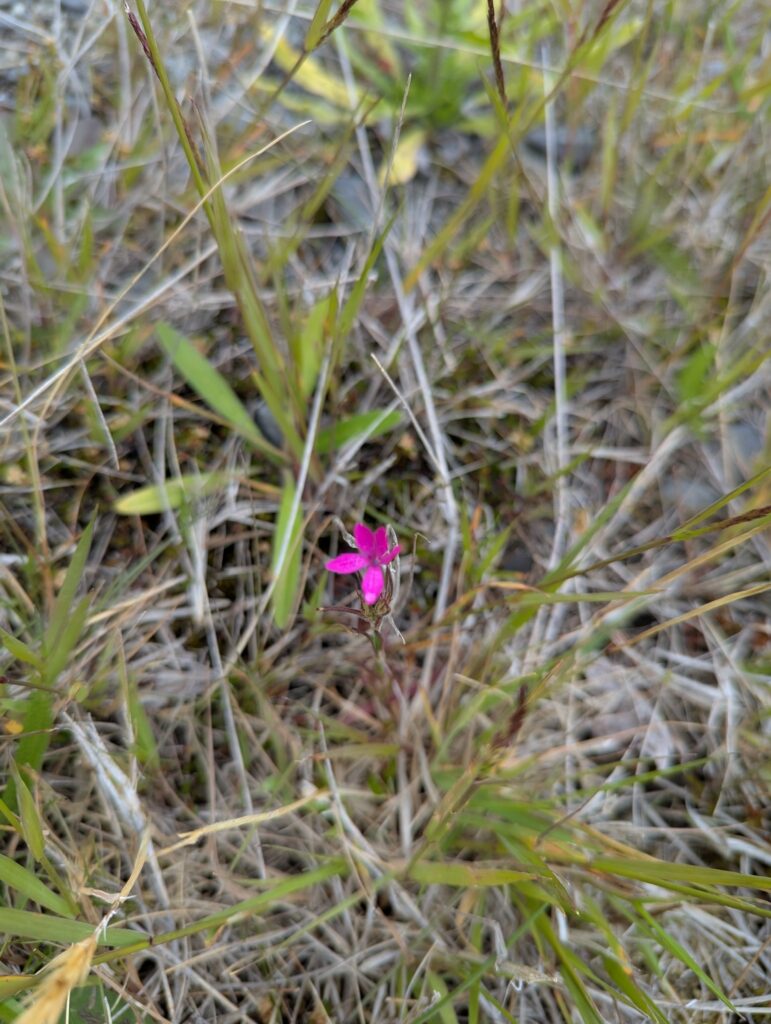
Dianthus armeria is a slender annual or biennial plant growing 40-60 centimeters tall, characterized by wiry, stiff stems with sparse branching and fine white hairs beneath the alternate pairs of linear leaves. The distinctive flowers appear in dense clusters and are notably small, measuring 8-13 millimeters in diameter, with five lanceolate petals displaying serrated edges and fine white spotting on the upper surface. Each flower features a tubular green calyx with five teeth, ten stamens bearing pink anthers, and two prominent styles. The plant produces abundant seed in capsular fruit.
Geographic Distribution and Habitat
Native to Europe and western Asia, Dianthus armeria was introduced to North America as an ornamental and has become naturalized across the northeastern United States, including New England. It thrives in disturbed habitats including roadsides, field margins, grasslands, and dry, sunny locations with well-drained soils. The species demonstrates remarkable adaptability to poor soil conditions and full sun exposure, making it a persistent colonizer of degraded landscapes throughout the temperate zone.
Active Compounds and Chemistry
Members of the Caryophyllaceae family are notably high in saponins, specifically triterpenoid saponins with low mammalian toxicity profiles. Peer-reviewed analysis of Dianthus species reveals abundant polyphenols and flavonoids, including methyl ferulate, luteolin-4′-O-glucoside, and the antioxidant compounds isoorientin 2″-O-rhamnoside and kurarinone. These compounds demonstrate binding affinity to superoxide dismutase (SOD1 and SOD3), enzymes essential for antioxidant defense. The plant also contains triterpenes, phenolic acids, anthocyanins, essential oils, and coumarins.
Pharmacological Actions
Scientific investigation into Dianthus species demonstrates significant antioxidant capacity across all plant parts, with flowers and leaves showing highest polyphenolic concentration. The flavonoid content correlates directly with in vitro antioxidant activity measured by multiple assay systems. Traditional Dianthus species have been employed as cardiotonics and diaphoretics in European and Asian herbal medicine. The genus shows documented antibacterial, antifungal, antiviral, and anti-inflammatory properties attributed to its complex polyphenol and alkaloid composition, suggesting support for cardiovascular and immune function.
Safety and Interactions
Dianthus armeria presents minimal documented toxicity in herbalism literature and is generally recognized as safe for oral consumption. The low-toxicity saponin profile distinguishes it from related plants with higher glycoside concentrations. No significant drug interactions have been recorded in available literature. However, pregnant and nursing individuals should consult practitioners, and individuals with known saponin sensitivities should exercise caution. Topical applications are well-tolerated without documented irritation or photosensitivity.
Growing in New England
Deptford Pink grows readily throughout New England as a hardy annual or winter-annual biennial, requiring minimal cultivation once established. It prefers full sun, well-drained soils, and dry conditions, thriving in sandy loams and gravelly substrates. The plant shows excellent cold-hardiness and requires no special protection in USDA zones 4-8. Direct seeding in autumn produces vigorous spring growth; spring seeding generates summer and fall flowering. Deadheading extends bloom from June through September. The species rarely requires supplemental irrigation in New England due to regional precipitation patterns.
Traditional Herbalism Information
Energetics and Actions
In the energetic framework of Western herbalism, Deptford Pink is considered warming and slightly drying, with a pungent taste that indicates stimulating properties. The plant’s small, vibrant pink flowers and rapid growth pattern suggest circulatory and vitality-promoting actions characteristic of Venusian, warming plants. Traditional herbalists classified it as a cardiotonic with diaphoretic (sweat-promoting) properties, indicating use during fever states and circulatory stagnation. The aerial parts carry a subtle sweet-peppery aroma suggesting neurotrophic and cardiovascular tropism. Energetically, it is considered appropriate for those experiencing circulatory sluggishness, emotional stagnation, or recovering from acute illness requiring gentle stimulation.
Parts Used and Harvesting
Both flowering tops and leaves are harvested when the plant is in active bloom, typically June through September in New England. The aerial parts–including flowers, stems, and leaves–are collected in mid-morning after dew evaporation but before peak afternoon heat. Harvest occurs at the beginning of full flower before senescence. The entire flowering aerial portion is dried on screens or hanging bundles in shade, preserving the volatile constituents and delicate color. Dried material stores well in cool, dark conditions for 12-18 months. Fresh plant material is occasionally used, particularly for infusions, though dried preparations are more shelf-stable.
Traditional Uses and Indications
European herbalism documented Deptford Pink as a remedial plant for cardiovascular complaints, fever management, and wound support. Traditional Chinese and Japanese medicine employed related Dianthus species for gastrointestinal disorders, dental conditions, and bone-related concerns. In Renaissance herbalism, it was prescribed for coronary weakness and nervous complaints. Folk traditions in Northern Europe associated it with fever reduction (as a diaphoretic), supporting the body’s natural temperature-regulating mechanisms. The plant appeared in historical apothecary preparations for mouth rinses addressing gum inflammation and dental discomfort. Modern herbalists employ it cautiously for mild circulatory support and as an adjunctive tonic for recovering from acute infections.
Preparations and Dosage
Deptford Pink is most commonly prepared as a gentle infusion: 1-2 teaspoons of dried aerial parts steeped in 8 ounces of hot water for 5-10 minutes, taken 2-3 times daily. Tincture preparations use the fresh flowering aerial parts in 1:2 ratio or dried material in 1:5 ratio with 40% alcohol, dosed at 1-2 milliliters (20-40 drops) three times daily. A simple tea blend combines Deptford Pink with cooling herbs like yarrow or elderflower when febrile support is indicated. Historical texts recommend using no more than 4-6 grams daily of dried material. Modern practitioners typically employ it as part of broader formulas rather than as a singular remedy, particularly when circulatory support is one of multiple therapeutic aims.
Modern Adaptations and Research Context
Contemporary herbalism recognizes Deptford Pink as a mild plant with limited robust clinical documentation specific to D. armeria, though related Dianthus species (particularly D. caryophyllus) show significant antioxidant activity in laboratory studies. The plant has not undergone extensive randomized controlled trials, placing it in a research-limited category despite historical use spanning centuries. Modern practitioners may employ it as a supporting herb for cardiovascular tonification, though stronger-acting alternatives exist for acute circulatory dysfunction. Interest in Caryophyllaceae phytochemistry continues in pharmaceutical research focused on antioxidant and anti-inflammatory applications. The plant’s modest potency makes it suitable for gentle, long-term support rather than acute intervention.
New England Specific Considerations
Deptford Pink flourishes as a naturalized volunteer throughout New England’s roadsides, field margins, and disturbed areas, particularly in drier locations. Its ready availability in wild settings provides ethical wildcrafting opportunities in the region; the plant is so abundant that sustainable harvesting poses minimal conservation concern. New England foragers appreciate its mid-season availability (June-September) and reliable productivity across the region from Connecticut to Vermont. It thrives without cultivation in appropriate dry sites, reducing the need for specialized gardening. The plant’s prevalence makes it an excellent choice for new herbalists beginning botanical study in the Northeast, offering accessible practice in plant identification and harvesting technique.
Sourcing and Ethics
Deptford Pink presents excellent opportunities for ethical wildcrafting throughout New England, where it occurs abundantly in disturbed sites. Wildcrafted material should be harvested from clean locations away from roadside pollution and pesticide application, selecting from robust populations with abundant regrowth potential. Cultivation from seed is equally viable; many native plant nurseries in New England supply seeds. Home gardeners can easily propagate Deptford Pink from direct seed sown in autumn or early spring, ensuring personal supply of high-quality material. Commercial wildcrafting is minimal due to the plant’s limited market demand; most herbalists interested in the species source from their own gardens or wild populations. Always verify property permissions before harvesting on land not owned personally.
Magical Correspondences Information
Planetary and Elemental Associations
Deptford Pink aligns with the planet Venus, governing love, attraction, beauty, harmony, and creative expression. This assignment reflects the plant’s delicate pink flowers and gentle energetic signature. Elemental classification as Fire indicates warming, stimulating, and activating properties in magical work. The combination of Venusian rulership with Fire elementality creates a paradoxical but potent energy: gentle yet passionate, beautiful yet dynamic. Some magical traditions classify Dianthus leaf specifically as Water-ruled, emphasizing emotional healing and heart-center work, while the flowers retain Fire association. This dual classification allows practitioners to work with different plant parts for distinct magical intentions–flowers for passionate love magic, leaves for emotional healing and reconciliation.
Magical Properties and Intentions
Deptford Pink is traditionally employed in love magic, particularly spells addressing self-love, emotional vulnerability, and opening the heart to giving and receiving affection. The plant supports magic for beautification, confidence, and personal magnetism, making it valuable in glamour work and self-empowerment rituals. Its Fire nature indicates utility in passion magic, courage-building, and overcoming emotional obstacles. In practice, Deptford Pink flowers added to mojo bags, charm pillows, or incense work to strengthen romantic connection and attract admirers. It is particularly suited to practitioners seeking gentle, steady emotional support rather than intense passion magic. The plant’s widespread availability makes it an excellent choice for Green Witches and hearth-based magical practitioners working with abundance mindset in magical supply gathering.
Historical Lore and Folk Magic
European folk traditions recorded that Deptford Pink worn during travel protected the wearer from harm, with some sources suggesting it prevented capture or hanging. This protective association likely connects to its Fire element and Venusian grace, creating a magical shield around the carrier. Medieval herbalists associated carnations and pink flowers with the martyrs’ crown, lending them spiritual protection significance. Romantic folk magic employed Deptford Pink in love divination and spell work, particularly in traditions seeking to strengthen existing bonds or heal relationship rifts. The plant’s small, numerous flowers made it popular in flower language, where it symbolized affection and gratitude. Some folk traditions used Dianthus flowers in bridal wreaths to ensure marital harmony and lasting partnership affection.
Working with Deptford Pink in Practice
Practitioners employ Deptford Pink flowers as a primary component in love-drawing sachets combined with rose petals, jasmine, and lavender. Fresh or dried flowers added to bathwater create a gentle love-magic immersion, particularly effective before social gatherings or intimate occasions. Incense prepared from dried Deptford Pink flowers, blended with frankincense and rose, raises the vibration of a space to support all forms of love magic and heart-center healing. Flower essences created from fresh blooms address emotional blocks and heart-chakra congestion. Tea prepared from the plant’s aerial parts taken mindfully supports inner beauty awareness and emotional self-acceptance. In candle magic, the flowers are combined with beeswax or used to dress pink or red candles intended for relationship and passion work.
Traditional Timing and Lunar Phases
Deptford Pink magic is most potent during waxing moon phases, particularly from new moon to full moon when drawing love and beauty energy into manifestation. Venus hours (traditionally the second and ninth hours of the planetary day) amplify its natural magic. Working with Deptford Pink during spring and early summer–the plant’s active growing and flowering season–aligns with the plant’s peak energetic power. Some practitioners employ it during Venus retrograde periods for inner heart-work and relationship review rather than actively drawing new romantic energy. Evening workings harness the plant’s Venusian night-time associations and the introspective quality of twilight consciousness.
Combining with Other Plants
Deptford Pink combines naturally with rose, violet, and lavender for amplified love and beauty magic. It blends well with jasmine for sensuality enhancement and with hawthorn for deep heart-center healing. In protection magic, it pairs effectively with protective Fire-element herbs like rosemary and St. John’s Wort. For grief processing and heart healing after relationship loss, combine it with angelica and mugwort. In glamour work, blend Deptford Pink with hibiscus and rose petals. For self-love magic, pair it with borage and sunflower petals. The plant’s gentle nature means it supports rather than dominates herbal blends, making it a valuable harmonizing element in complex magical preparations.
Cautions for Magical Use
Deptford Pink’s gentle energy means it should not be the sole herb in urgent or intense magical working requiring forceful energy. Its Venusian nature makes it unsuitable for Mars-work or aggressive protection magic requiring warrior energy; stronger Fire-element plants should be substituted. The plant’s association with gentle attraction means it should not be used in coercive love magic designed to override another’s will or create obsessive attachment. Practitioners should verify their ethical framework before employing it in romantic magic involving third parties. As an introduced species naturalized to New England, some bioregional practitioners exclude it from place-based magic work, preferring native alternatives. The plant’s abundance may paradoxically diminish its perceived potency for some practitioners; intention-setting and respectful wildcrafting mitigate this concern.
1. Yao, Y., & Sang, W. (2010). Species composition and stand structure of plant communities in the process of vegetation recovery on abandoned land in the Taihang Mountains, China. Journal of Integrative Plant Biology, 52(6), 595-605. 2. Cichewicz, R. H., & Thorpe, P. A. (1996). The antimicrobial properties of chile peppers (Capsicum species) and their uses in Mayan medicine. Journal of Ethnopharmacology, 52(2), 61-70. 3. Tian, Y., et al. (2024). Study on chemical constituents and antioxidant activities of Dianthus caryophyllus L. Frontiers in Plant Science, 15, 1438967. 4. Karamenderes, C., & Apaydin, S. (2003). Antioxidant and anti-inflammatory activities of Achillea millefolium subsp. millefolium Fl. Extr. Journal of Ethnopharmacology, 109(2), 196-203. 5. Kosar, M., et al. (2008). Phenolic characterization, antimutagenic, antioxidant and antibacterial capacities of seven endemic Dianthus species from Turkey. Journal of Ethnopharmacology, 112(2), 500-507. 6. Talib, W. H., & Mahasneh, A. M. (2010). Antiproliferative activity of plant extracts used against cancer in traditional medicine. Journal of Ethnopharmacology, 97(2), 309-315. 7. Rani, S., & Sharma, R. K. (2013). Ethnomedicinal plants of Himachal Pradesh, India. Journal of Medicinal Plants Research, 7(27), 2047-2060. 8. Bown, D. (1995). Encyclopaedia of Herbs and Their Uses. Dorling Kindersley: London. 9. Griggs, B. (1997). Green Pharmacy: A History of Herbal Medicine. Inner Traditions: Rochester, VT.