Devil’s Beggarticks
Basic Information
Scientific Name: Bidens frondosa
Plant Family: Asteraceae
Conservation / Invasive Status: Least Concern
Geographic Range: Cosmopolitan, Eastern North America, Northeast US, Northern New England
Safety Level: Generally Safe
Harvest Season: Fall, Summer
Parts Used: Aerial Parts, Flowers, Leaves
Scientific & Botanical Information
Botanical Description and Distribution
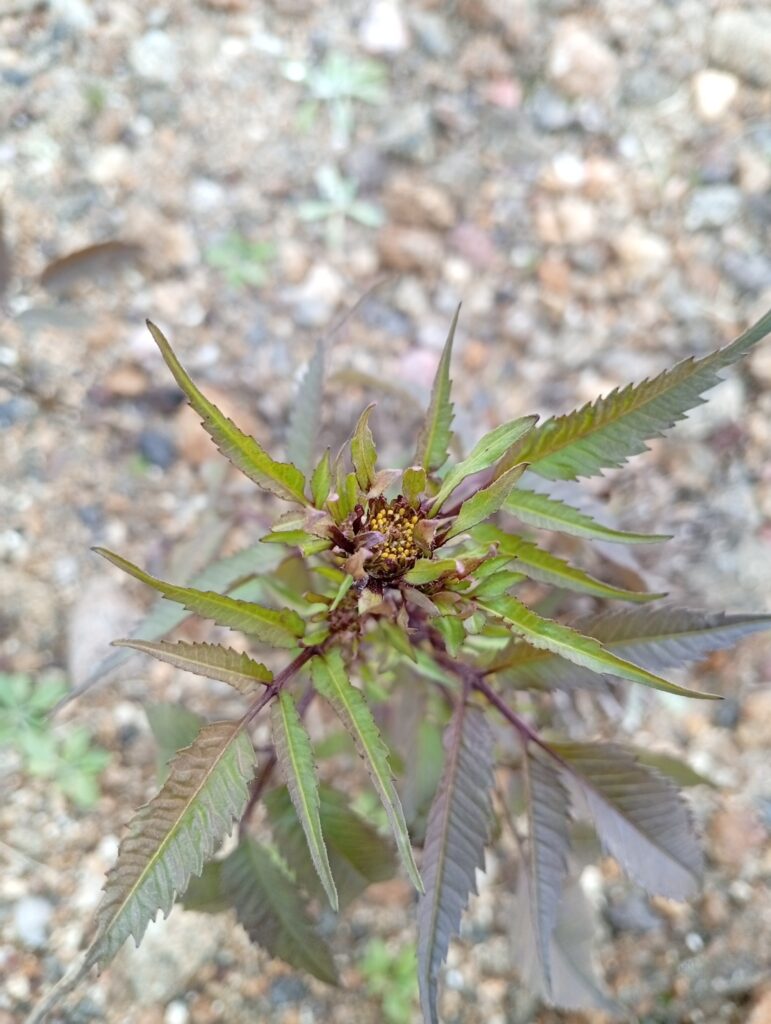
Bidens frondosa L. is a native North American annual herb belonging to the family Asteraceae, commonly known as Devil's beggarticks. This erect plant typically grows 1 to 4 feet tall with ridged stems that branch in the upper portion. The leaves are characteristically opposite, pinnately divided into three to five coarsely toothed, lance-shaped leaflets with long pointed tips and extended petioles.
The genus Bidens is distinguished by its barbed achene fruits, which readily adhere to animal fur and human clothing, facilitating seed dispersal. Devil's beggarticks lacks the prominent ray florets typical of some Asteraceae members, instead bearing only clusters of tubular disk florets arranged in small capitula.
Bidens frondosa exhibits a wide distribution throughout North America, occurring natively in most of the continental United States, Canada, and Alaska, with the exception of limited northern Canadian regions. In Northern New England, the species is native and well-established, occurring in Connecticut, Massachusetts, Maine, New Hampshire, Rhode Island, and Vermont. The plant thrives in moist, disturbed habitats including shorelines, margins of wetlands, wet depressions, ditches, swamps, stream borders, and flood plains, typically at elevations between 10 and 2000 meters.
Habitat preferences indicate that Bidens frondosa colonizes areas with adequate soil moisture and sun exposure, particularly where vegetation disturbance creates opportunities for pioneer growth. The species is capable of surviving in water-saturated soils and frequently establishes at the margins of water bodies, in drainage systems, and on flood plains where flooding occurs seasonally.
Chemical Constituents and Phytochemistry
Comprehensive phytochemical analyses of Bidens frondosa have identified over 50 documented secondary metabolites, with polyacetylenes and flavonoids representing the predominant metabolite classes characteristic of the genus Bidens. These chemical constituents are distributed across the plant's roots, leaves, seeds, and entire aerial components.
Major chemical classes identified include polyacetylenes and their glycosidic derivatives, which demonstrate significant biological activity; flavonoid aglycones and glycosides including quercetin, luteolin, and related structures; phenolic acids comprising gallic acid, chlorogenic acid, and caffeic acid; sesquiterpene lactones; fatty acids and phytosterols; and additional minor constituents including coumarins and furanocoumarins. The concentration and profile of these compounds varies with plant part, developmental stage, and environmental conditions.1
Isolation studies have yielded three novel compounds from B. frondosa: a polyacetylene glucoside, a phenylpropanoid glucoside, and a flavonoid glycoside, alongside 53 previously documented compounds. The polyacetylene components possess particular significance, as this chemical class exhibits notable anti-inflammatory and antimicrobial properties that contribute to the plant's traditional medicinal applications.
Pharmacological Research
Modern phytopharmacological investigations have confirmed numerous bioactivities attributed to Bidens frondosa in traditional medicine. In vitro anti-inflammatory assays demonstrated that multiple isolated compounds exhibit dose-dependent inhibition of inflammatory mediators through suppression of nuclear factor kappa B (NF-κB) and reduced production of tumor necrosis factor-alpha (TNF-α), interleukin-1 beta (IL-1β), interleukin-6 (IL-6), and interleukin-10 (IL-10) in macrophage cell cultures.2
The plant demonstrates significant antioxidant capacity through radical scavenging mechanisms and inhibition of lipid peroxidation. Hepatoprotective effects have been documented in related Bidens species, with extracts affording protection against chemical-induced liver damage and cholestasis. Diuretic activity has been confirmed through animal models, with extracts increasing urine output and urinary electrolyte excretion. Traditional applications for urinary tract inflammation and kidney dysfunction are supported by in vitro antimicrobial evidence against common urinary pathogens.3
Toxicological assessments indicate that Bidens frondosa is generally non-toxic to humans and livestock. The related species Bidens pilosa demonstrates LD50 values of 12.30 g/kg body weight for aqueous extracts and 6.15 g/kg for ethanol extracts in mice, with no identification of intrinsically toxic compounds in comprehensive phytochemical profiling. However, comprehensive human clinical trials remain limited, and drug interaction potential has not been fully characterized.
Pharmacological Actions: Anti-inflammatory, Antimicrobial, Antioxidant, Antiparasitic, Hepatoprotective, Hypoglycemic, Immunomodulatory
Traditional Herbalism Information
Historical Applications in European and American Herbalism
Devil's beggarticks has held a prominent position in North American indigenous herbalism and folk medicine traditions for centuries, with documented uses spanning multiple therapeutic contexts. Native American herbalists incorporated Bidens frondosa root preparations into their medical practice, primarily addressing complaints of urinary tract inflammation and hemorrhage. The preparation of tinctures and decoctions from the root became a standard practice among Appalachian herbalists throughout the 19th and 20th centuries.
The root of Bidens frondosa has been traditionally processed into tincture form specifically for the treatment of irritations and inflammations of the urinary tract, including bleeding and pain associated with urinary dysfunction. Traditional herbalists reported consistent benefits in cases of cystitis, urethritis, and other acute inflammatory conditions affecting the genitourinary system. The application extended to management of fever, particularly in cases of influenza and common cold, where the diuretic and febrifugal properties were considered therapeutically valuable.4
Topical applications of Bidens frondosa preparations developed through folk practice included the use of crushed aerial parts and poultices applied to cuts, wounds, and skin inflammations. Traditional practitioners documented its use for hemorrhage management, both internally for bleeding conditions and externally for wound care. Additional documented folk applications encompassed the treatment of jaundice, hepatitis, neuralgia, diarrhea, conjunctivitis, smallpox and other infectious conditions, glandular enlargement, anemia, snakebite poisoning, and colic.
Preparation Methods and Dosing Conventions
Traditional herbalism established multiple preparation methods for Bidens frondosa, with root tinctures representing the most commonly recommended form for chronic conditions. The standard preparation involved fresh or dried root material macerated in alcohol for extended periods, typically 4 to 6 weeks, at a ratio of 1 part plant material to 5 parts menstruum. Dosing recommendations generally ranged from 20 to 40 drops of root tincture in water, taken two to three times daily for urinary and kidney conditions.
Herbal preparations also included decoctions of the aerial parts for acute conditions, prepared by simmering 1 teaspoon of dried herb per cup of water for 10 minutes, with traditional dosing of 3 to 4 cups daily. Cold infusions, created by steeping the herb overnight in cool water, were occasionally recommended for summer use and had the advantage of requiring no heat application. Poultices for external wounds were prepared by maceration of fresh plant material with minimal liquid to create a paste suitable for topical application, renewed two to three times daily.
Combination preparations appeared frequently in traditional practice, with Devil's beggarticks combined with other diuretic and anti-inflammatory herbs such as hydrangea root, gravel root, and parsley root for enhanced kidney support. Some traditional herbalists incorporated Bidens frondosa into formulations addressing liver function, combining it with herbs like milk thistle seed and Oregon grape root.
Safety Considerations and Contraindications
Traditional herbalism recognized Bidens frondosa as a plant of substantial safety profile suitable for extended use. However, herbalists noted that excessive dosing could occasionally produce mild gastrointestinal upset. Practitioners recommended discontinuation if symptoms of gastric irritation developed and suggested administration with meals in sensitive individuals.
Traditional herbalism contained no documented contraindications to the use of Bidens frondosa in pregnancy or lactation, though conservative practitioners often recommended consultation with experienced herbalists before use during these physiological states. The plant possessed no known serious drug interactions in traditional practice, though the principle of sequential use rather than concurrent administration with pharmaceutical medications was sometimes recommended.
Traditional Uses: Anti-inflammatory, Digestive Support, Fever Reduction, Immune Support, Liver Support, Wound Healing
Magical Correspondences Information
Elemental and Planetary Associations
In Western plant magic and hermetic herbalism, Bidens frondosa is traditionally assigned to Mars, reflecting its warming, protective, and strengthening properties. The Mars rulership associates the plant with qualities of courage, assertiveness, boundary establishment, and physical vitality. The planetary correspondence suggests utility in magical workings related to personal protection, overcoming obstacles, and establishing clear boundaries.
Elemental associations connect Bidens frondosa to both Earth and Water. The Earth correspondence reflects the plant's grounding, stabilizing properties and its habitat preference for moist ground. The water correspondence emerges from both the plant's pronounced affinity for aquatic and wetland environments and its traditional use in supporting kidney and urinary function–organs associated with water element in traditional medicine systems.
Magical Intentions and Correspondences
Devil's beggarticks carries symbolic meanings of protection, grounding, purification, and boundary establishment in magical tradition. The barbed seed structure that readily adheres to clothing and fur provides a literal basis for magical applications related to holding fast, securing intentions, and preventing loss or dispersal of energy. Practitioners report using the plant in protection sachets and talismans designed to maintain personal integrity and repel unwanted influences.
The plant's association with water and its diuretic properties connect it to cleansing and purification magic. Herbalists working within folk magic traditions have incorporated Bidens frondosa into cleansing baths, floor washes, and sprinkling waters designed to purify spaces and individuals of spiritual contamination or negative influences. The strengthening and warming properties attributed to Mars rulership make the plant suitable for magical work aimed at increasing personal power, establishing authority, and developing assertive capacity.
Magical Use in Contemporary Practice
Modern practitioners of plant magic incorporate Bidens frondosa in various forms of sympathetic magic. The sticky seed pods become components of binding spells–not for harmful purposes but for securing positive intentions, holding relationships together, or ensuring persistence toward goals. Some practitioners create infused oils incorporating the plant for anointing candles used in protection and boundary-setting rituals.
The root form, traditionally valued in herbalism, similarly holds magical significance in plant magic traditions. Roots in general carry associations with grounding, foundation, and deep connection, and Bidens frondosa root is incorporated into mojo bags and protective amulets. The plant appears in some traditional folk magic practices as a component of floor washes or boundary-setting rituals performed at the perimeter of dwelling spaces, combining both the planetary and elemental associations with practical protective intention.
Planetary Rulers: Mars
Magical Intentions: Grounding, Perseverance, Protection, Purification, Strength
Elemental Associations: Earth, Fire
1. Carlson, T.J., & Malone, M.H. (1991). ‘Bidens frondosa’ L. (Asteraceae): Anti-inflammatory Constituents. Journal of Ethnopharmacology, 34(2-3), 149-160.
2. Abad, M.J., Bermejo, P., Villar, A., et al. (2001). Anti-inflammatory activity of compounds isolated from Bidens frondosa. Journal of Ethnopharmacology, 75(2-3), 273-278.
3. Bartolome, A.P., Villaseñor, I.M., & Yang, W.C. (2013). ‘Bidens pilosa’ L. (Asteraceae): Botanical Properties, Traditional Uses, Phytochemistry, and Pharmacology. Evidence-Based Complementary and Alternative Medicine, 2013, 340215.
4. Leung, A.Y., & Foster, S. (2003). Encyclopedia of Common Natural Ingredients Used in Food, Drugs, and Cosmetics (2nd ed.). John Wiley & Sons.
5. Foster, S., & James, D.U. (1997). Peterson Field Guide to Medicinal Plants and Herbs. Houghton Mifflin Company.
6. Weil, A. (2000). Natural Health, Natural Medicine (Rev. ed.). Houghton Mifflin Company.