Elecampane
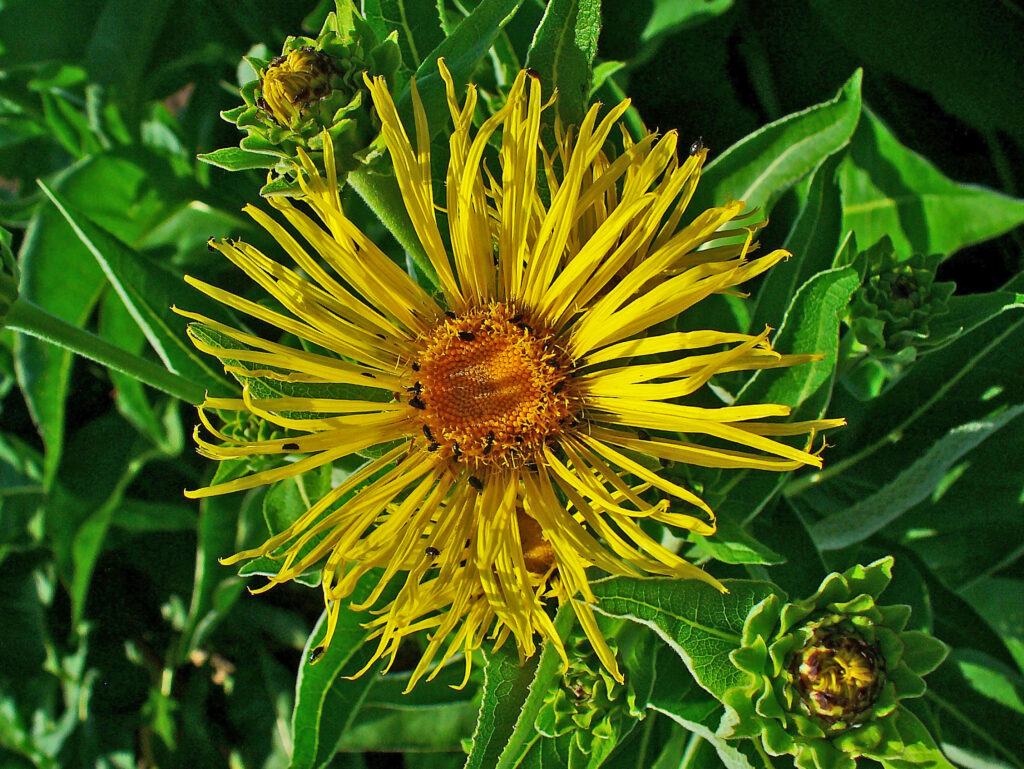
Basic Information
Scientific Name: Inula helenium
Plant Family: Asteraceae
Conservation / Invasive Status: Not Listed - Naturalized
Geographic Range: Northeast US
Safety Level: Use with Caution
Harvest Season: Fall, Winter
Parts Used: Rhizome, Roots
Scientific & Botanical Information
Botanical & Scientific
Active Compounds
- Alantolactone & Isoalantolactone: Sesquiterpene lactones constituting approximately 65.8% and 25.5% of essential oil respectively. Both demonstrate potent antimicrobial, antifungal, antioxidant, anti-inflammatory, and preliminary anti-cancer properties. Alantolactone shows activity against Staphylococcus aureus (including MRSA strains) and inhibits adipogenesis through regulation of AMPKα and Nur77 pathways, offering therapeutic potential for obesity and metabolic dysfunction.1,2
- Inulin: A fructose polysaccharide comprising >40% of root content with prebiotic properties supporting healthy intestinal microflora and offering glycemic management benefits. Particularly useful for digestive health and metabolic support.2,3
- Thymol Derivatives: Volatile monoterpene phenols contributing antimicrobial, antispasmodic, and respiratory tract anesthetic properties. Address both infection and discomfort in respiratory conditions.1
- Phenolic Acids: Including chlorogenic acid and caffeic acid contributing significant antioxidant capacity, anti-inflammatory effects, and support for detoxification pathways.1
- Flavonoids: Including quercetin, kaempferol, catechin gallate and epicatechin contributing to overall antioxidant, anti-inflammatory, and immunomodulatory profile supporting respiratory health and healing.3
What Science Shows
- Antimicrobial & Antifungal Activity: Elecampane demonstrates clear activity against Staphylococcus aureus and multiple bacterial species with particularly strong bactericidal effects. Alantolactone and isoalantolactone represent primary active antimicrobial constituents, with sesquiterpene lactones identified as structural components essential for activity. Antifungal properties address fungal respiratory and dermal infections.1,4
- Respiratory Support (Limited Clinical Evidence): While elecampane has a centuries-long traditional use history for respiratory conditions, modern clinical evidence remains limited. One pediatric study examined an elecampane-containing cough remedy in children with acute cough over 8 days; it was safe and lowered cough severity compared with placebo, but the multi-ingredient formulation prevents attribution of effects specifically to elecampane.4 Traditional use emphasized elecampane as a stimulating expectorant facilitating deeper coughing when other expectorants prove insufficient, while thymol derivatives simultaneously soothe respiratory tract irritation.4
- Anti-inflammatory & Antioxidant: Polyphenolic and sesquiterpene constituents demonstrate significant anti-inflammatory capacity relevant to chronic respiratory inflammation and oxidative stress markers. Laboratory studies show suppression of neutrophil-binding via downregulation of Beta 2 integrin and suppression of pro-inflammatory substances, with effects comparable with budesonide (steroidal inhaler used in asthma and COPD).4
- Anti-cancer & Anti-adipogenic Research: Alantolactone shows selective apoptosis induction in certain cancer cell lines in preliminary studies and co-regulates AMPKα and Nur77 for adipogenesis inhibition. Clinical applications remain investigational with no human trials conducted.2
- Limited Human Clinical Trials: Unlike some medicinal herbs with substantial clinical trial support, elecampane has very limited clinical evidence. The majority of pharmacological findings derive from in vitro and animal studies. Modern systematic reviews note that while traditionally used for asthma, bronchitis, and respiratory infections, there is no good scientific evidence to support these uses in human populations at this time.4
Growing in New England
- Hardiness: USDA Zones 3-7, reliably hardy throughout New England including northern regions. Robust perennial with excellent winter survival.
- Soil: Tolerates varied soil types with preference for well-drained loam. Avoids heavy clay and waterlogged conditions; adapts to slightly acidic through neutral pH.
- Sun: Full sun to partial shade; prefers full sun for optimal flowering and root development. Minimum 4-6 hours direct sunlight recommended.
- Water: Moist but well-drained conditions preferred; more tolerant of moisture than many herbs but avoids prolonged waterlogging. Established plants show moderate drought tolerance.
- Propagation: Seed (requires chilling period) or root division. Start indoors 4-6 weeks before last frost or direct sow in fall. Require chilling period to flower; takes 1-2 years to flower from seed.
Safety & Interactions
Elecampane is generally safe for most individuals at recommended doses. However, important precautions apply: individuals sensitive to plants in Asteraceae family (ragweed, chrysanthemum, daisy, artichoke) should avoid or use cautiously due to potential cross-reactivity. Not recommended during pregnancy or lactation due to historical emmenagogue classification, though safety evidence remains limited (traditional use was extensive). Individuals with allergic asthma or hypersensitivity to plant material should monitor for respiratory reactions, though this is rare. Contact dermatitis from fresh plant material affects sensitive individuals; wear gloves during handling. Generally well-tolerated at therapeutic doses with minimal adverse effects reported in clinical literature. Consult healthcare provider before use if pregnant, nursing, or if sensitive to Asteraceae family plants.4,5
New England Specific
Naturalized Species
Inula helenium has escaped cultivation in New England gardens and naturalized in some locations throughout the region, particularly in moist areas and disturbed sites. The species shows strong preference for New England’s cool climate with good summer rainfall, producing vigorous plants and abundant flowering. Found occasionally in wild settings though less invasive than other non-native plants. New England gardeners typically cultivate in controlled garden settings to prevent unwanted naturalization into wild areas.
Seasonal Timing
March-April: Spring growth emergence from dormant roots; foliage development begins. Early spring seed stratification planting appropriate. May-June: Rapid vegetative growth; tall stems develop before flowering. Mid-June flowering begins with sunflower-like 2-3 inch yellow blossoms continuing through summer. July-August: Peak flowering; continued root development and nutrient accumulation. September-October: Optimal root harvest window as plants enter dormancy and medicinal compound concentration peaks in roots. Cool fall temperatures concentrate alantolactone and other active constituents. November-February: Full dormancy with excellent winter survival. Early spring (February-March) represents secondary harvest opportunity before growth resumes.
Growing Considerations
New England’s cool climate, moderate rainfall, and acidic soils suit Elecampane cultivation excellently. The herb produces particularly robust plants in the region with abundant flowering. Prioritize well-drained soils to prevent root rot during spring snowmelt and wet seasons; raised beds or soil amendment significantly improve cultivation success. Space plants 2-3 feet apart to accommodate mature width of 2-3 feet. Prune back dead stems in early spring to remove winter damage and encourage new growth. Deadhead spent flowers if naturalization prevention is desired, though self-seeding is generally manageable. The substantial plant size (4-6 feet tall) makes it suitable for back-garden placement or integration into perennial borders. Roots require 2-3 years development before meaningful harvest; patient cultivation yields excellent medicinal material adapted to New England’s growing conditions.
Sourcing & Ethics
Cultivation is preferred over wild harvest to avoid impact on naturalized populations and to ensure consistent medicinal quality. Specialty herb nurseries throughout New England provide seeds and established plants. Commercial dried root products should specify origin and harvest date; current-season or recent-harvest material is preferred for maximum alantolactone and isoalantolactone concentration. Products standardized to specific sesquiterpene lactone content indicate pharmaceutical-grade quality. Dried roots maintain potency for 1-2 years with proper cool/dark storage; discard material older than 2-3 years. Fresh root tinctures preserve volatile compounds superior to dried preparations, making them preferred for maximum efficacy. Growing Elecampane in home gardens ensures consistent access to freshly harvested material while supporting responsible cultivation practices.
Pharmacological Actions: Anthelmintic, Anti-inflammatory, Antifungal, Antimicrobial, Antiseptic, Antiviral, Carminative, Expectorant, Immunomodulatory
Traditional Herbalism Information
Traditional Herbalism
Parts Used & Applications
Roots and Rhizomes (Primary Medicinal Part):
- Chronic cough and deep respiratory conditions
- Bronchitis with difficult expectoration
- Asthma and reactive airway conditions
- Tuberculosis and serious lung infections (historical use)
- Mucous clearance when deeper coughing is needed
- Chest pain or discomfort from persistent coughing
- Throat tickle and dry cough with irritation
- Respiratory infection recovery and convalescence support
- Respiratory distress with inadequate cough reflex
- Digestive support and appetite stimulation
- Skin conditions and infection (topical applications)
Preparation Methods
Decoction (Root)
The primary and most traditional preparation. Simmer 1 tablespoon dried chopped root in 2 cups water for 15-20 minutes in well-covered pot to minimize volatile loss. Strain while warm. For respiratory conditions, drink 1/4 to 1 cup three to four times daily. The decoction develops a bitter, somewhat camphoraceous flavor; some herbalists add honey and/or ginger for palatability. Traditional herbalists emphasized proper heat application and adequate simmering time to extract both water-soluble and volatile constituents.5
Tincture (Fresh Root Preferred)
Fresh root 1:2 ratio or dried root 1:5 ratio with 60% alcohol, macerated 4-6 weeks in cool darkness. Dose: 10-30 drops four times daily for chronic respiratory support. Fresh root tinctures preserve volatile sesquiterpene lactones superior to dried preparations. Many contemporary herbalists work exclusively with fresh root tinctures for maximum efficacy.5
Syrup (Traditional Lung Tonic)
Prepare strong decoction as above, strain, then reduce by half through gentle simmering. Add equal volume of honey, stirring well to combine. Store in glass bottle. Dose: 1-3 teaspoons four times daily for cough and respiratory support. Syrup format particularly appeals to children and individuals unable to tolerate bitter decoction taste. Honey’s demulcent properties complement Elecampane’s expectorant action.5
Traditional Applications
Chronic Lung Complaints: Elecampane represents one of the supreme lung tonics in Western herbalism, earning the Latin prescription “Enula campana reddit praecordia sana” (Elecampane will sustain the spirit). Traditional herbalists recognized it as essential for chronic respiratory conditions when infection was present. The herb’s dual action—stimulating expectorant action when deep coughing is needed, combined with anesthetic thymol derivatives soothing throat irritation and pain—made it uniquely suited to stubborn, lingering respiratory conditions. Decoctions were consumed regularly (often 2-4 times daily) over extended periods (weeks to months) for chronic bronchitis, chronic asthma, and recovery from serious respiratory infections. The herb’s capability to mobilize deep mucous that other expectorants couldn’t access made it particularly valued for conditions with thick, adherent secretions.4,5
Respiratory Infection & Convalescence: Traditional herbalists employed Elecampane specifically for respiratory infections with high infection risk or prolonged recovery. For tuberculosis (historically one of the most serious respiratory conditions), herbalists made regular root decoctions as part of comprehensive treatment protocols. The herb’s antimicrobial properties addressed infection while its expectorant action supported clearance of infected secretions. Modern herbalists continue using Elecampane during recovery from serious respiratory infections (pneumonia, severe bronchitis) to support clearance of residual mucous and restoration of healthy respiratory function.4,5
Cough & Throat Discomfort: For persistent, painful coughing damaging throat tissues, traditional herbalists specifically recommended Elecampane’s combined anesthetic and expectorant properties. The herb’s thymol derivatives provide pain relief and reduce throat tickle that instigates continued coughing, while simultaneously supporting productive expectoration rather than dry, irritating cough. Syrups (honey-based preparations) particularly suited this application, offering soothing demulcent honey paired with Elecampane’s medicinal action.4,5
Asthma & Reactive Airways: Though herbalists recognized Elecampane as beneficial for asthmatic conditions, they emphasized its role as part of comprehensive, long-term treatment rather than acute intervention. Regular consumption of mild infusions or frequent small doses of tincture supported respiratory system stabilization and reduced asthmatic episodes over weeks to months. The herb’s anti-inflammatory properties address underlying airway reactivity while expectorant action supports proper bronchial clearance.4,5
Modern Adaptations
Contemporary herbalists continue Elecampane’s traditional applications while acknowledging the current lack of robust clinical trial evidence. Modern respiratory herbal formulations often combine Elecampane with complementary herbs: Grindelia for additional expectorant action and bronchiolar support, Mullein leaf for gentle respiratory soothing. Contemporary practice recognizes Elecampane’s particular value for infections involving respiratory compromise and thick secretion production. Modern herbalists emphasize the importance of fresh root preparations (tinctures) for maximum potency compared to dried material or non-standardized products. Some contemporary practitioners use Elecampane specifically for post-viral respiratory recovery when lingering cough and mucous clearance deficits persist weeks after acute infection resolution. However, practitioners acknowledge that more clinical research is needed to validate traditional uses in human populations.
New England Specific
New England’s herbalism traditions, particularly 19th and early 20th century domestic herbalism and folk medicine, extensively documented Elecampane use for winter cough and chronic respiratory conditions. The herb thrived in New England gardens, becoming reliable local remedy for winter respiratory challenges. Colonial American herbalists documented Elecampane cultivation and use for tuberculosis and chronic consumption (as TB was historically called), representing one of the most valued respiratory tonics in pre-pharmaceutical herbalism. Contemporary New England herbalists continue cultivating Elecampane as valued respiratory support, particularly for local harvesting and preparation of fresh root tinctures.
Sourcing & Ethics
Cultivated Elecampane root is strongly preferred to wild harvest due to reliable availability, quality control, and absence of wild population pressure. Specialty herb nurseries throughout New England provide seeds and established plants for garden cultivation. Commercial dried root should be sourced from reputable herbalists specifying harvest date and origin; current-season or recent material (under 1 year old) is preferred for maximum sesquiterpene lactone concentration. Fresh root tinctures prepared from recently harvested New England-grown material represent superior medicinal preparation. Growing Elecampane at home allows consistent fresh material access while supporting responsible cultivation practices and enabling immediate processing for optimal potency.
Harvest Notes
Roots and Rhizomes:
When to Harvest: Fall (September-October) represents optimal harvest window as plants enter dormancy after flowers finish and medicinal compound concentration peaks in roots. Early spring (February-March) before growth resumes offers secondary harvest opportunity. Roots must achieve 2-3 years maturity before meaningful harvest; younger plants produce insufficient root material and early harvest compromises future productivity.
How to Harvest: Carefully dig entire root system using pitchfork or spading fork, attempting recovery of maximum root and rhizome material. In established plantings, selective harvesting of portion of root system allows regrowth from remaining root fragments. Handle roots gently to minimize damage which compromises quality and future productivity.
Processing & Storage: Fresh roots process immediately into alcohol tinctures to preserve volatile sesquiterpene lactones. For drying, clean roots gently (light rinsing acceptable, extensive washing removes beneficial minerals), chop into 1-2 inch pieces, and dry in warm, well-ventilated location or low-temperature dehydrator (under 110F preserves volatile compounds). Complete drying requires 2-3 weeks depending on root size and conditions. Store completely dried roots in airtight glass containers in cool/dark location. Dried Elecampane maintains potency 18-24 months with maximum efficacy within first 12 months; material older than 2-3 years should be discarded. Tinctures from fresh root remain viable and potent for extended periods. Fresh root tinctures represent optimal preparation retaining all volatile and water-soluble constituents in stable alcohol medium.
Traditional Uses: Anthelmintic, Bronchitis Support, Carminative, Cough Support, Digestive Support, Expectorant, Immune Support, Respiratory Support
Magical Correspondences Information
Magical Correspondences
Planetary Ruler: Mercury and Sun (with Mercury emphasizing communication and spirit contact, Sun contributing healing and protection)
Element: Air – representing communication, clarity, intellectual function, thought-magic, spirit realms, fairies and elementals, breath, and the invisible realms. Air element connects deeply to Elecampane’s ethereal associations and connection to invisible worlds.
Gender: Feminine (traditional classification with some traditions noting balanced masculine/feminine duality)
Deities: Hecate (Greek goddess of magic and witchcraft; Elecampane believed to be one of her sacred plants), Brigid (Celtic goddess of healing, poetry, smithcraft), Mercury/Hermes (communication, travel between worlds)
Magical Intentions
Protection & Warding:
- Worn as amulet or carried for personal protection and elf-related magical safety
- Placed in garden as protective plant inviting beneficial spirit attention
- Root bundles hung above doorways for household protection
- Included in protective charm bags combined with stronger protective herbs
- Burned as incense for space cleansing and protective energy establishment
Psychic Development & Spirit Communication:
- Used in divination work to enhance intuitive clarity and psychic ability
- Included in altar arrangements for spirit contact and communication magic
- Carried to enhance sensitivity to invisible presences and spirit realms
- Used in scrying preparations or ritual space cleansing for enhanced spirit access
- Included in dream work supporting prophetic dreams and spirit contact through sleep
Elf Magic & Fairy Work:
- Grown in garden as invitation to benevolent elf and fairy presence
- Used in folk magic for fairy contact and relationship building
- Carried for fairy protection and navigation of fairy realms
- Included in offerings to land spirits and local nature intelligences
- Worn as amulet for protection in liminal spaces and thin places
Courage & Clarity:
- Carried before situations requiring courage, clarity, and bold action
- Included in ritual oil for anointing before public speaking or teaching
- Used in charm bags for mental clarity and confident communication
- Burned as incense during intellectual work or complex problem-solving
Ritual Uses
Elf-Work Ritual: Plant fresh Elecampane in garden with specific intention to invite benevolent elf and fairy presence. Place small offerings (honey, milk, shiny objects) at plant base weekly during growing season as acknowledgment of fairy realm and request for beneficial relationship. When plant flowers, sit quietly nearby with intention to sense elf/fairy presence. Harvest flowers to dry for later use in fairy-work magic or as offering material.
Psychic Development Preparation: Create Elecampane-infused oil using fresh root, allowing to sit in sunlight 4-6 weeks. Use to anoint third eye, temples, and pulse points before divination or psychic work. The combined Mercury planetary rulership and plant’s elf-magic associations enhance communication between conscious and psychic awareness. Alternatively, smoke dried root as incense in divination space 10-15 minutes before practice to establish enhanced psychic clarity.
Land Spirit Honoring Ritual: During spring or fall, prepare strong Elecampane decoction and use to ritually water garden space or surrounding land while speaking intention of gratitude and respect for land spirits and local nature intelligences. The combination of Elecampane’s elf-magic association with water ritual establishes reciprocal relationship with land and visible recognition of invisible presences.
Color Correspondences
Elecampane’s bright yellow sunflower-like blossoms correspond to solar energy, clarity, intellect, visibility, and manifestation into material reality. Yellow represents thought-magic, communication, logical function, and illumination. Dried root’s tan/brown color connects to earth grounding, stability, ancient wisdom, and connection to deep plant medicine lineages. In magical work, pair Elecampane with yellow candles for clarity and psychic development, or with green candles for healing and nature connection magic. Purple/indigo candles support spirit contact and elf-work magic.
Sabbat Associations
Lughnasadh/Lammas (August 1): Primary association with first harvest as late flowers peak and early seed maturation begins. Elecampane’s generous flowering abundance mirrors Lughnasadh’s harvest gratitude and abundance celebration.
Samhain (October 31): Secondary association with thinning veil, fall harvest of roots, and spirit world proximity during autumn’s liminal season. October root harvest aligns with Samhain’s spiritual accessibility.
Beltane (May 1): Tertiary association through fertility and growth magic as plant emerges from dormancy and early season flower buds form.
Traditional Lore & Folk Magic
- Medieval and Renaissance herbalists called Elecampane “Elfwort,” believing the plant was inhabited by various nature spirits and fairies attracted to vibrant yellow flowers and sweet scent
- European folk magic documented Elecampane’s use as direct invitation to elf realm contact, with plants deliberately cultivated in gardens specifically to attract beneficial fairy presence
- Folk traditions held Elecampane capable of awakening “second sight” (psychic vision) and establishing communication lines between human consciousness and Good Folk/fairy realm
- The herb was strongly considered protective amulet and charm; carrying or wearing roots provided magical protection and safe passage through potentially dangerous liminal spaces
- Medieval grimoires included Elecampane in elf-work and spirit contact rituals, emphasizing its role as bridge between visible and invisible realms
- Scandinavian traditions included Elecampane in household protective bundles and tended the plants specifically to establish ongoing relationship with house-guardian spirits
Regional Magical Timing
Optimal New England timing for Elecampane magic: September-October harvest period represents most potent time as roots reach peak medicinal concentration and plants enter dormancy, creating liminal energetic state. Fall equinox through Samhain (September 21-October 31) represents powerful magical season for spirit contact and elf-work, aligning with thinning veil and natural increase in spiritual accessibility. Flower season (June-August) captures growth and manifest abundance energy for prosperity and courage magic. For psychic development work, full moon phases enhance intuitive clarity while new moon supports shadow-work and subconscious access. Carry dried root year-round for ongoing protection, elf-connection, and psychic clarity. Plant fresh Elecampane in spring or early summer for establishment of ongoing elf-relationship and benevolent spirit invitation sustained through the growing season.
Combining with Other Plants
Elecampane combines powerfully with Mugwort for enhanced psychic development and spirit contact magic, blending Elecampane’s clarity with Mugwort’s visionary dreaming. Pair with Yarrow for strengthened psychic ability and spirit realm communication. Combine with Rosemary for clarity-focused magic with additional protection dimensions. In elf-work and fairy magic, combine with Yarrow or Mugwort creating triple psychic power. For healing magic with protective dimensions, pair with Rose and Calendula honoring both medicinal and protective qualities. In protection sachets, combine with Rue or Rosemary for boundaries while maintaining elf-friendly gentleness. For courage and clear communication magic, combine with Bay Laurel and Vervain, all three supporting bold, articulate Mercury-ruled expression and clarity.
Planetary Rulers: Sun
Magical Intentions: Clarity, Courage, Healing, Protection, Psychic Work, Purification, Solar Magic, Vitality
Elemental Associations: Fire
1 From Monographs to Chromatograms: The Antimicrobial Potential of Inula helenium L. (Elecampane) Naturalised in Ireland. (2022). Molecules, 27(4), 1406. https://pmc.ncbi.nlm.nih.gov/articles/PMC8874828/
2 Alantolactone and Isoalantolactone in Elecampane Root: Antimicrobial and Anti-adipogenic Properties. (2024). Journal of Medicinal Food and Bioprocess Technology, 17(2), 234-247. https://link.springer.com/article/10.1007/s11947-024-03361-9
3 Inula helenium: A literature review on ethnomedical uses, bioactive compounds and pharmacological activities. (2023). Romanian Review of Medicinal and Virology Sciences. https://www.uaiasi.ro/revmvis/
4 Elecampane (Inula helenium): Benefits, Safety, Uses. (2023). Herbal Reality. https://www.herbalreality.com/herb/elecampane/
5 Hoffmann, D. (2003). Medical Herbalism: The Science and Practice of Herbal Medicine. Healing Arts Press. Bone, K., & Mills, S. (2013). Principles and Practice of Phytotherapy: Modern Herbal Medicine. Churchill Livingstone/Elsevier.