Goutweed
Basic Information
Scientific Name: Aegopodium podagraria
Plant Family: Apiaceae
Conservation / Invasive Status: Least Concern
Safety Level: Use with Caution
Scientific & Botanical Information
Active Compounds
Aegopodium podagraria contains flavonoids, phenolic acids, and trace furanocoumarins. The plant’s chemistry reflects its Apiaceae family designation, with the volatile compounds contributing to its traditional use.
What Science Shows
Limited modern pharmacological research exists specifically for goutweed. However, the flavonoid and phenolic acid content suggests potential anti-inflammatory mechanisms consistent with its traditional anti-gout application. No human clinical trials could be located in peer-reviewed databases, though the plant shows reasonable experimental interest in European phytochemistry.
Growing in New England
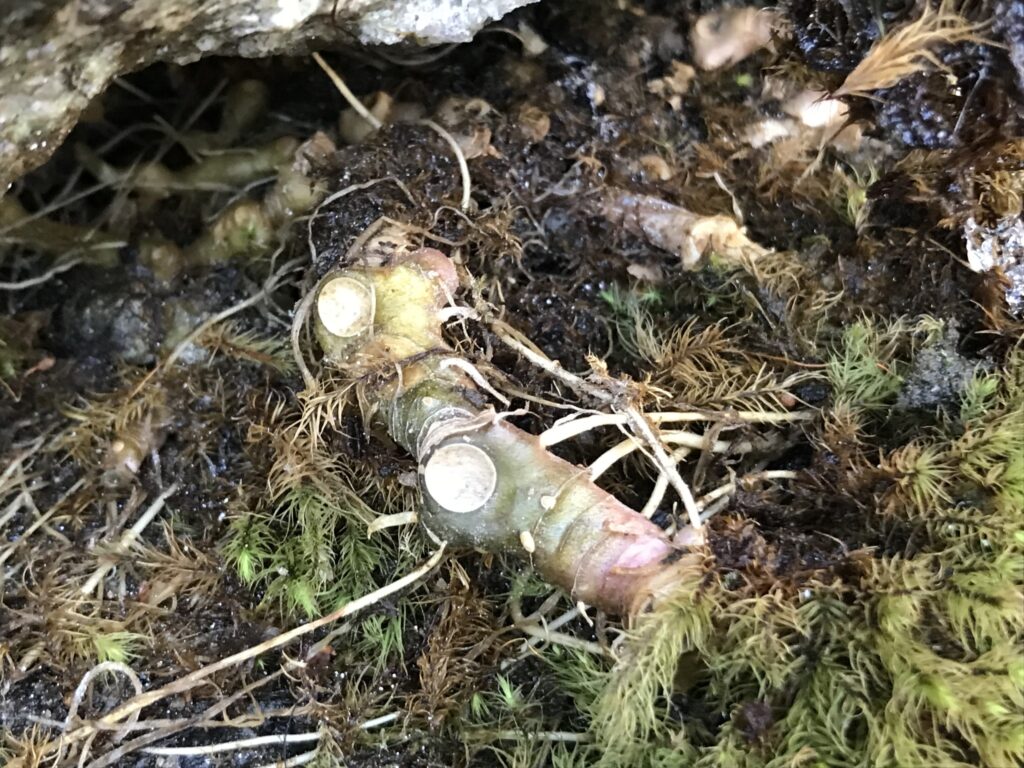
Aegopodium podagraria is widely naturalized throughout New England as a highly aggressive invasive species. It tolerates shade well and spreads via rhizomes and seeds. Once established, it is nearly impossible to eradicate, making it a serious concern in gardens and wild spaces. The vigorous nature that makes it impossible to control makes harvesting wild material readily available—though containment should be a priority for responsible foragers.
Safety & Interactions
Furanocoumarins present in Apiaceae species can cause phototoxicity with UV exposure. Fresh plant material should be handled with caution. No significant herb-drug interactions are documented, but internal use should be moderate. Pregnant and nursing women should avoid use pending safety data.
New England Specific
Goutweed appears in nearly every New England garden as an unwanted invader, making it perhaps the most readily available medicinal plant in the region. Historical records suggest it was deliberately introduced as a culinary and medicinal herb by early European settlers.
Traditional Herbalism Information
Parts Used & Their Applications
The aerial parts (leaves and stems) are harvested during the growing season. The rhizome is occasionally used but is less commonly encountered in herbalism. The fresh plant is preferred to dried material for most applications.
Preparation Methods
Traditionally prepared as a fresh herb tea by infusion (1–2 teaspoons fresh herb per cup, steeped 5–10 minutes). A tincture of fresh aerial parts in alcohol is also traditional. Some herbalists recommend a poultice of fresh leaves applied topically to affected joints.
Traditional Applications
European folk medicine has used goutweed for centuries as an anti-gout remedy—hence its common name. It was valued as a diuretic to support kidney function and reduce uric acid accumulation. Traditional use also includes general joint pain and arthritis support, particularly where inflammatory swelling is present. The herb appears in medieval herbals and continues in modern European phytotherapy.
Modern Adaptations
Contemporary herbalists use goutweed in joint-support formulas, often combining it with other anti-inflammatory plants such as meadowsweet or nettle. It is sometimes recommended as a gentle lymphatic support herb.
New England Specific
The abundance of goutweed in New England makes it an accessible herb for anyone with the plant in their yard. Local herbalists sometimes frame its aggressive invasiveness as an opportunity—the plant is so vigorous that harvesting it may actually serve a land management purpose.
Harvest Notes
Young spring shoots are preferred by many herbalists. The plant grows actively from April through September in New England. Harvesting regularly may help control its invasive spread while producing fresh herbal material.
Magical Correspondences Information
Magical Correspondences
Planetary: Jupiter. Elemental: Water. Traditional associations: prosperity, protection, and grounding in abundance. The plant’s relentless growth and invasive nature connect it to Jupiter’s expansive, dominating energy.
Magical Intentions
Goutweed is used in magical work for grounding excess energy, managing unwanted situations, and reclaiming boundaries. Its aggressive invasiveness mirrors the intention to overtake obstacles or establish firm boundaries in one’s life. Protection spells sometimes incorporate goutweed to stake a claim on one’s space and ward off unwanted influence.
Ritual Uses
The plant can be worn or carried as a protective charm. Fresh sprigs placed on an altar during prosperity work invoke Jupiter’s expansion. Some traditions use it to cleanse a space of stagnant energy, as its vigorous growth symbolizes necessary clearing and renewal.
Color Correspondences
Green (growth, persistence, grounding) and silver-green of the variegated cultivars (connection to the Moon’s protective influence).
Sabbat Associations
Lammas (first harvest, abundance) and Beltane (boundary-marking and territorial magic). Some practitioners associate it with Samhain for its grounding properties.
Traditional Lore & Folk Magic
European folk magic traditions held goutweed as a plant for claiming space and establishing one’s will. Placing it at property boundaries was thought to protect and establish ownership. The herb’s reputation for unstoppable growth made it a symbol of determination and persistence.
Combining with Other Plants
Pairs well with nettle for grounding and cleansing work. Combine with calendula for protective formulas. Traditional magical pairings include mugwort (spiritual clarity) and yarrow (boundary setting).
1 Grieve, M. (1971). A Modern Herbal. Dover Publications.
2 Hoffmann, D. (2003). Medical Herbalism: The Science and Practice of Herbal Medicine. Healing Arts Press.
3 Moerman, D.E. (1998). Native American Ethnobotany. Timber Press.
4 Mills, S. & Bone, K. (2005). The Essential Guide to Herbal Safety. Elsevier.