Hemp Dogbane
Basic Information
Scientific Name: Apocynum cannabinum
Plant Family: Apocynaceae
Conservation / Invasive Status: Stable; widespread native North American species, not threatened
Geographic Range: Eastern North America, North America, Northeast US, Northern New England
Safety Level: Use with Caution
Harvest Season: Fall, Summer
Parts Used: Aerial Parts, Bark, Latex, Roots
Scientific & Botanical Information
Active Compounds
Apocynum cannabinum contains cardiac glycosides, including cymarin and apocynamarin. Potent heart-active compounds requiring careful handling.
What Science Shows
Documented in pharmacological literature for cardiac glycoside content. Compounds have digitalis-like heart activity requiring strict dosage control. Modern research confirms potency but narrow margin between therapeutic and toxic doses.
Growing in New England
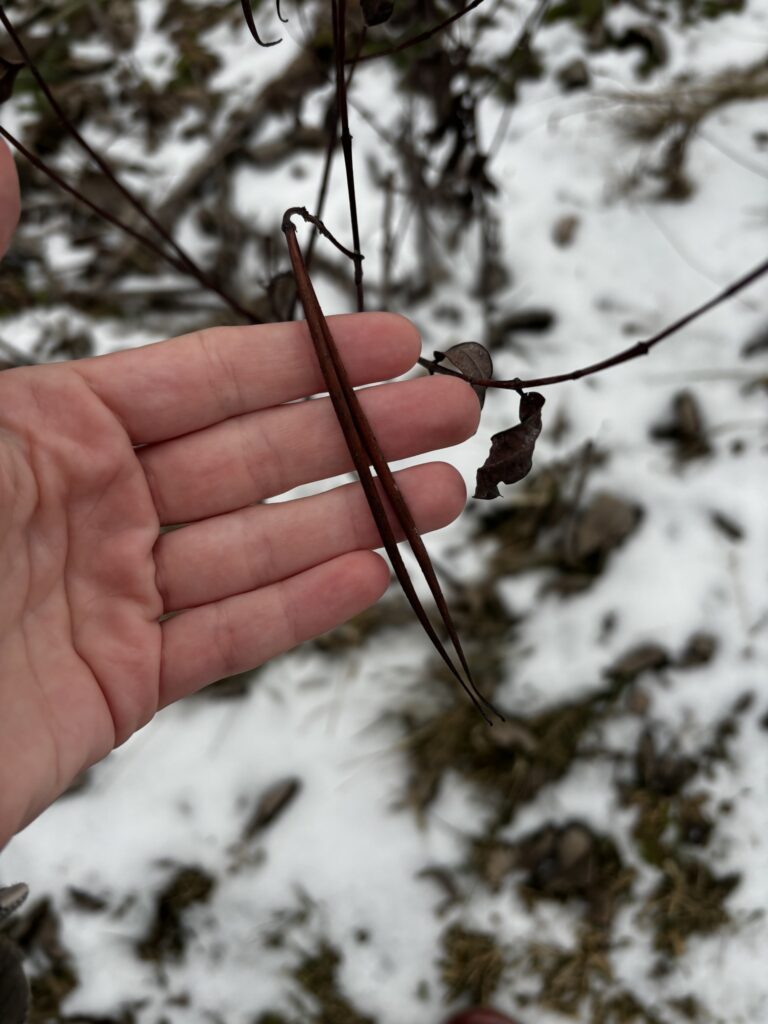
Native to North America, grows throughout New England in dry to moderately moist areas. Establishes readily from seed and spreads via rhizomes. Produces distinctive twin seed pods.
Safety & Interactions
TOXICITY CAUTION: Potentially toxic due to cardiac glycoside content. Compounds accumulate in body. Individual sensitivity varies significantly. Use only under professional supervision. Pregnant/nursing women must avoid. Significant drug interactions with cardiac medications.
New England Specific
Native plant with deep historical indigenous significance. Modern practitioners should approach with respect for potency.
Pharmacological Actions: Anti-inflammatory, Antioxidant, Cardiotonic, Diuretic, Highly Cytotoxic in overdose, Hypotensive, Immunomodulatory, Vasoconstrictive
Traditional Herbalism Information
Parts Used & Their Applications
Historically root was primary medicinal part used by indigenous practitioners. Modern herbalists rarely use this plant internally due to safety concerns.
Preparation Methods
Traditional preparations involved carefully dosed infusions or decoctions of root. Modern practice rarely employs this plant internally.
Traditional Applications
Indigenous peoples used as cardiac tonic and diuretic. Documented use for heart conditions and fluid accumulation. Well understood and carefully managed within traditional knowledge systems.
Modern Adaptations
Contemporary Western herbalism has abandoned internal use due to toxicity. Some maintain in materia medica for historical knowledge, recommending external use only.
New England Specific
Local knowledge of use primarily through ethnobotanical sources. Contemporary herbalists recommend safer alternatives.
Harvest Notes
Roots traditionally harvested autumn when vital forces move downward. Given safety concerns, most practitioners do not harvest medicinally.
Traditional Uses: Cardiovascular Support, Circulation Support, Diuretic, Edema Management, Expectorant (carefully), Heart Tonic (Indigenous use)
Magical Correspondences Information
Magical Correspondences
Planetary: Mercury. Elemental: Fire. Traditional associations: rapid transformation, power, protection, boundary between healing and harm.
Magical Intentions
Used in advanced practice for powerful transformation and boundary-setting. Corresponds to matters of heart—courage, will, personal power. Appropriate only for experienced practitioners who understand energetic parallels to chemical danger.
Ritual Uses
Used as altar plant rather than internal preparation. Dried seed pods or roots on altars for transformation work. Teaches respect and caution.
Color Correspondences
Deep green (earthiness), red (fire, power, danger), white (fine line between properties).
Sabbat Associations
Lughnasadh (honoring wild forces), Samhain (boundary respect and powerful forces).
Traditional Lore & Folk Magic
In indigenous tradition, respected as plant of significant power. Understood as teacher of responsibility and careful action.
Combining with Other Plants
Not combined with others for internal use. In magical practice, may be placed on altars with grounding plants like nettle or mugwort.
Planetary Rulers: Saturn
Magical Intentions: Ancestral Wisdom, Boundaries, Healing Paradox, Protection, Purification through Fire, Shadow Work
Elemental Associations: Fire, Water
1 Moerman, D.E. (1998). Native American Ethnobotany. Timber Press.
2 Mills, S. & Bone, K. (2005). The Essential Guide to Herbal Safety. Elsevier.
3 Hoffmann, D. (2003). Medical Herbalism: The Science and Practice of Herbal Medicine. Healing Arts Press.
4 Blumenthal, M., et al. (2000). Herbal Medicine: Expanded Commission E. Integrative Medicine Communications.