Meadow Evening Primrose
Basic Information
Scientific Name: Oenothera pilosella
Plant Family: Onagraceae
Conservation / Invasive Status: Least Concern
Safety Level: Generally Safe
Scientific & Botanical Information
Botanical Description
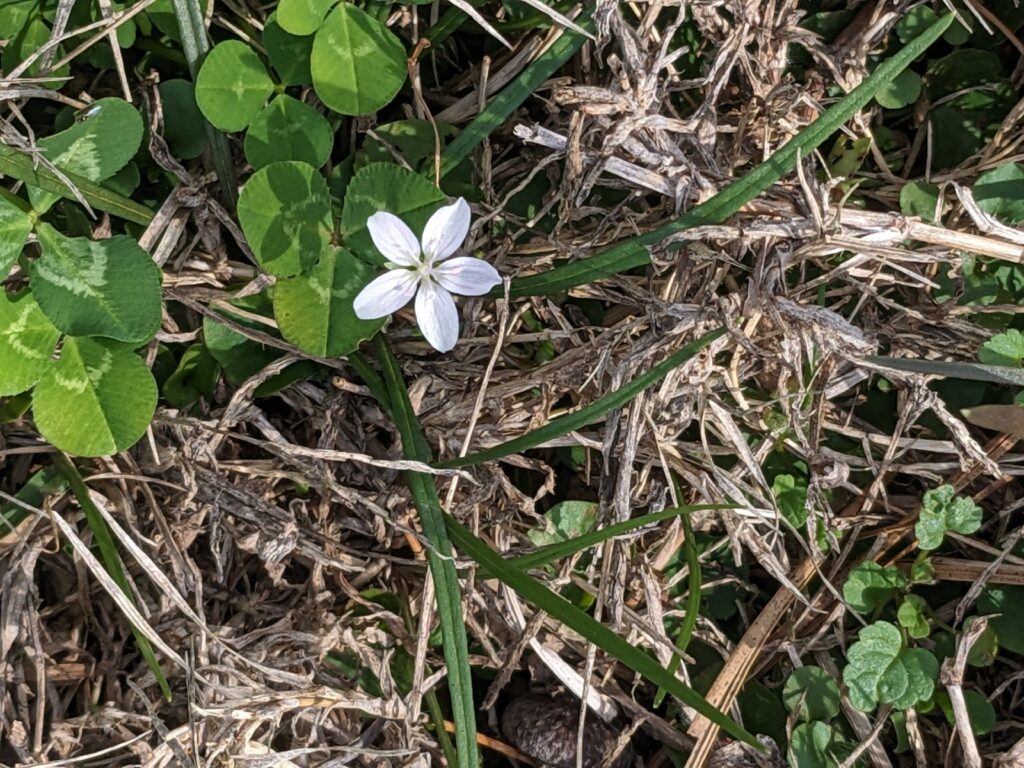
Oenothera pilosella, commonly known as meadow evening primrose or small-flowered evening primrose, is a short-lived herbaceous perennial or winter annual in the Onagraceae family, typically reaching 12-36 inches in height, though occasionally to 48 inches in optimal conditions. The plant exhibits a basal rosette of narrow, lanceolate leaves in its first year (or throughout its life cycle if establishing as a winter annual), from which an erect flowering stem emerges lined with progressively smaller leaves. The stem displays distinctive reddish or purplish coloration, particularly toward the base, and exhibits fine, short hair-like pubescence (the species epithet pilosella refers to this “hairy” appearance)1. The flowers, characteristic of the Oenothera genus, display four bright yellow petals (occasionally with reddish markings), arranged in a distinctive four-part symmetry, with prominent stamens and a cross-shaped stigma typical of the family. The flowers characteristically open in the evening (hence the common name) and remain open through the night, often closing by mid-morning the following day–an adaptation to pollination by nocturnal moths and insects. Following pollination, the plant develops distinctive capsular fruits containing numerous small seeds2. The entire plant is considerably smaller and more delicate in appearance than its commercial relative, O. biennis (evening primrose proper), requiring careful observation to distinguish from related Oenothera species.
Geographic Distribution & Habitat
Oenothera pilosella is native to eastern and central North America, with its primary range extending from the Great Lakes region south through the Ohio and Mississippi River valleys, with scattered populations in the Northeast. In Northern New England, the species’ distribution is more limited and sporadic compared to its more common relative O. biennis, though populations do establish in suitable habitats throughout the region in USDA hardiness zones 4-9. The plant prefers open, disturbed habitats with good light exposure, establishing readily in meadows, prairie remnants, sandy or gravelly areas, roadsides, and agricultural margins. O. pilosella demonstrates a preference for well-draining, sandy, or gravelly soils and tolerate drought stress better than many competing plant species, making it a pioneer species in early-successional habitats. The plant occasionally appears as a volunteer in gardens and managed landscapes, particularly in New England where warmer microclimates or south-facing slopes provide optimal growing conditions. The species’ more delicate structure and slower growth compared to O. biennis means it may be out-competed in highly fertile or overly moist soils, explaining its association with leaner, more open habitats3.
Active Compounds
Oenothera pilosella, like other Oenothera species, accumulates distinctive phytochemicals concentrated in the seeds and, to a lesser extent, in the aerial plant parts. The primary bioactive constituent of commercial significance is gamma-linolenic acid (GLA), a polyunsaturated omega-6 fatty acid comprising approximately 8-10% of the seed oil in O. biennis (evening primrose proper)4. While direct analysis of O. pilosella seed oil composition is limited in the published literature, the species likely contains comparable (though potentially lower) GLA concentrations. Additionally, Oenothera seeds contain linoleic acid, oleic acid, and other essential fatty acids, along with vitamin E (tocopherols), which function as antioxidants and lipid stabilizers. The whole plant (aerial portions) contains phenolic compounds, flavonoids (including quercetin), and tannins in variable concentrations. Some botanical references note the presence of ellagic acid in Oenothera species, though concentration levels vary. The lipid profile and antioxidant capacity distinguish evening primrose from most herbals, positioning it within the framework of medicinal foods or nutraceuticals rather than as a concentrated herbal extract. Research remains sparse regarding O. pilosella specifically, with most data extrapolated from the more extensively studied O. biennis5.
Pharmacological Actions
The pharmacological profile of evening primrose derives largely from its fatty acid composition, particularly GLA and the essential fatty acid precursors. GLA is converted in vivo to dihomogamma-linolenic acid (DGLA) and subsequently to various eicosanoids (inflammatory signaling molecules), which can modulate immune response and inflammation. Multiple clinical trials and meta-analyses examining evening primrose oil (derived from O. biennis) have documented modest but statistically significant benefits for rheumatoid arthritis symptoms, hormonal symptoms associated with menstruation and menopause, and skin conditions including eczema and dermatitis6. The mechanism is hypothesized to involve modulation of inflammatory eicosanoid metabolism, though the exact physiological pathway remains incompletely understood. The antioxidant compounds (vitamin E, phenolics, flavonoids) contribute to the herb’s capacity to support lipid stability and protect cell membranes. Most commercial evening primrose preparations derive from O. biennis, which achieves higher seed yields and oil concentration than O. pilosella. For O. pilosella specifically, traditional herbalist applications likely aligned with those of related Oenothera species, though the smaller seed production and more delicate plant structure limited commercial development. Contemporary interest in O. pilosella focuses on its ecological role and ornamental qualities rather than medicinal application, though the plant presumably possesses comparable (if lower-concentration) beneficial properties to O. biennis7.
Safety & Interactions
Oenothera pilosella is classified as “Generally Safe” for consumption and use, with no significant toxins identified in the species. The oil and seeds, when properly extracted and stored, present minimal risk of adverse effects in most individuals. However, some individuals report mild gastrointestinal upset (bloating, mild diarrhea) when first consuming evening primrose oil, typically resolving within a few days of continued use or with dose reduction. Individuals with bleeding disorders or taking anticoagulant medications (warfarin, antiplatelet agents) should consult healthcare practitioners before supplementing with evening primrose oil, as the essential fatty acid profile theoretically affects platelet function, though significant clinical interactions are rare. Pregnant individuals should limit consumption to food-amount quantities (eating seeds occasionally) rather than concentrated supplemental doses of oil, as data on developmental safety of concentrated oil remains limited. The plant contains no documented allergenic compounds, though individuals with sensitivities to the Onagraceae family should exercise initial caution. Quality and storage affect safety: oxidized or improperly stored evening primrose oil may generate harmful oxidation byproducts; purchasing from reliable suppliers and ensuring proper refrigeration of oil preparations supports safety. The aerial plant portions (leaves, flowers, stem) present no safety concerns and can be consumed as a mild tea or food8.
Growing in New England
Oenothera pilosella can be cultivated successfully throughout Northern New England with attention to its preference for well-draining, sandy or gravelly soil and full sun exposure (6+ hours daily). Seeds can be started indoors in late winter (February-March) or direct-seeded outdoors in spring (April-May) or autumn (September-October) for a winter annual growth pattern, allowing natural cold stratification. The species demonstrates modest seed germination rates; some sources recommend light scarification (gentle abrasion of the seed coat) to improve germination. Once established, plants require minimal supplemental watering after the first growing season, deriving moisture from deep roots adapted to drier conditions. The plant does not thrive in consistently moist, fertile, or rich soils; in garden settings, providing lean, sandy, or gravelly growing medium and good drainage optimizes success. Plants may be short-lived (biennial or short-lived perennial); allowing some plants to self-seed maintains continuous populations. Harvesting seeds for oil extraction requires collecting mature seed capsules in late summer or early autumn, allowing them to dry completely before processing. The modest seed production of O. pilosella compared to O. biennis means that commercial-scale oil extraction is impractical from pilosella, limiting it primarily to ornamental and ecological cultivation. The plant’s delicate, evening-opening flowers attract nocturnal moths and pollinators, making it a valuable addition to gardens designed for night-time insect support9.
Traditional Herbalism Information
Energetics & Actions
In Western herbal energetics, Oenothera pilosella and related evening primrose species carry a cooling, slightly drying energy with primary affinity for the reproductive and hormonal systems, and secondary support for skin and inflammatory conditions. The plant’s characteristic evening-opening flowers led traditional herbalists to associate it with the Moon and lunar consciousness, intuition, and the hidden or nocturnal aspects of existence. The oil-rich seed profile positioned evening primrose energetically as a “nourishing” herb, supporting cellular lubrication and flexibility. Herbalists recognize the plant’s gentle, yin-natured energetic profile–cooling and moistening simultaneously, a paradox resolved through the understanding that the oil provides internal lubrication while the herb’s overall temperature remains cool. The plant’s affinity for cyclical hormonal functions connects it to the Water element and the Moon’s rulership of cyclical processes. Some traditional sources reference the plant’s evening blooming as representative of introspection and the turning inward of attention, making it energetically supportive for deep inner work and emotional processing1.
Parts Used
Within herbalism, both the seeds (particularly the oil extracted from mature seeds) and the aerial plant portions (leaves, flowers, stem) of O. pilosella provide medicinal benefit, though historical application focused primarily on seed oil as the concentrated, potent form. The seeds, harvested in late summer or early autumn after complete maturation and drying, represent the primary medicinal part, traditionally cold-pressed or extracted to yield the characteristic oil rich in GLA and essential fatty acids. The aerial portions–particularly the flowers (harvested at peak bloom) and young leaves–can be prepared as infusions or tinctures, offering a milder but more accessible preparation than concentrated seed oil. Some herbalists prepare a whole-plant extract from fresh O. pilosella flowering plant material, capturing the full spectrum of plant constituents. Historically, before the advent of modern oil extraction technology, herbalists likely employed the seeds by crushing or soaking them in carrier oils or other mediums, or used the aerial plant as a medicinal tea or infusion2.
Traditional Uses
Traditional herbalist application of evening primrose species (with documentation primarily focused on O. biennis due to its greater prevalence and commercial development, though presumably extending to O. pilosella) centers on hormonal balance and inflammatory conditions. Herbalists recognized the plant’s particular affinity for supporting menstrual regularity, reducing menstrual cramping and associated mood disturbances, and supporting comfortable transitions through menopause. Historical use for skin conditions including eczema and dermatitis appears across herbalist traditions, with the theory that the oil’s nutritive and anti-inflammatory properties supported cellular healing and reduced inflammatory skin manifestations. Some herbalist records reference use for breast tenderness and swelling associated with hormonal fluctuations. Traditional practice employed evening primrose oil-rich preparations (through creation of infused oils or traditional extraction methods) for joint and inflammatory conditions, recognizing the oil’s capacity to support inflammatory balance. The plant’s gentle nature made it particularly valued for individuals with sensitive constitutions or those unable to tolerate more stimulating herbs3. European herbalist traditions incorporated evening primrose into women’s health formulas, often in combination with other plants supporting hormonal balance and inflammation modulation.
Preparations & Dosage
For concentrated seed oil, the modern standard preparation involves cold-pressed extraction, with typical clinical dosing in research studies ranging from 1.4-2.8 grams daily of the oil (delivering approximately 140-280 mg GLA daily). Commercial supplements typically provide capsules containing 500 mg evening primrose oil per capsule, with standard dosing of 1-3 capsules daily (distributed throughout the day with meals for optimal absorption). A traditional herbal infusion of dried aerial plant material can be prepared by steeping 1-2 teaspoons of dried leaves and flowers in 8 ounces of hot water for 10-15 minutes, consumed 1-3 cups daily. A tincture of fresh or dried aerial plant material (prepared at a 1:5 ratio in 40% alcohol) can be dosed at 30-60 drops (1.5-3 mL) one to three times daily. For self-harvested seeds, a simple infused oil can be created by gently heating dried seeds in a carrier oil (olive, coconut, or other plant oil) over several hours or days, then straining and using the resulting oil topically for skin conditions or internally if desired. Time to therapeutic benefit varies: menstrual and mood-related applications typically require 2-3 cycles (2-3 months) before significant improvement appears, while skin conditions may show improvement within 4-8 weeks of consistent use4.
Modern Adaptations
Contemporary herbalism has developed increasingly sophisticated understanding of evening primrose’s role in hormonal balance and inflammatory conditions, particularly through the lens of modern nutritional science clarifying the mechanism of GLA and essential fatty acid metabolism. Modern practitioners employ evening primrose specifically for individuals with menstrual cycle dysregulation, elevated inflammatory markers, or skin conditions characterized by inflammatory response. The integration of evening primrose into broader hormonal support protocols–combining it with other plants addressing liver function, stress resilience, and endocrine support–represents a modernization of traditional herbalism’s systemic approach. Interest in the plant’s potential for supporting healthy brain function, mood stability, and cognitive flexibility has emerged, drawing upon the role of essential fatty acids in neurological health and inflammatory modulation. Some contemporary practitioners explore evening primrose for individuals experiencing hormonal fluctuations related to polycystic ovary syndrome (PCOS), endometriosis, or other complex reproductive conditions, though such application remains largely anecdotal and should be pursued under practitioner guidance. The plant’s gentle, nourishing profile has positioned it within modern herbalism’s emphasis on nutritive and building tonics rather than acute illness treatments5.
New England Specific
While O. pilosella occurs in Northern New England, it is less abundant than its commercial relative O. biennis. Some New England herbalists and naturalists maintain awareness of local populations, occasionally harvesting seed material for personal use or small-scale cultivation. The plant’s preference for leaner soils and open habitats means it thrives in certain microhabitats within New England–sandy areas, meadow edges, and south-facing disturbed sites–making it a plant that rewards careful observation and site-specific knowledge. Contemporary New England permaculture and regenerative agriculture practitioners increasingly cultivate evening primrose species (both O. pilosella and O. biennis) for their ecological and medicinal value, with several local growers providing seed and plant material. The region’s cool climate actually optimizes the nutritional quality of the seeds, with evidence suggesting that plants grown in cooler regions develop higher concentrations of certain beneficial compounds. New England herbalist communities, while smaller than those in warmer regions, maintain active knowledge of evening primrose cultivation and application, with several established practitioners offering guidance on growing, harvesting, and processing the herb locally6.
Sourcing & Ethics
For Oenothera pilosella specifically, sustainable sourcing involves cultivating plants locally or purchasing seeds and plant material from New England growers and suppliers who practice ethical cultivation. The plant’s modest seed production compared to O. biennis means commercial-scale oil extraction from O. pilosella is impractical; most contemporary evening primrose oil supplements derive from O. biennis. For those interested in O. pilosella specifically, home cultivation represents the most accessible and ethical path, with seeds available from specialty seed companies and native plant nurseries. Wild harvesting of O. pilosella should occur from abundant populations only, with harvest of no more than 30% of available seeds in any location. For commercial preparations, purchasing evening primrose oil (typically from O. biennis) sourced from ethical growers who practice sustainable agriculture and fair labor standards supports responsible sourcing. Some herbalists and nutritional companies now offer organic, third-party tested evening primrose oil with transparent sourcing information. Supporting local New England growers and seed savers who cultivate evening primrose species strengthens regional herbalism and provides access to seeds and plants optimized for regional growing conditions7.
Magical Correspondences Information
Planetary & Elemental Associations
Oenothera pilosella aligns powerfully with the Moon, particularly the dark Moon and nocturnal cycles, reflecting the plant’s characteristic evening opening and nocturnal pollination. The plant’s affinity for evening and nighttime consciousness connects it to the Moon’s association with intuition, dreams, the subconscious, and hidden knowledge. Secondary associations include Venus (the planet governing love, sexuality, and self-nurturing), reflecting the plant’s particular affinity for reproductive and self-care applications, and Water element (associated with emotion, intuition, and cyclical flow). Some practitioners cite Mercury’s association with communication and the plant’s gentle ability to facilitate emotional expression and inner communication. The plant’s rooting in lean, sandy, or gravelly soils suggests tertiary Earth element associations, grounding the Moon’s ethereal qualities in material reality. The evening primrose’s characteristic delay until nightfall before opening carries magical associations with patience, timing, trust in natural cycles, and the power of the hidden or nocturnal1.
Magical Properties
Oenothera pilosella holds powerful magic for nocturnal consciousness, dream work, intuition development, and feminine self-care and nourishment. The plant’s evening-opening flowers create a natural focal point for evening rituals, meditation, and the cultivation of relationship with the night and lunar consciousness. Practitioners employ the herb in dreamwork, placing dried flowers beneath pillows or creating infusions consumed before sleep to enhance dream recall and vividness. The plant’s affinity for hormonal balance extends magically to supporting emotional resilience, cyclical wisdom, and integration of one’s own inner cycles. The oil-rich seeds carry magical significance for nourishment, abundance, and the inner lubrication necessary for smooth flow in life’s transitions. Some practitioners create protective charms from evening primrose flowers and seeds, recognizing the plant’s gentle but steadfast support for those undergoing difficult transitions. The plant appears in women’s empowerment and self-nourishment magic, particularly for individuals learning to prioritize their own care and wellbeing. Ritualists incorporate evening primrose into spellwork for enhancing intuition, accessing hidden knowledge, and strengthening connection to the subconscious and dream realms2.
Historical Lore & Folk Magic
Historical magical traditions surrounding evening primrose remain less documented than those for more widely distributed plants, but scattered references appear in European herbalism and folk magic traditions. The plant’s evening-opening flowers attracted attention from various traditions, with some sources suggesting it was employed in nocturnal magic and dream-work traditions. Folk traditions referenced evening primrose in women’s self-care and protection magic, with the plant appearing in charm bags and amulets for reproductive health and feminine vitality. Some herbalist and magical traditions referenced the plant’s affinity for supporting the “inner work” of rest, recovery, and introspection–associations aligned with the evening and night. The plant’s modest presence in historical texts may reflect its regional specificity and smaller commercial availability compared to more prominent plants, but traditional magical principles underlying nocturnal, lunar, and introspective work would have positioned it as a valuable ally for these purposes. Contemporary witchcraft and herbalism have revived interest in evening primrose as a plant for deliberate, intentional relationship with the night and the Moon’s hidden phases3.
Working with Oenothera pilosella in Practice
Direct magical engagement with O. pilosella centers on evening and nighttime practice, creating intentional relationship with the plant’s natural rhythm. Creating an evening garden observation practice–sitting with blooming evening primrose plants at dusk, witnessing the flower opening as darkness falls–establishes direct attunement to the plant’s teaching of timing, patience, and trust in natural cycles. Crafting a dream-work ritual by placing dried flowers or seeds beneath the pillow, or steeping fresh flowers as an evening tea consumed before sleep with intention for dream clarity, creates accessible nightly practice. For individuals working with moon phase magic, incorporating evening primrose into dark Moon rituals (creating infusions, meditating with the plant’s energy, or planting seeds during the dark Moon) establishes alignment with the plant’s nocturnal affinity. Some practitioners create infused oils using evening primrose seeds or flowers, applying the oil to the heart or lower abdomen with intention for self-nourishing, emotional flow, and reproductive self-care. Building relationship with a living evening primrose plant in one’s garden–observing its growth through seasons and witnessing its evening bloom–creates ongoing magical partnership and attunement. For individuals working with intuition development or dream interpretation, creating a small altar space with dried evening primrose flowers and a dream journal anchors intention for accessing subconscious wisdom4.
Traditional Timing
Optimal magical work with evening primrose aligns fundamentally with evening hours and the approach of darkness, making this plant uniquely suited to twilight and nighttime practice. The dark Moon (new Moon and the three nights preceding) represents an auspicious time for deep evening primrose magic, particularly for dream work, introspection, and accessing hidden knowledge. Summer evenings, when twilight lingers longest (June-July in Northern New England), provide extended opportunity for evening flower observation and twilight ritual. The plant’s blooming period (typically mid-summer through early autumn, July-September in New England) marks the window of maximum potency for working with living plants or freshly harvested flowers. Midsummer’s Eve (June 20-21) and related solstice season create powerful times for celebrating the balance of light and darkness and for deepening relationship with nocturnal consciousness. Individual practice can align with personal daily rhythm: evening practitioners might incorporate evening primrose work into regular evening rituals, while those struggling to connect with nighttime consciousness might intentionally work with the plant during twilight hours to gradually shift awareness toward nocturnal sensitivity. Any practice undertaken at night (midnight meditations, dream work, introspection) naturally aligns with evening primrose’s power5.
Combining with Other Plants
Oenothera pilosella combines powerfully with other Moon-associated and night-aligned plants, particularly mugwort (premier plant of dreams, Moon cycles, and liminal consciousness), skullcap (supporting nervous system relaxation and dream work), and passionflower (supporting emotional flow and relaxation). For reproductive and hormonal magic, combining evening primrose with other plants supporting feminine cycles (red clover, motherwort, cramp bark) amplifies the hormonal-balancing energy. In dream-work practice, pairing evening primrose with mugwort and a sleep-supporting herb like chamomile creates powerful synergy for dream access and nocturnal consciousness. For intuition development, combining evening primrose with other plants supporting psychic sensitivity (mullein, St. John’s wort) strengthens the work. Some practitioners blend evening primrose with rose or hibiscus flowers for self-care and self-nourishment work, combining the medicinal and magical properties. In lunar magic, pairing evening primrose with other plants aligned with the specific Moon phase (dark Moon herbs, waning herbs) reinforces the work. For water-element magic or ocean-aligned practice, combining evening primrose with other aquatic or water-aligned plants (water lily, yarrow, or other water-associated herbs) integrates the evening primrose’s Water-element affinity6.
Cautions for Magical Use
Practitioners should approach evening primrose magic with awareness that the plant teaches patience and trust in natural timing–magic with this herb should not be rushed or forced. The plant’s gentle, steady energy means that results often unfold gradually rather than dramatically; practitioners should cultivate patience and faith in the process. Those working with dream access should be prepared for increased dream vividness and recall, which can sometimes surface challenging or disturbing dreams as the subconscious processes material; proper grounding and integration practices should accompany dream-work magic. For individuals with sleep difficulties or insomnia, evening primrose magic that intentionally deepens evening consciousness might exacerbate sleep disruption; such practitioners should approach with caution or work with grounding, sleep-supporting practices simultaneously. The plant’s association with hidden knowledge and nocturnal consciousness means that magic with evening primrose may bring submerged feelings, memories, or insights to awareness; practitioners should ensure they are ready to process whatever emerges. For those unfamiliar with nighttime or lunar practice, beginning with gentle observation of living plants or mild evening infusions creates a safer entry point than intensive magical work. Practitioners should ensure that their evening primrose oil or seed preparations come from reliable sources and have not been oxidized or compromised, as using spoiled plant material undermines both medicinal and magical efficacy7.
1. Huang YS, Ziboh VA. (2000). Gamma-linolenic acid: recent advances in biotechnology and clinical applications. AOCS Press.
2. Horrobin DF. (1992). Nutritional and medical importance of gamma-linolenic acid. Progress in Lipid Research, 31(2), 163-194.
3. Moerman DE. (1998). Native American Ethnobotany. Timber Press.
4. Duke JA. (2002). Handbook of Medicinal Herbs, 2nd Ed. CRC Press.
5. Plants for a Future Database. (2012). Oenothera pilosella. https://pfaf.org
6. Weakley AS. (2022). Flora of the Southeastern United States. UNC Herbarium.