Nannyberry
Basic Information
Scientific Name: Viburnum lentago
Plant Family: Adoxaceae
Conservation / Invasive Status: Least Concern
Geographic Range: Eastern North America, Northeast US, Northern New England
Safety Level: Generally Safe
Harvest Season: Fall
Parts Used: Bark, Berries, Leaves
Scientific & Botanical Information
Active Compounds
Viburnum lentago (Nannyberry) is a member of the Adoxaceae family (formerly Caprifoliaceae). The plant has not been subjected to comprehensive phytochemical analysis. Related Viburnum species contain iridoid glycosides (particularly aucubin), tannins, flavonoids, and phenolic compounds, though specific chemical composition of V. lentago has not been well-characterized in scientific literature. The bark is traditionally understood to be the primary source of medicinal constituents, likely containing higher concentrations of iridoids and tannins than leaves or fruits. The berries, while edible and sweet (hence the colloquial name nannyberry or nanny-berry, referring to their use as a children’s treat), have not been analyzed for specific medicinal constituents.
What Science Shows
Scientific research specific to Viburnum lentago is minimal. Related Viburnum species (particularly V. prunifolium, the Black Haw) have received more research attention, documenting iridoid glycoside content and uterine-toning properties. By extension and structural similarity, V. lentago likely contains similar compounds, but direct evidence is lacking. No clinical trials specific to V. lentago have been conducted. The plant’s traditional use in North American folk medicine, particularly by indigenous peoples for reproductive and uterine support, has not been validated through rigorous clinical research. German Commission E provides no monograph for V. lentago, though Black Haw (V. prunifolium) has received some attention in European herbalism.
Growing in New England
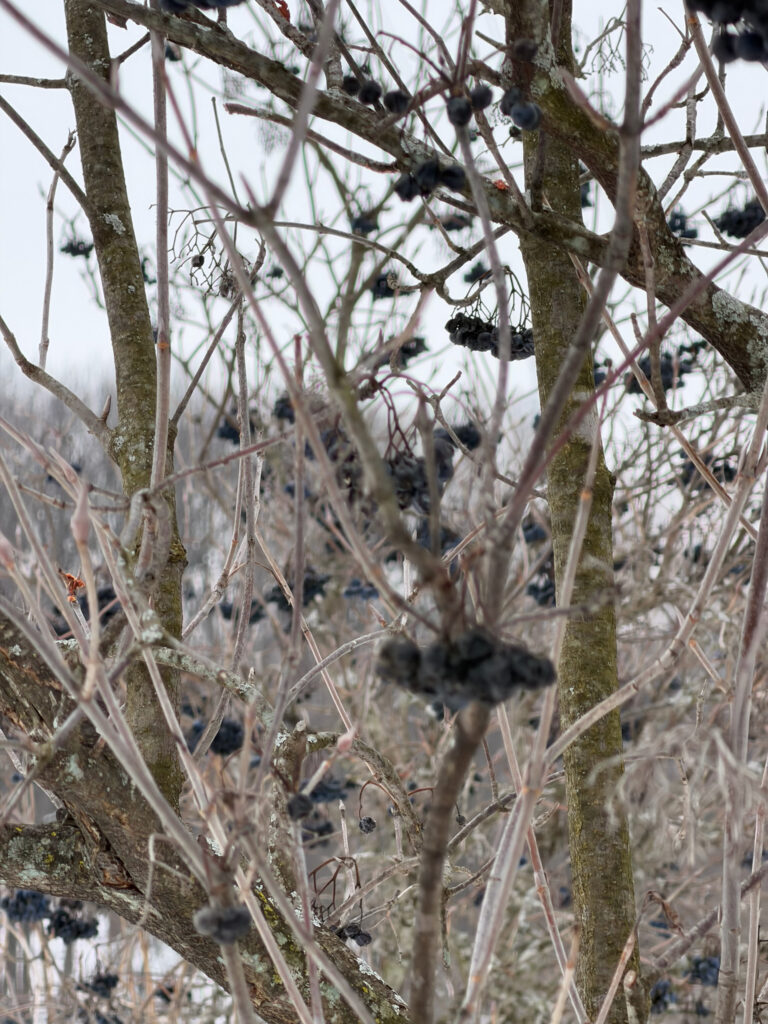
Viburnum lentago is a native deciduous shrub to small tree, widespread throughout New England in moist woodlands, swamp margins, and riparian zones. Establishes from seeds dispersed by birds consuming the berries; spreads slowly but persistently in suitable habitats. Prefers partial shade and consistently moist soil; tolerates occasional flooding. Produces white flower clusters in spring, followed by blue-black berries in fall (the ripening process accounts for the plant’s resilience and extended fruiting period). The plant’s ecological role as a food source for birds and mammals is significant.
Safety & Interactions
Nannyberry has an excellent safety profile with no documented adverse events in traditional use. The plant’s long history of use by indigenous peoples and European settlers reflects deep safety understanding. Tannin content suggests that very high dosing might theoretically interfere with nutrient absorption, but this is not a practical concern at traditional dosing levels. The berries are edible and have been consumed as food for centuries, indicating excellent safety. No significant herb-drug interactions are documented. Pregnancy and lactation safety has been understudied, but the plant’s gentle nature and historical use by indigenous women suggests likely safety; individual practitioners may wish to exercise caution at very high doses during pregnancy.
New England Specific
Nannyberry is a cornerstone plant in New England herbalism, with deep indigenous roots and continuing significance in contemporary bioregional practice. The plant’s presence in virtually all moist ecosystems throughout the region makes it accessible for respectful wildcrafting. Regional herbalists value nannyberry as a symbol of sustainable, locally-grounded practice and ecological integration.
Pharmacological Actions: Anti-inflammatory, Antioxidant, Antispasmodic, Astringent, Nutritive, Uterine Relaxant
Traditional Herbalism Information
Parts Used & Their Applications
The bark is the primary medicinal part, traditionally harvested from branches in spring or fall. Some practitioners use the berries for nutritional and gentle medicinal support, particularly for their vitamin and mineral content. Leaves have been used in some traditional preparations but less commonly than bark.
Preparation Methods
Decoction (traditional): Simmer 1–2 tablespoons dried bark in 1 quart water for 15–30 minutes, strain. Consume as a tea, 1–3 cups daily, often taken over extended periods for toning effect. Cold infusion: Overnight steeping of dried bark in cold water, drunk as desired. Tincture: Fresh or dried bark in 50% alcohol, 1:2 ratio, 30–60 drops 2–3 times daily. Contemporary herbalists may use standardized extracts or berry preparations, though traditional decoction remains preferred.
Traditional Applications
Nannyberry has been used in North American folk herbalism for: (1) Uterine and reproductive support, particularly for cramping and irregular patterns; (2) Supportive use during transitions and life changes affecting reproductive health; (3) Constitutional toning and strengthening of the uterus and associated tissues; (4) Gentle support for musculoskeletal discomfort, particularly in the pelvic region; (5) Nutritional support via the edible berries, rich in vitamins and minerals. Traditional use emphasizes nannyberry’s gentle, constitution-supportive properties.
Modern Adaptations
Contemporary herbalists have embraced nannyberry as a core herb for reproductive and uterine support. The plant appears in formulas targeting menstrual health, cycle regulation, and supportive care during reproductive transitions. Contemporary practitioners recognize nannyberry as a profoundly female-centered herb, though beneficial for anyone with a uterus. The plant’s integration into bioregional herbalism reflects recognition of its deep indigenous roots and local availability. Some practitioners use nannyberry as a nutritive tonic, emphasizing the edible berries as food medicine.
New England Specific
Nannyberry represents a cornerstone of New England reproductive herbalism. The plant’s accessibility in local ecosystems, indigenous historical use, and continuing traditional knowledge support its prominence in contemporary practice. Regional herbalists emphasize nannyberry as a plant to know intimately and to harvest respectfully from abundant wild populations. Sustainable harvesting of bark from branches and collection of berries for food is straightforward and ecologically sound.
Harvest Notes
Bark should be harvested in spring (April–May) or fall (September–October) when bark strips easily. Use branches from young saplings or prunings from larger trees; avoid girdling mature trees. Dry bark slowly on screens in shade; store in sealed glass containers protected from light and humidity. Properly dried bark maintains potency for 2–3 years. Berries should be collected in fall when fully ripe (blue-black color); dry on screens or use fresh. Verify positive identification: the opposite, simple, oval leaves with distinctive parallel veining and the white flower clusters (spring) or blue-black berries (fall) are characteristic.
Traditional Uses: Anti-inflammatory, Antispasmodic, Nutritive (berries), Uterine Tonic, Women's Health
Magical Correspondences Information
Magical Correspondences
Planetary: Venus (fertility, creative power, nurturing, emotional depth, cyclical wisdom). Element: Water (emotions, intuition, cyclical flow, nourishment, containment). Secondary associations: Earth (grounding, physical embodiment).
Magical Intentions
Support for fertility and creative power; honoring of cyclical nature and phases of life; emotional nourishment and depth; connection to feminine wisdom; grounding of intuitive power into manifestation; protection and nurturing of creative endeavors.
Ritual Uses
Nannyberry bark is used in fertility and creative-power magic, with particular resonance for those honoring feminine cycles. Dried bark may be carried in mojo bags or placed on altars emphasizing Venus energy and cyclical wisdom. Used in ritual work supporting creative projects, relationship deepening, and life transitions. The plant’s production of edible berries creates magical association with abundance, nourishment, and nurturing. Some traditions incorporate nannyberry into fertility magic or protective magic for pregnant people and new mothers, invoking the plant’s constitution-strengthening properties.
Color Correspondences
White spring flowers (purity, manifestation potential); blue-black ripened berries (depth, mystery, intuitive wisdom); pale inner bark (divine creative potential); green foliage (growth, nourishment, vitality).
Sabbat Associations
Beltane (May; fertility, creative fire, cyclical activation); Lughnasadh (August; abundance of creative harvest); Samhain (October; honoring cycles, death and rebirth within creative cycles). Secondary association with Spring Equinox (March; balance, awakening of creative potential).
Traditional Lore & Folk Magic
Indigenous traditions associated nannyberry with feminine wisdom, fertility, and cyclical power. The plant’s role in supporting women’s health created deep cultural association with feminine power and creative potential. European settlers incorporated nannyberry into protective and nurturing magic, particularly for pregnant people, nursing mothers, and children. The plant’s edible berries created associations with abundance, nourishment, and maternal care. The plant’s presence throughout New England created strong bioregional associations with feminine wisdom and place-based spirituality.
Combining with Other Plants
Pairs well with: red clover (reproductive support and abundance), raspberry leaf (feminine support and nurturing), rose (emotional depth and Venus energy), mugwort (intuitive connection and cyclical wisdom), plantain (grounding and practical manifestation). Best combined with Venus-ruled, water-element, and feminine-wisdom plants for amplified creative and cyclical power.
Planetary Rulers: Moon, Venus
Magical Intentions: Fertility, Healing, Love, Nourishment, Protection
Elemental Associations: Earth, Water
1 Moerman, D.E. (1998). Native American Ethnobotany. Timber Press. [Viburnum lentago traditional use by indigenous peoples].
2 Mills, S. & Bone, K. (2005). The Essential Guide to Herbal Safety. Elsevier. [Nannyberry safety profile; traditional reproductive applications].
3 Hoffmann, D. (2003). Medical Herbalism: The Science and Practice of Herbal Medicine. Healing Arts Press. [Viburnum genus overview; bark preparation methods].
4 Erichsen-Brown, C. (1979). Medicinal and Other Uses of North American Plants. Dover. [Indigenous North American plant use; Viburnum documentation].
5 Grieve, M. (1971). A Modern Herbal. Dover Publications. [Historical documentation of Viburnum use in folk medicine].