Onion
Basic Information
Scientific Name: Allium cepa
Plant Family: Amaryllidaceae
Conservation / Invasive Status: Least Concern
Geographic Range: Cosmopolitan
Safety Level: Generally Safe
Harvest Season: Fall, Summer
Parts Used: Bulbs
Scientific & Botanical Information
Taxonomy and Botanical Description
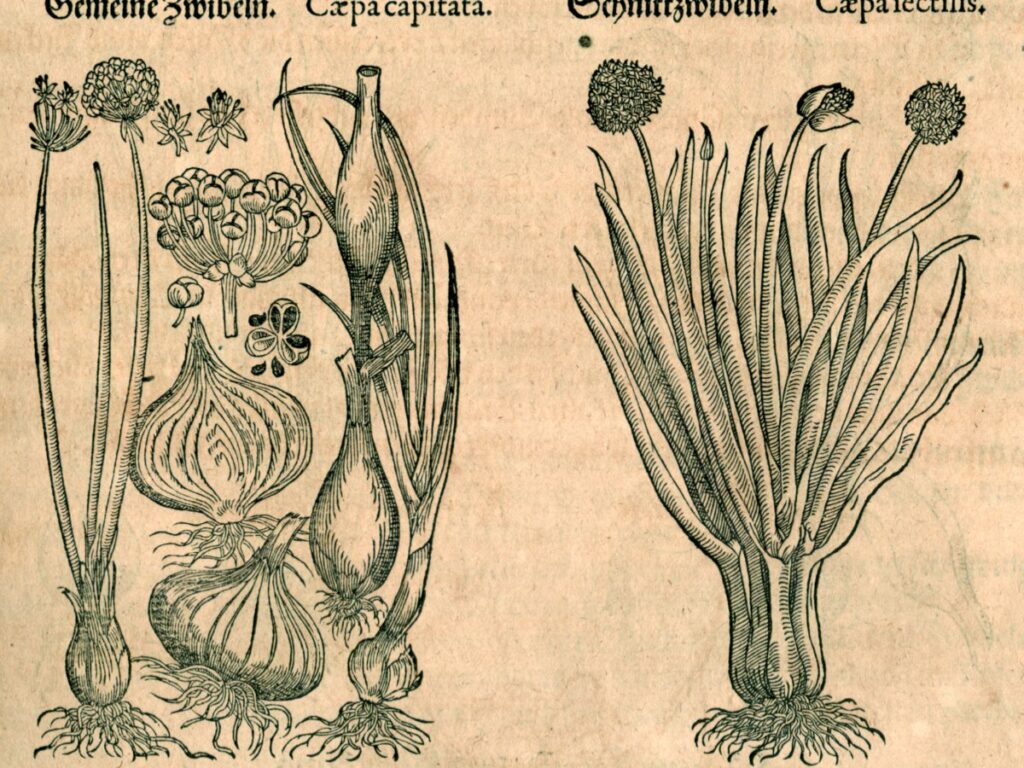
Allium cepa L. is a biennial herb belonging to the family Amaryllidaceae, though older botanical literature may classify it under Liliaceae or Alliaceae1. It is cultivated worldwide as an annual crop, though its natural life cycle spans two years. The plant is distinguished by its characteristic tunicated bulb—an underground storage organ wrapped in papery, membranous outer scales that provide protection and longevity during storage.
The aerial portions of Allium cepa consist of hollow, cylindrical leaves that emerge directly from the bulb base. These leaves are blue-green, waxy, and reach heights varying by cultivar and growing conditions. The inflorescence, when produced, is a characteristic umbel borne on a leafless scape that can extend up to 1.5 meters in height, topped with small white, pink, or purple flowers depending on cultivar. The flowers are hermaphroditic and produce viable seeds, though seed production diverts energy from bulb development, making seed-stalk removal a standard horticultural practice2.
Origin and Distribution
Allium cepa is a cultigen—a plant species that has become so modified through human cultivation that its wild progenitor can no longer be clearly identified from the cultivated form. Current evidence suggests the wild ancestor is Allium oschaninii, endemic to the mountainous regions of Iran, Afghanistan, and Pakistan1. Archaeological and ethnobotanical data indicate domestication occurred in Central Asia during the Bronze Age, with evidence of cultivation in ancient Egypt dating to at least 3500 BCE, where onions held religious and symbolic significance.
Today, Allium cepa has achieved cosmopolitan distribution and is cultivated on every inhabited continent. It ranks among the top ten most economically important vegetable crops globally, with annual production exceeding 100 million metric tons. This ubiquity reflects both the crop’s adaptability to diverse climates and its central role in cuisines worldwide.
Conservation Status
Allium cepa does not appear on any conservation threat lists and requires no IUCN assessment category. The species is classified as Least Concern due to its status as a widely cultivated crop with no wild population concerns. However, genetic diversity within cultivated onion germplasm has narrowed considerably through selective breeding for commercial traits, a concern addressed by seed savers and agricultural heritage organizations2.
Phytochemistry
The bulbs of Allium cepa are exceptionally rich in bioactive secondary metabolites that account for both the plant’s sensory characteristics and its pharmacological properties. The primary chemical classes include:
Flavonoids: Quercetin is the dominant flavonoid in most onion varieties, present at concentrations ranging from 270–1917 mg/kg fresh weight depending on cultivar and growing conditions2,7. Red onion varieties contain higher quercetin levels than yellow or white cultivars. Beyond quercetin, onions accumulate quercetin glycosides including quercetin-4’-glucoside and quercetin-3,4’-diglucoside, which are more bioavailable than the aglycone form8. Red and purple onion varieties also contain anthocyanins, contributing their distinctive coloration and providing additional antioxidant potential1,2.
Organosulfur Compounds: These volatile and non-volatile sulfur-containing compounds are responsible for both onion’s pungent odor and many of its medicinal properties. The primary compounds include allyl propyl disulfide (APDS), diallyl disulfide (DADS), and diallyl trisulfide (DATS), all derived from the non-protein amino acid S-allyl cysteine sulfoxide (alliin)2,9. When onion tissue is damaged by cutting or chewing, the enzyme alliinase catalyzes the conversion of alliin to allicin and its further degradation products. The highly volatile lachrymatory factor—identified as propanethial-S-oxide—is produced during this enzymatic cascade and is responsible for the characteristic tears produced when cutting onions3. Additional organosulfur compounds include S-methyl cysteine sulfoxide, thiosulfinates, and the cepaenes (complex polysulfides)9.
Phenolic Acids and Other Compounds: Onions contain phenolic acids including ferulic, caffeic, and p-coumaric acids, though at lower concentrations than quercetin. Saponins are present but in variable amounts. The bulbs also accumulate fructans and fructooligosaccharides, particularly inulin, which contribute to the prebiotic activity of onions and explain their traditional use for digestive health1,2. Vitamin C, vitamin B6, and selenium are present in nutritionally significant quantities2.
Pharmacological Actions and Mechanisms
The diverse phytochemistry of Allium cepa results in multiple overlapping pharmacological actions, most supported by cell culture, animal, and human clinical studies:
Antioxidant and Anti-inflammatory Activity: Quercetin and other flavonoids are potent antioxidant compounds that scavenge free radicals and upregulate endogenous antioxidant enzymes1,2. The anti-inflammatory mechanism operates partly through inhibition of cyclooxygenase (COX) and lipoxygenase (LOX) enzyme pathways, reducing prostaglandin and leukotriene synthesis2,3. This dual antioxidant and anti-inflammatory activity positions onion as an ally in managing chronic inflammatory conditions.
Antimicrobial Activity: Organosulfur compounds, particularly APDS, DADS, and DATS, demonstrate broad-spectrum antimicrobial activity against both gram-positive and gram-negative bacteria2,3. These compounds disrupt bacterial cell membranes and inhibit pathogenic growth at concentrations achievable through regular dietary consumption. The antimicrobial activity extends to antifungal and antiparasitic effects, partially explaining onion’s traditional use in treating infections1,2.
Antiplatelet Activity: A landmark study demonstrated that organosulfur compounds in onion inhibit human platelet aggregation through sulfur-dependent mechanisms6. This effect contributes to cardiovascular protective activity, as excessive platelet clumping underlies thrombotic events.
Hypoglycemic and Metabolic Effects: Allyl propyl disulfide and other organosulfur compounds increase free insulin levels and enhance insulin secretion in animal models2,3. Regular onion consumption has been associated with modest improvements in fasting blood glucose and hemoglobin A1c in diabetic human subjects. The fructan content may also contribute to improved glucose metabolism through prebiotic effects on gut microbiota1,2.
Hypotensive Activity: The combined antioxidant, anti-inflammatory, and antiplatelet effects of onion constituents contribute to modest blood pressure reduction observed in some clinical trials1,2.
Hepatoprotective and Cardiovascular Protection: Quercetin and organosulfur compounds provide protection against chemically-induced liver damage in animal models and reduce markers of liver injury in clinical contexts2,3. Cardiovascular protection extends beyond antiplatelet activity to include endothelial protection and lipid modulation1,2.
Anticancer Potential: Quercetin demonstrates in vitro cytotoxic activity against breast, colon, gastric, and ovarian cancer cell lines1,2. Organosulfur compounds have shown ability to inhibit pulmonary adenoma development in mice, though human clinical evidence remains limited to observational epidemiological studies suggesting reduced cancer risk with higher allium intake1,2,3.
Neuroprotective and Immunomodulatory Effects: Quercetin and organosulfur compounds protect neuronal cells against oxidative stress and excitotoxicity in vitro2. Onion extracts have demonstrated immunomodulatory activity, enhancing immune function while also reducing excessive inflammatory responses1,2.
Safety and Interactions
Allium cepa is classified as Safety Class 1 in the American Herbal Products Association’s Botanical Safety Handbook, indicating a long history of safe use with no significant known hazards when consumed at typical dietary and therapeutic doses.4,5 However, several considerations warrant attention:
The antiplatelet activity of organosulfur compounds raises a theoretical concern for individuals taking anticoagulant or antiplatelet medications such as warfarin, aspirin, or clopidogrel. While clinically significant interactions from dietary onion consumption are unlikely, concentrated onion supplements or high-dose juice preparations should be used cautiously in this population, and patients should inform their healthcare providers of supplemental onion use.6
Raw onion consumption may exacerbate gastroesophageal reflux disease (GERD) symptoms in susceptible individuals, likely due to the volatile sulfur compounds relaxing the lower esophageal sphincter. Cooking substantially reduces this effect.2,3
Contact dermatitis from handling raw onions is documented but uncommon, affecting primarily agricultural workers with prolonged occupational exposure. True allergy to Allium cepa is rare but has been reported, with cross-reactivity possible among Allium species including garlic, leek, and chive.5
The lachrymatory factor (propanethial-S-oxide) causes temporary eye and mucous membrane irritation during cutting but produces no lasting harm and is neutralized by cooking or refrigeration prior to cutting.9
No known contraindications exist for pregnancy or lactation at normal dietary intake levels. Onion is generally well-tolerated across all age groups.4,5
Growing in New England
Allium cepa is a cool-season crop that requires careful attention to photoperiod for successful bulbing. Photoperiod-sensitive varieties fall into three categories: long-day (14-16+ hours daylight required for bulbing), intermediate-day, and short-day varieties. In New England, which lies at approximately 41-45°N latitude, long-day varieties are essential. Recommended cultivars for the region include Copra (exceptional storage), Ailsa Craig (large, mild), and Walla Walla (early, sweet)2.
Seeds should be started indoors 8-10 weeks before the anticipated last frost date, typically in late February to early March in New England. Seedlings are transplanted to field beds or containers in mid-April once soil temperatures reach 50°F. Onions thrive in well-drained soil enriched with organic matter, slightly alkaline to neutral pH, and full sunlight. Consistent moisture during the growing season promotes vigorous leaf growth, though excessive nitrogen delays bulb maturation.
Harvest occurs in late July through August when foliage naturally dies back and falls over (the lodging stage). Bulbs are lifted carefully and allowed to cure in a warm, well-ventilated location for 2-3 weeks, during which the outer scales dry and tighten, extending storage life. Properly cured onions store for 6-8 months in cool (45-55°F), dry conditions2.
Folk Wisdom
The common saying An apple a day keeps the doctor away, but an onion a day keeps everyone away humorously captures both onion’s health benefits and its notorious pungent properties. From a phytochemical perspective, this adage contains genuine wisdom: the very compounds responsible for tears and strong odor—the organosulfur compounds and lachrymatory factor—are among the most bioactive constituents providing the antimicrobial, cardiovascular protective, and antioxidant benefits for which onion is prized9. The compounds that repel are, paradoxically, those that heal.
Pharmacological Actions: Anti-inflammatory, Antibacterial, Antifungal, Antimicrobial, Antioxidant, Antispasmodic, Diuretic, Hepatoprotective, Hypotensive, Immunomodulatory, Neuroprotective
Traditional Herbalism Information
Energetic Properties and Traditional Classification
In Western herbal tradition, Allium cepa is classified as warming and drying in nature. Culpeper, writing in the mid-17th century, described onion as hot in the fourth degree—the highest classification of heating action in Galenic medicine12. This warming quality is directly related to the volatile organosulfur compounds that produce the pungent taste and odor; in herbal tradition, pungency indicates heating and circulatory-stimulating properties11,12.
The drying quality becomes apparent after cooking: fresh onions have a demulcent aspect due to their water content and fructan content, but when dried or concentrated into preparations, their astringent and drying character emerges. This combination of warming and drying makes onion particularly suited to conditions characterized by cold, dampness, and stagnation—respiratory congestion, sluggish digestion, sluggish circulation11.
Herbal Actions and Therapeutic Properties
Traditional herbalists recognize the following actions in Allium cepa:
Expectorant and Diaphoretic: Onion is a classic expectorant, promoting the mobilization and expectoration of thick mucus from the respiratory tract. The pungent warming quality supports the action of the diaphoretic category—promoting perspiration and supporting the body’s thermoregulatory response to infection. These actions make onion particularly valuable in acute respiratory conditions accompanied by chest congestion11,13,14.
Antimicrobial and Febrifuge: The volatile organosulfur compounds provide antimicrobial activity against respiratory pathogens, while the warming nature supports fever resolution by promoting circulation and perspiration. This combination explains why onion features so prominently in traditional cold and flu remedies11,12,13.
Circulatory Stimulant: The pungent warming quality makes onion a circulatory stimulant that moves stagnant blood, bringing warming and nourishment to peripheral tissues. This action is particularly evident in traditional poultice applications, where fresh or roasted onion is applied to areas of localized inflammation or infection12,14.
Rubefacient: Closely related to its circulatory action, onion acts as a rubefacient—an agent that increases local blood flow and redness when applied topically. Raw or roasted onion poultices visibly redden the overlying skin within minutes, drawing inflammatory exudate and immune activity to the surface11,12.
Carminative and Stomachic: The warming, pungent quality supports digestive function, dispersing gas and promoting normal peristalsis. Onion has traditionally been used to improve appetite, reduce bloating and flatulence, and support sluggish digestion11,13.
Diuretic: Culpeper and other traditional sources indicate onion promotes urination, supporting the elimination of excess fluid and uric acid. This action is often applied in traditional herbalism to support kidney function and address fluid retention12.
Antispasmodic: The organosulfur compounds and the plant’s warming action provide mild antispasmodic activity, helpful in conditions involving muscle tension or smooth muscle spasm in the respiratory or digestive tract13,14.
Tonic and Immunomodulatory: Particularly when used as food-as-medicine over extended periods, onion supports overall constitutional strength and resilience to infection11,13.
Parts Used and Preparation Methods
The bulb (onion proper) is the primary medicinal part, used fresh, dried, as juice, or in decoctions and tinctures11,13. The papery outer skin or peel contains concentrated quercetin and can be dried, decocted, or extracted for supplemental use8. Fresh onion juice, extracted by grating and pressing, is used in small amounts as a direct antimicrobial agent. The whole fresh bulb is used in dietary applications.
Onion Syrup (Honey Onion): This is perhaps the most enduring and beloved herbal preparation, simple enough for household preparation yet effective enough to deserve inclusion in formal herbals. The preparation is straightforward: alternately layer sliced fresh onion and raw honey in a clean jar, leaving it sealed at room temperature overnight or for 24 hours. The onion releases its juices into the honey, creating a natural syrup. The result is strained and the liquid taken by the spoonful for coughs, sore throat, and respiratory congestion. The honey acts as both preservative and demulcent, while the onion provides expectorant and antimicrobial action11,12.
Poultice: Fresh onion is minced raw or roasted whole and applied directly to the skin, secured with cloth. A traditional preparation for boils involves wrapping a roasted onion in cloth and applying while still warm to the affected area to draw out the infection. The same application is used for insect stings, chilblains, and localized inflammation11,12.
Tincture: Fresh onion juice can be tinctured in high-proof alcohol at a ratio of 1:5, with a finished alcohol content of 45%. The tincture extracts and preserves the volatile principles and provides a concentrated form for winter use13.
Decoction: Dried onion skins or sliced dried onion can be decocted in water, producing a pale golden liquid with a mild onion aroma. This preparation is less commonly used than fresh preparations but offers an option for extended storage11.
Food-as-Medicine: Dietary use of fresh onions is the most accessible and sustainable form of herbal action. Regular consumption of onions—raw in salads, cooked in soups and stews, or pickled—provides ongoing delivery of quercetin, organosulfur compounds, and prebiotic fructans1,2.
Traditional Uses by Body System
Respiratory System: Onion is among the most time-tested respiratory herbs in Western tradition. Coughs, colds, acute bronchitis, and even chronic asthma have been addressed with onion preparations for centuries. The onion syrup is the classic preparation, often combined with honey or a small amount of ginger or thyme for additional support11,12,13. Culpeper recommends roasted onion eaten with honey for cough and hoarseness12. In New England folk practice, onion was a staple ingredient in chest plasters alongside mustard and other warming herbs.
Ear, Nose, and Throat: Culpeper specifically recommends warmed onion juice dropped into the ears for earache, and this application persists in contemporary folk practice12. A whole roasted onion held to the ear provides gentle warmth that supports circulation and drainage. These applications are best reserved for situations where infection is not suspected or has already been evaluated by a healthcare provider.
Skin and External Applications: The rubefacient and antimicrobial properties make onion valuable as a topical application for boils, abscesses, infected wounds, and chilblains. The traditional poultice application—wrapping roasted onion or raw onion paste in cloth and applying topically—remains a simple and effective application. The combination of direct antimicrobial action and increased local circulation supports resolution of localized infection11,12.
Digestive System: Onion’s carminative action addresses bloating, gas, and sluggish digestion. The prebiotic fructans promote the growth of beneficial gut microbiota, supporting long-term digestive and immune health1,2. Traditional use for dysentery and diarrhea reflects antimicrobial action, though current applications focus more on supporting normal flora and digestive function11,12,13.
Urinary and Kidney Function: The traditional diuretic action has been applied to fluid retention and kidney stone conditions, though clinical evidence is limited. Modern understanding of onion’s prebiotic effects and cardiovascular benefits may better explain historical observations of improved urinary and renal function with onion use1,2.
Cardiovascular System: Beyond its traditional warming and circulatory-stimulating actions, modern phytochemical research has validated onion’s capacity to support healthy blood glucose levels, reduce platelet aggregation, and provide antioxidant protection to the cardiovascular system1,2,3,6. Regular dietary onion consumption is among the most practical ways to support cardiovascular health through food-as-medicine.
Immune and Fever Response: The combination of antimicrobial, febrifuge, and immune-supportive actions makes onion a foundational remedy in acute infection and fever. The warming, circulating quality supports the body’s natural fever response, while volatile compounds provide direct antimicrobial activity11,12,13.
Dosage and Administration
For fresh dietary use, 50-100g of fresh onion bulb daily consumed in the diet provides therapeutic quantities of quercetin and organosulfur compounds2. A small to medium onion (roughly 100-150g) represents a modest amount in culinary context.
Fresh juice from pressed raw onion, which is more concentrated and intense, is dosed at 2-5 ml (roughly half to 1 teaspoon), often mixed with honey to improve palatability and add demulcent action. This should be taken no more than three times daily and is best reserved for acute situations.
Herbal tincture, if prepared at 1:5 ratio with 45% alcohol, is dosed at 2-5 ml three times daily. The small volume concentrates organosulfur compounds and extends shelf life for several years.
For onion syrup prepared by the standard honey-onion method, a tablespoon (roughly 15 ml) can be taken 3-4 times daily during acute respiratory illness, or once or twice daily for general respiratory support11,13.
Modern Adaptations and Contemporary Applications
The surge in phytochemical research has sparked renewed interest in onion-derived products. Quercetin supplements extracted from onion skin (often labeled as onion extract) are available commercially, though whole food forms retain advantages in terms of synergistic compounds and food-based integration2,7. Standardized onion extract is incorporated into cough preparations and respiratory formulas by herbal manufacturers.
The prebiotic properties of onion’s fructan and fructooligosaccharide content have generated interest in fermented onion preparations, which combine the anti-inflammatory quercetin with beneficial fermentation-derived compounds and enhanced probiotic activity2. Traditional fermentation (pickling in salt and vinegar) has now been validated as a means of not only preserving onion but enhancing its prebiotic and probiotic potential.
New England Herbalism and Historical Context
In colonial and rural New England, onion was a winter staple and foundational medicinal herb. Every household maintained an onion cellar or cool storage space holding hundreds of pounds of cured onions to provision the household through months when fresh vegetables were unavailable. Beyond its culinary centrality, onion featured prominently in home medical practice.
Roasted onion poultices became such a standard remedy in Vermont folk medicine that references to the Vermont onion remedy appear in 19th and early 20th century health guides. The use of onion in spring tonics—typically combined with other pungent, warming herbs—reflects the traditional understanding of onion as a renovative agent useful after the damp, cold winter months.
The practice of placing a cut onion in the sickroom, believed to draw out illness or bad air, reflects both the antimicrobial effect of volatile compounds (reducing airborne pathogens) and the traditional theory of sympathy in medicine—that onion, being a concentrated vital force, would draw illness from a person toward itself.
Folk Wisdom
Feed a cold, starve a fever may be debatable, but in New England farmhouse kitchens, the remedy for both was the same: onion broth and onion syrup. Generations of mothers and grandmothers kept onion syrup ready through winter months, ladling it out at the first sign of a cough or sniffle. A cut onion placed in the room of a sick child was standard practice well into the twentieth century—a tradition that bridges the gap between kitchen medicine and sympathetic healing, and one whose antimicrobial basis modern science has quietly confirmed.11,15
Sourcing, Sustainability, and Ethics
Allium cepa raises no ethical sourcing concerns. It is widely cultivated on every continent with no wild population harvesting or habitat pressure. Indeed, growing onions in a home or community garden is among the most practical ways to ensure quality and reduce environmental impact. Home-grown onions require no pesticide application in most climates, flourish in average garden soil, and store for extended periods without refrigeration.
Those sourcing onions commercially should prefer organic cultivation to minimize pesticide and synthetic fertilizer residues. Seed companies specializing in heirloom and open-pollinated varieties offer exceptional genetic diversity compared to commercial hybrid cultivars2.
Traditional Uses: Anti-inflammatory, Antimicrobial, Cardiovascular Support, Carminative, Digestive Support, Diuretic, Expectorant, Immune Support, Respiratory Support, Wound Healing
Magical Correspondences Information
Correspondences and Energetic Attributes
In Western magical tradition, Allium cepa carries strong Mars correspondences. Mars, the planet associated with protection, courage, boundary-setting, and banishing, directly aligns with onion’s traditional magical applications17,18. The element associated with onion is Fire, the element of transformation, purification, passion, and rapid action17. This combination of Mars and Fire imbues the onion with potent protective, cleansing, and transformative energy.
The plant is classified as masculine in gender, meaning it carries assertive, outgoing, protective energy rather than receptive or nurturing qualities17,18. Tuesday is onion’s planetary day (Mars day), making it an auspicious day for magical work with onion, particularly for banishing, protection, or courage-related workings. The Mars hour, calculated based on the day of the week and time zone, offers an additional layer of magical timing17.
Deity Associations and Sacred History
The onion holds unique spiritual and sacred significance across ancient civilizations, particularly in Egypt where evidence of ritual onion use spans millennia19,20. The ancient Egyptian goddess Isis, associated with magic, resurrection, and protective motherhood, was honored with onion offerings at temples. Onions were placed in mummy wrappings as part of funerary ritual, symbolizing eternal life and serving as a preservative agent that honored both the physical and spiritual dimensions of the deceased19,20.
Sokar, the Egyptian god of the dead and the afterlife, and his later syncretic association with Osiris (god of rebirth, resurrection, and regeneration), connect onion to the underworld and processes of death and renewal. Archaeological evidence reveals that onions were placed in the eye sockets of mummified pharaohs, including Ramesses IV, in a practice connecting the bulb’s layered, concentric structure with the layered realm of the afterlife and the penetrating quality of vision through the veil19,20.
In Greek tradition, Hecate, the threefold goddess associated with crossroads, magic, protection, and liminal spaces, was honored with onion left as offerings at three-way intersections. The onion’s ability to ward off negative forces and clarify vision aligns with Hecate’s role as a protective guide through mysterious and dangerous terrain18,19.
Magical Intentions and Symbolic Meanings
The primary magical intentions associated with onion encompass a coherent family of protective, purifying, and clarifying effects:
Protection: This is onion’s primary and most powerful magical application. The practice of hanging whole onions above doorways or in kitchen windows, particularly in Mediterranean and Eastern European traditions, creates a protective barrier against negative influence and the evil eye17,18,20. The onion is believed to absorb negative energy directed toward the household, with the bulb’s papery layers serving as a shield that progressively absorbs negativity. Some practitioners pierce the onion with black-headed pins and place it on windowsills, using the sharp pins to catch and hold negative intent.
Exorcism and Banishing: Cut onions placed in room corners, particularly when intention is set to banish negative energy or entities, operate through the principle of sympathetic magic: the onion’s layers can be understood as peeling away or removing obstacles and unwanted presences17,18. Dried onion skins can be burned as part of banishing incense, combining the purifying action of fire with onion’s protective energy.
Healing: The practice of rubbing a cut onion over an afflicted area originates from the sympathetic principle that the onion—being a concentrated vital force and antimicrobial agent—will draw out illness, infection, or pain17,18. Placing a cut onion under the bed of a sick person is a folk practice combining protective and healing intentions: the onion shields the person from additional negative influence while simultaneously drawing out illness.
Dreams and Prophecy: White onion placed under the pillow is a classical folk magical practice for accessing prophetic dreams, particularly dreams concerning one’s future romantic partner or spouse17. The onion’s traditional association with underworld journeys and Sokar/Osiris connects it to the liminal dream state, while white specifically carries associations with clarity, purification, and spiritual illumination.
Prosperity and Abundance: Planting onions in a garden with the intention of drawing abundance and prosperity is a widespread folk practice17,18. The planting of an onion at the front door threshold, particularly with coins or other prosperity symbols buried alongside it, combines the protective and abundant qualities. This working capitalizes on the onion’s role as a storage organ—a plant that concentrates and holds resources—applying that energetic principle to the household’s material well-being.
Passion and Lust: Red onions, in particular, carry Mars associations with passion and sexual vitality. Red onion can be incorporated into magical workings related to desire, attraction, and passionate connection17.
Color Symbolism in Magical Application
Different onion colors carry distinct magical associations based on color symbolism and Mars rulership17,18:
Red Onion: Carries Mars energy in its most direct and passionate form. Red onion is used for protective magic with a bold, assertive quality; for courage and strength workings; and for passion and desire magic. Red onion can also be used in banishing with increased intensity and heat.
Yellow Onion: The most common variety carries associations with friendship, harmony, and intellectual clarity alongside Mars protection. Yellow onion is appropriate for workings related to protection of home and family, for maintaining strong social bonds, and for mental clarity and truth-seeking.
White Onion: Associated with purification, clarity, truth, and the higher functions of Mars (spiritual protection, discernment against deception). White onion is ideal for dream work, for magical cleansing of space and energy, for workings related to spiritual vision and truth, and for protection of the mind and spirit rather than just the physical.
Ritual and Spellwork Applications
Protective Charms and Amulets: The simplest and most enduring application is hanging a whole onion above a doorway or in a window, ideally in a location where it will be noticed by those entering or passing by, creating a visible magical boundary. This charm is sometimes enhanced by piercing the onion with black-headed pins or nails, transforming it from a simple absorber of negativity into an active deflector. The charm remains in place until it dries completely (2-4 weeks) and can then be composted with gratitude.
Sympathetic Magic with Layers: The concentric layers of an onion bulb make it exceptionally suited to sympathetic magic—the principle that like affects like. To work with obstacles: peel an onion layer by layer while focusing on the specific obstacle or negative pattern to be removed, seeing each layer as a barrier being lifted. To clarify a situation: peel away layers while seeking understanding, allowing the layers to represent the layers of complexity being revealed.
Banishing Ritual: Cut an onion in half and place one half in each corner of a room, setting intention for negative energy to be absorbed. After 24 hours, seal the halves in bags and dispose of them away from the home, visualizing the negative energy contained and released. Some practitioners prefer to burn the onion halves as a more active form of the banishing.
Healing Poultice Magic: Beyond the physical effects of a raw or roasted onion poultice (which are genuine and supported by antimicrobial properties), the magical application involves focusing on the transfer of the onion’s vital force to the afflicted area while it warms and rests against the skin. Setting intention for the onion to draw out pain, infection, or disease creates a magical alignment with the physical healing action.
Dream Work Preparation: Place a white onion under the pillow before sleep, setting clear intention for the dreams sought. Upon waking, record the dreams immediately. The onion remains in place for seven nights, after which it is composted. Some practitioners combine this with a small journal kept with the onion, recording dreams each morning.
Prosperity Planting: Obtain onion sets (small bulbs) for planting. As you plant each in garden soil, place a coin or symbol of prosperity beside it, setting intention for abundance to grow with the plant. This combines the concentrative energy of the onion (its role as a storage organ) with sympathetic magic (the plant growing reflects abundance growing in the home). At harvest time, cook and eat the onions mindfully, consciously receiving the abundance you have grown.
Traditional Lore and Historical Magical Practice
Ancient Egypt: The concentric layers of the onion bulb held profound spiritual significance in ancient Egypt, understood as representations of the layered structure of the universe and the progression through spiritual realms. Oaths and contracts were sworn upon onions, giving the bulb a role as witness and guarantor of truth. The practice of including onions in burials served multiple functions: as sustenance for the afterlife journey, as a preservative for the body, as a symbol of eternal life and regeneration, and as a protective ward against chaos and decomposition19,20.
Mediterranean and European Tradition: The evil eye—the malevolent gaze believed to cause harm—is a central concern in Mediterranean folk magic, and onion is among the primary protections against it. The practice of carrying an onion in one’s pocket as protection against the evil eye is widespread from Italy through the Eastern Mediterranean and extends to Middle Eastern traditions18,20.
Eastern European and Balkan Tradition: Serbian wedding tradition includes the bride carrying an onion for protection against the envious gazes of neighbors, explicitly connected to the evil eye concept and to the vulnerability of the bride during the liminal transition of marriage20.
Indian and South Asian Tradition: Red onions hung at village entrances during cattle plague reflect the broader use of onion as a protective ward against disease and misfortune affecting community livestock and therefore food security19.
Medieval European Tradition: During plague epidemics, onions were hung in homes with the belief that they would draw out the pestilent air. While the mechanism understood was miasma-based, the practical benefit reflects onion’s genuine antimicrobial properties and its ability to reduce airborne pathogen loads through volatile organosulfur compound release. Medieval apothecaries included onion in protective sachets and amulets, often combined with other protective herbs like garlic and rosemary18,20.
American South and Folk Magic Traditions: The tradition of placing an onion in a window to absorb illness persists in African American folk magic and Southern Appalachian traditions, often combined with other protection practices.
Timing and Lunar Correspondences
Tuesday is the day of Mars and the most auspicious day for onion magic, particularly for protection, banishing, and boundary-setting workings17,18. The Mars hour, calculated from the day’s planetary hour system, offers optimal timing, though most practitioners find Tuesday itself sufficient for effective work.
Moon phase correspondences depend on the specific intention: waning moon (from full to new) is appropriate for banishing negative influences, removing obstacles, and reducing harmful influences. Waxing moon (from new to full) is appropriate for protection magic, prosperity workings, and strengthening protective boundaries17,18.
Integration into Practice and Sacred Space
Onion is above all a kitchen witch’s plant. Its ready availability, its cosmopolitan presence in every household, and its genuine effectiveness for both physical and magical purposes make it ideal for grounded, practical magical work. Keeping an onion in one’s kitchen—whether for magical or culinary purposes—is a simple way to maintain protective energy in the heart of the home.
In altar or shrine work, a whole onion can serve as a protective focal point, particularly in conjunction with other Mars-ruled herbs like garlic, black pepper, or chili. The pungent scent of onion dominates sacred space—a quality that can be either desired (for clearing and sharpening focus) or managed by pairing with more subtle herbs like lavender or rose if more gentle energy is needed.
The layered nature of the onion makes it an exceptionally evocative symbol in ritual contexts. Peeling an onion while focusing on inner work—whether removing obstacles, releasing emotions, or revealing truth—engages sympathetic magic in a visceral, embodied way that many practitioners find more effective than visualization alone.
Combining with Other Plants
Onion pairs naturally with other Mars-ruled and Fire-aligned plants. Garlic (Allium sativum) is its most traditional companion—combining the two in protection work creates a potent double ward that has been a staple of Mediterranean folk magic for centuries17,18. Black pepper adds sharpness and acceleration to banishing work when combined with dried onion skin in incense blends. Chili peppers amplify the Mars heat for workings requiring aggressive boundary-setting or the breaking of hexes.
For healing magic, onion combines well with honey (both in physical and magical preparation), thyme for respiratory healing, and ginger for warming and circulation-stimulating workings. These combinations mirror traditional herbal preparations—onion-honey syrup, onion-thyme chest rubs—creating a seamless bridge between physical and magical practice17.
To temper onion’s intensity for gentler workings, pair it with Venus-ruled herbs: rose petals soften the Mars aggression for protection work in romantic contexts, lavender balances the pungency for peaceful home protection, and chamomile moderates the heat for healing work with children or sensitive individuals17,18.
For prosperity workings, onion combines effectively with basil (a traditional money-drawing herb also ruled by Mars in some traditions) and cinnamon for abundance and warmth. Burying an onion with a sprig of basil and a coin creates a potent prosperity charm17.
Cautions for Magical Use
Mars energy, while powerful and protective, carries a sharp, cutting quality that can overwhelm more subtle or sensitive working. Practitioners who experience the Mars energy of onion as too intense may find it more comfortable to combine onion with balancing herbs—for instance, adding onion to a protection sachet that also contains rose petals or lavender to temper the Mars intensity with Venus gentleness.
The pungent scent of onion, while effective for clearing stagnant energy and creating a sharp magical boundary, can dominate altar space and may be overpowering during meditative or receptive magical work. If using onion as an altar focal point for extended periods, positioning it away from the center of the workspace may preserve the protective benefit while preventing scent-related distraction.
Combining onion and garlic in protection work creates an exceptionally powerful ward, as both are strong Mars plants, but may be unnecessarily intense for most household protection needs. Reserve the onion-garlic combination for situations of significant negative influence or for workings requiring maximum protective strength.
Folk Wisdom
The widespread belief that a cut onion left in a room will absorb illness or negative energy—found across cultures from ancient Egypt to the American South—persists in folk practice to this day. While modern science frames the mechanism differently (volatile sulfur compounds reduce airborne microbial loads rather than absorbing disease), the practical result aligns with the folk claim. Similarly, the tradition that onions hung in a doorway will turn black if they have absorbed evil intent likely reflects the natural oxidation and drying process, but the protective intention behind the practice remains meaningful in magical contexts.17,20,21
Planetary Rulers: Mars
Magical Intentions: Banishing, Dreams, Healing, Lust, Prosperity, Protection, Purification, Strength
Elemental Associations: Fire
- Marrelli, M., et al. (2019). Allium cepa: A Treasure of Bioactive Phytochemicals with Prospective Health Benefits. Molecules, 24(24), 4507.
- Zhao, X.X., et al. (2021). Recent Advances in Bioactive Compounds, Health Functions, and Safety Concerns of Onion (Allium cepa L.). Frontiers in Nutrition, 8, 669805.
- Hosseinzadeh, H., et al. (2021). Pharmacological Properties of Allium cepa, Preclinical and Clinical Evidences; A Review. Iranian Journal of Pharmaceutical Research, 20(2), 107-134.
- Teshika, J.D., et al. (2019). Traditional and modern uses of onion bulb (Allium cepa L.): a systematic review. Critical Reviews in Food Science and Nutrition, 59(sup1), S39-S70.
- Corea, G., et al. (2023). An ethnopharmacological, phytochemical, and pharmacological overview of onion (Allium cepa L.). Journal of Ethnopharmacology, 319, 117226.
- Goldman, I.L., et al. (1996). Antiplatelet activity in onion (Allium cepa) is sulfur dependent. Thrombosis and Haemostasis, 76(3), 450-452.
- Kim, S.H., et al. (2017). Variation of quercetin glycoside derivatives in three onion (Allium cepa L.) varieties. Saudi Journal of Biological Sciences, 24(6), 1157-1164.
- Slimestad, R., et al. (2007). Onions: a source of unique dietary flavonoids. Journal of Agricultural and Food Chemistry, 55(25), 10067-10080.
- Tang, Y., et al. (2026). Onion (Allium cepa L.) Organosulfur Compounds: From Traditional Use to Modern Pharmacological Insights. Food Science and Nutrition, 14(1), e71519.
- Dorsch, W. (1996). Allium cepa L. (Onion): Part 2. Chemistry, Analysis and Pharmacology. Phytomedicine, 3(4), 391-397.
- Grieve, M. (1931). A Modern Herbal. Dover Publications (1971 reprint). Onion entry.
- Culpeper, N. (1653). Culpeper’s Complete Herbal. Various modern reprints. Onion entry.
- Hoffmann, D. (2003). Medical Herbalism: The Science and Practice of Herbal Medicine. Healing Arts Press.
- Wood, M. (2008). The Earthwise Herbal Volume I: The Old World. North Atlantic Books.
- Gladstar, R. (2012). Rosemary Gladstar’s Medicinal Herbs: A Beginner’s Guide. Storey Publishing.
- King, J., and Felter, H.W. (1898). King’s American Dispensatory. Ohio Valley Company. Allium cepa entry.
- Cunningham, S. (1985). Cunningham’s Encyclopedia of Magical Herbs. Llewellyn Publications.
- Beyerl, P. (1984). The Master Book of Herbalism. Phoenix Publishing.
- Greer, J.M. (2017). The Encyclopedia of Natural Magic. Llewellyn Publications.
- Storl, W.D. (2016). A Curious History of Vegetables: Aphrodisiacal and Healing Properties, Folk Tales, Garden Tips, and Recipes. North Atlantic Books.
- Folkard, R. (1884). Plant Lore, Legends, and Lyrics. R.H. Allen and Company.