Pomegranate
Basic Information
Scientific Name: Punica granatum
Plant Family: Lythraceae
Conservation / Invasive Status: Least Concern
Geographic Range: Native to Asia
Safety Level: Use with Caution
Harvest Season: Fall, Winter
Parts Used: Bark, Flowers, Fruit, Leaves, Roots, Seeds
Scientific & Botanical Information
Botanical Description
Punica granatum L. is a deciduous shrub or small tree in the family Lythraceae (formerly placed in its own family, Punicaceae), typically reaching 1.5 to 5 meters in height with multiple spiny branches, though cultivated specimens can grow to 8 meters under optimal conditions. The trunk is short and often gnarled with reddish-brown bark that becomes increasingly fissured with age. The leaves are elliptic to lance-shaped, approximately 7.5 cm long, bright green and glossy, arranged oppositely or in sub-opposite whorls along the stems.1
The flowers are among the most distinctive in horticulture: large, axillary, and borne toward the ends of branchlets, with a thick, tubular, persistent calyx of five to seven lobes that remains attached to the fruit as the characteristic crown. Petals are lance-shaped, inserted between the calyx lobes, typically brilliant orange-red though cultivars range from white to deep crimson. Flowers may be single or double, with double-flowered ornamental forms that rarely fruit.1
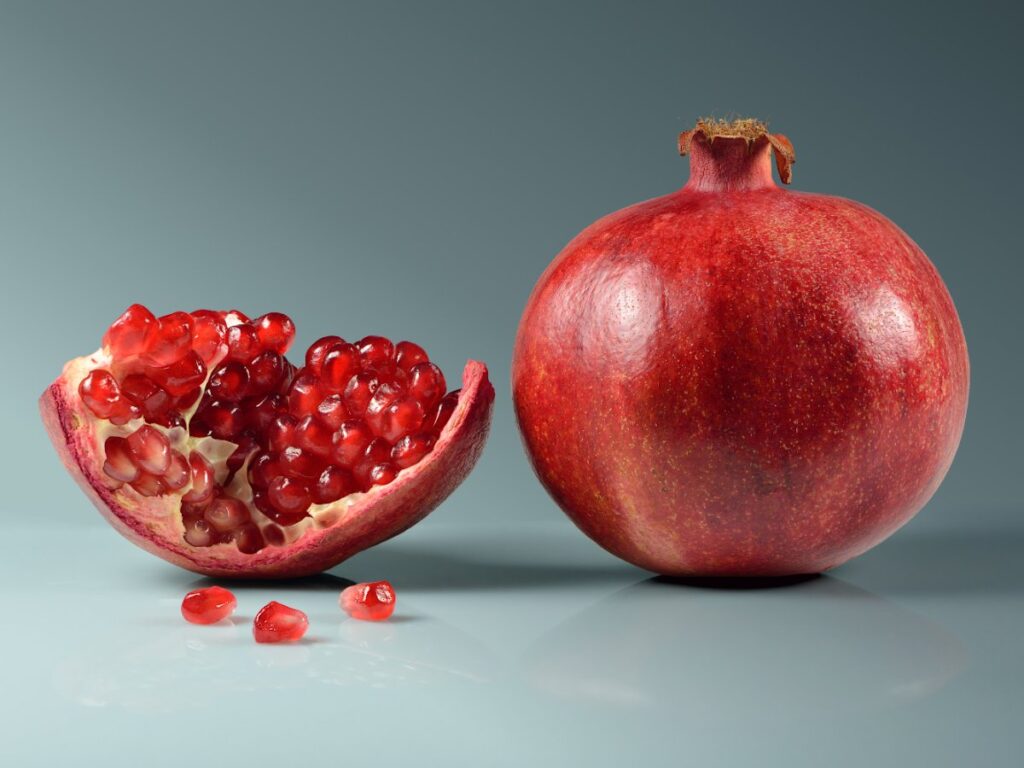
The fruit is a specialized berry type known as a balausta, unique to this genus. It is round to slightly oblate, 5 to 12 cm in diameter in cultivated varieties, with a tough, leathery rind (pericarp) that ranges from yellow-green to deep red. The interior is divided into irregular compartments (locules) by white, spongy, membranous walls. Within these compartments lie the seeds, each surrounded by a fleshy, translucent juice sac called a sarcotesta, and it is these seed-aril complexes that constitute the edible portion. A single fruit may contain 200 to 1,400 arils depending on cultivar and growing conditions.2
Geographic Distribution and Habitat
Punica granatum originated in the region spanning the Caucasus Mountains, the Iranian plateau, and Central Asia, with its primary center of domestication in ancient Persia approximately 5,000 years ago. Archaeological evidence confirms cultivation near the Tigris-Euphrates valley by 2,200 BCE, making pomegranate one of the earliest cultivated fruit species. The fruit was dispersed through ancient trade routes to India by the first century CE, reached Indonesia by the fifteenth century, and was carried to the Americas by Spanish colonists in the sixteenth century.3
Today, pomegranate is cultivated throughout Mediterranean, semi-arid, and subtropical regions worldwide. Leading producers include India, Iran, China, Turkey, Afghanistan, Pakistan, the United States (primarily California and Arizona), Spain, and Egypt. The species thrives in hot, dry summers and cool winters, preferring well-drained soils and full sun. It demonstrates considerable drought tolerance once established and adapts to alkaline soil conditions, though quality fruit production requires regular irrigation.1
Active Compounds
Pomegranate is among the most phytochemically complex fruits studied to date, with bioactive compounds distributed throughout the fruit, rind, seeds, flowers, bark, and leaves.
Ellagitannins: Punicalagins (alpha and beta isomers) are the most distinctive and abundant bioactive compounds in pomegranate, constituting the primary polyphenolic fraction of both juice and rind. Punicalagins are the largest molecular-weight polyphenols identified in the fruit and are principally responsible for its exceptional antioxidant capacity. Related compounds include punicalin and ellagic acid, the primary metabolic product of ellagitannin hydrolysis, which possesses independent pharmacological activity.4
Anthocyanins: Cyanidin, delphinidin, and pelargonidin glycosides account for the characteristic red-pink coloration of the arils and juice. Anthocyanin composition varies among cultivars and contributes to both antioxidant and anti-inflammatory properties.5
Flavonoids: Quercetin, rutin, kaempferol, luteolin, and genistein are present across fruit and leaf tissues.5
Organic acids: Gallic acid, chlorogenic acid, coumaric acid, cinnamic acid, and caffeic acid contribute to the polyphenolic profile.4
Punicic acid: The seed oil contains 55 to 81 percent punicic acid, a conjugated alpha-linolenic acid (omega-5 fatty acid) structurally analogous to conjugated linoleic acid. This unusual fatty acid has attracted research interest for its anti-inflammatory and metabolic effects.6
Alkaloids: The bark and root bark contain pelletierine, pseudopelletierine, isopelletierine, and methylpelletierine. These piperidine alkaloids are responsible for the anthelmintic properties historically used against tapeworm and carry a distinct safety profile from the fruit.7
Other constituents: Catechins, tannins, and significant dietary fiber (particularly in the pericarp) round out the compound profile. The rind contains the highest concentration of ellagitannins, which is why whole-pressed juice, which includes rind polyphenols, demonstrates greater antioxidant activity than aril-only juice.4
Pharmacological Actions
Antioxidant activity: Pomegranate juice demonstrates radical scavenging capacity exceeding that of red wine and green tea, primarily mediated by punicalagins and hydrolyzable tannins. The antioxidant efficacy stems from the electron-donating capacity of the polyphenolic structures, with the rind fraction contributing disproportionately to total antioxidant capacity.4
Anti-inflammatory activity: Pomegranate peel extracts inhibit the NF-kB signaling pathway and suppress pro-inflammatory cytokine expression including TNF-alpha, CRP, IL-1beta, IL-6, and IFN-gamma. Ellagic acid exhibits additional antimutagenic and anti-fibrotic properties through modulation of inflammatory pathways.8
Antiatherosclerotic and antihypertensive activity: Multiple studies document cardioprotective effects including improved vascular function, blood pressure reduction, and enhanced lipid profiles. Meta-analyses confirm consistent improvements in systolic blood pressure and triglyceride levels with regular pomegranate juice consumption.9
Anticancer activity: Preclinical studies demonstrate activity against prostate, breast, and colon cancer cell lines through suppression of inflammatory signaling, apoptosis induction, and inhibition of epithelial-to-mesenchymal transition. In colorectal cancer patients, pomegranate extract influenced gene expression and reduced plasma LPS-binding protein. Clinical evidence remains preliminary, and pomegranate should not be considered a cancer treatment.10
Antimicrobial activity: Punicalagins and related tannins demonstrate activity against Staphylococcus aureus and other pathogenic bacteria through interference with cell wall integrity and metabolic processes.4
Antidiabetic activity: Punicalagin, ellagic acid, and ellagitannins demonstrate antihyperglycemic effects through multiple molecular targets involved in glucose homeostasis, including alpha-amylase and alpha-glucosidase inhibition.9
Neuroprotective activity: Pomegranate extracts inhibit cholinesterase enzymes and enhance antioxidant capacity in neural tissue, suggesting potential benefit in neurodegenerative conditions. Preclinical data support a multifunctional neuroprotective mechanism through oxidative stress reduction.11
Safety and Interactions
Pomegranate fruit and juice are considered very safe when consumed as food, with an extensive history of dietary use spanning millennia and no documented serious adverse effects at typical consumption levels.
Drug interactions: Pomegranate juice inhibits intestinal CYP3A4 and CYP2C9 cytochrome P450 enzymes in vitro. However, human clinical studies indicate that pomegranate juice does not produce clinically significant increases in drug exposure for CYP3A4 or CYP2C9 substrates at typical consumption levels, suggesting laboratory findings may overestimate clinical risk.12
Warfarin interaction: Case reports document that pomegranate consumption can increase INR in warfarin-treated patients, presumably through CYP2C9 effects on warfarin metabolism. Patients with previously stable INRs experienced changes upon starting or stopping regular pomegranate consumption. Monitoring is recommended for patients on anticoagulant therapy.12
Antihypertensive interaction: Additive hypotensive effects may occur when pomegranate is combined with ACE inhibitors or other antihypertensive medications, as pomegranate independently lowers blood pressure.9
Bark and root preparations: Preparations containing pelletierine alkaloids have a distinctly different safety profile from the fruit. While traditionally used as anthelmintics against tapeworm, these alkaloids are toxic at excessive doses and such preparations should only be used under qualified supervision.7
Growing in New England
Punica granatum cannot be reliably grown outdoors in Northern New England. Standard cultivars require USDA Hardiness Zones 8 to 11, while New England encompasses primarily Zones 5 to 6 with some coastal areas reaching Zone 7. Several cold-hardy Russian cultivars, including Salavatski and Russian 26, can survive Zone 6 winters but are unlikely to produce reliable fruit in the short, cool New England growing season. Container culture in large pots moved to protected indoor spaces during winter represents the most practical approach for enthusiasts. Fresh pomegranates are widely available seasonally from September through January in grocery stores throughout the region, and pomegranate juice, dried arils, and standardized extracts are available year-round.
Folk Wisdom
The Roman naturalist Pliny the Elder documented pomegranate in the first century CE as a key ingredient in twenty-six different medicinal preparations, reflecting a reputation as a universal remedy that had already accumulated across millennia of Mediterranean civilization. This encyclopedic therapeutic range, from digestive complaints to parasitic infections to wound healing, arose independently in Egyptian, Persian, Greek, Indian, and Chinese medical traditions, each arriving at strikingly similar applications for the same fruit. Few plants in the historical pharmacopoeia can claim such consistent cross-cultural validation of their medicinal utility.
Pharmacological Actions: Anti-inflammatory, Antimicrobial, Antioxidant, Antitumor, Hypotensive, Neuroprotective
Traditional Herbalism Information
Energetics and Actions
Pomegranate, known as Dadima in Sanskrit, exhibits complex energetics that vary with cultivar and the part of the plant employed. In Ayurvedic medicine, the sweet variety is classified with madhura (sweet), amla (sour), and kashaya (astringent) rasas, a semi-hot virya (anushna), light and unctuous qualities (laghu and snigdha gunas), and a sweet post-digestive effect. The sweet pomegranate is one of relatively few fruits considered tridosha-balancing, beneficial for Vata, Pitta, and Kapha constitutions alike. Sour pomegranate, by contrast, increases Pitta while balancing Vata and Kapha. Ayurvedic texts praise Dadima as a pharmacy unto itself, acknowledging the complete medicinal utility of every part of the fruit.13
In Unani medicine, pomegranate is classified within the four-element framework as mildly cooling and drying, prescribed for constitutional imbalances related to excess heat and moisture, particularly in digestive and inflammatory conditions.14
In Western herbal terms, pomegranate acts as a powerful astringent, refrigerant, anthelmintic, styptic, hemostatic, and nutritive tonic. The astringent action, concentrated in the rind and bark due to their high tannin content, is among the strongest in the materia medica. The refrigerant action applies primarily to the juice and fresh arils, while the anthelmintic action is specific to the bark and root bark alkaloids.7
Parts Used and Their Applications
Pomegranate is exceptional in that every part of the plant has documented medicinal applications spanning multiple traditional systems.
Fruit juice and arils: The most commonly consumed preparation, valued as a nutritive tonic, digestive aid, and appetite stimulant. The arils are mineral-rich, providing significant iron, calcium, and potassium. Fresh juice is prescribed traditionally for jaundice, diarrhea, and nausea during pregnancy. In Ayurveda, the juice is considered a rasayana (rejuvenative) that supports overall vitality and tissue nourishment.13
Rind and peel: One of the most valued medicinal parts in traditional herbalism due to its exceptionally high tannin content, particularly punicalagins and ellagitannins. The dried rind is a powerful astringent used for diarrhea, dysentery, and gastroenteritis. It is prepared as decoction, dried powder, or paste for both internal and topical applications. The rind also serves as a traditional wound-healing agent and is used in oral health preparations.15
Seeds: Beyond the edible aril, the hard seed within contains punicic acid and other fatty acids with hormonal activity. Traditional systems employ pomegranate seeds for reproductive health, menstrual regulation, and fertility support. Dried pomegranate seeds, known as anardana in Ayurveda, are used in classical formulations including Dadimadi Gritham (herbal ghee) and Dadimavaleha (traditional herbal paste).13
Flowers: Highly astringent, pomegranate flowers are used as a hemostatic to stop bleeding, particularly nosebleeds. Flower preparations are also applied to wounds and used as an oral astringent for gum disease and mouth ulcers.15
Bark and root bark: Contains pelletierine alkaloids that paralyze intestinal parasites, specifically tapeworms, within minutes of contact. This is one of the oldest documented medicinal uses of any plant, recorded in the Ebers Papyrus of ancient Egypt. The bark decoction was a standard anthelmintic preparation across Ayurvedic, Unani, and Western herbal traditions for centuries before the advent of synthetic antiparasitic drugs.7
Leaves: Used in traditional astringent preparations and as part of comprehensive herbal formulas, though less prominent than other plant parts in the materia medica.
Traditional Uses
Parasitic infections: The bark decoction for tapeworm expulsion is among the oldest continuously documented medicinal plant uses, recorded in the Ebers Papyrus (c. 1550 BCE) and maintained in pharmacopoeias worldwide through the early twentieth century. Pelletierine alkaloids in the bark inhibit the parasite’s ability to grip the intestinal wall; immersion in a 1:10,000 solution causes tapeworm paralysis within approximately six minutes. The bark decoction was followed by a cathartic to expel the immobilized worm.7
Digestive support: Pomegranate has been used since antiquity for digestive disorders, with an adaptogenic quality: the astringent rind treats diarrhea and dysentery, while the sweet-sour juice stimulates appetite and supports digestion in cases of weakness or debility. Traditional Chinese Medicine employs pomegranate for gastric coldness, acidity, and abdominal distension.14
Women’s health: Traditional use for menstrual regulation, fertility support, and menopausal symptom management spans Ayurvedic, Persian, and Mediterranean herbal traditions. The seed’s hormonal activity and the fruit’s nutritive qualities together support reproductive health.13
Oral health: Pomegranate rind decoction is a traditional gargle for sore throat, mouthwash for gum disease, and topical treatment for mouth ulcers. The powerful astringent action tightens and tones oral mucous membranes.15
Skin conditions and wound healing: The rind’s astringent and antimicrobial properties make it a traditional remedy for wounds, ulcerations, and inflammatory skin conditions. Both topical paste and decoction wash have been employed.15
Cardiovascular support: Traditional Unani and Ayurvedic practitioners prescribed pomegranate for heart strengthening and blood purification, applications supported by modern evidence of antihypertensive and antiatherosclerotic activity.9
Fever management: The cooling refrigerant action of fresh juice makes pomegranate a traditional febrifuge, consumed during febrile illness for both its cooling properties and rehydrating effect.13
Preparations and Dosage
Fresh juice: Consumed in quantities of 50 to 240 mL daily. Whole-pressed juice, which captures polyphenols from rind, pith, and arils, is more medicinally potent than aril-only juice. Used as both a nutritive beverage and a vehicle for other herbal preparations.
Rind decoction: Approximately 5 grams of dried pomegranate peel simmered in 200 mL of water for one hour, strained, and consumed for diarrhea, dysentery, and digestive complaints. This is the most traditional and economical medicinal preparation.
Dried rind powder: Four grams mixed with warm water as a traditional astringent remedy. Can also be made into topical paste for skin conditions or incorporated into dental care formulations. Long shelf life makes this a convenient preparation.
Anardana (dried seeds): Used in Ayurvedic formulations as a digestive and tonic. Clinical studies have used 5 grams of seed powder twice daily for therapeutic applications.
Seed oil: Cold-pressed oil rich in punicic acid, used topically as a massage oil (typically diluted to 5 to 20 percent in a carrier oil) or taken internally in small quantities as a nutritional supplement.
Bark decoction (anthelmintic): This preparation requires professional supervision due to the presence of pelletierine alkaloids. Traditional preparation involves soaking bark in water overnight, then simmering until reduced by half. This use has largely been superseded by modern antiparasitic drugs.7
Pomegranate vinegar: A traditional fermented preparation used for digestive support and food preservation in Mediterranean and Middle Eastern cuisines.
Modern Adaptations
The commercial pomegranate juice industry, led by brands such as POM Wonderful, has brought pomegranate’s medicinal reputation to mainstream awareness. Whole-pressed juice captures polyphenols from the entire fruit, including the polyphenol-rich rind, delivering higher punicalagin concentrations than aril-only juice. Standardized pomegranate extracts concentrated for punicalagin content are now widely available as capsules and powders, offering the fruit’s primary bioactive compounds without the sugar content of juice. Pomegranate seed oil has entered the cosmetic and supplement markets, valued for its punicic acid content and anti-inflammatory properties. The fruit’s antioxidant reputation has also driven its incorporation into functional food products, skincare formulations, and cardiovascular health supplements.
New England Specific
Pomegranate cannot be cultivated outdoors in Northern New England under traditional methods, as the species requires warmer, drier conditions than the region provides. Container cultivation in large pots overwintered indoors is the most practical approach for those who wish to grow the plant. Fresh pomegranates are widely available seasonally from September through January in grocery stores and farmers markets throughout the region. Bottled pomegranate juice, dried arils, pomegranate molasses, and standardized supplements are available year-round through health food stores and online retailers, providing consistent access to the fruit’s medicinal benefits.
Sourcing and Ethics
Major pomegranate production occurs in India, Iran, China, Turkey, Afghanistan, and the United States, with California leading domestic cultivation. Water usage is a significant ethical consideration: pomegranate cultivation requires approximately fifty inches of water annually, and in arid production regions, this necessitates substantial irrigation with associated groundwater impacts. Nitrogen fertilizer contamination and pesticide use in large-scale California production raise additional environmental concerns. Sourcing from certified organic producers reduces chemical input exposure, and supporting smaller-scale farms using sustainable water management practices aligns pomegranate consumption with responsible herbal practice.16
Folk Wisdom
An ancient Jewish tradition holds that each pomegranate contains exactly 613 seeds, corresponding to the 613 mitzvot (commandments) of the Torah, making the fruit a symbol of righteousness, abundance, and spiritual completeness. While seed counts vary considerably in practice, ranging from 165 to over 1,300, a 2006 study counting seeds from 206 pomegranates sourced globally calculated an average remarkably close to 613, lending contemporary credibility to the ancient attribution. The blessing recited over pomegranate at Rosh Hashanah captures the fruit’s enduring symbolic power as a vessel of hidden, innumerable blessings.
Traditional Uses: Anti-inflammatory, Antimicrobial, Astringent, Cardiovascular Support, Digestive Support, Emmenagogue, Wound Healing
Magical Correspondences Information
Planetary Rulers and Elemental Association
Pomegranate is ruled by Mercury and aligned with the element of Fire, as documented in Cunningham’s Encyclopedia of Magical Herbs.17 The Mercury association reflects the fruit’s connection to communication between worlds, divination, wisdom, and the multiplicity contained within a single form, each of the hundreds of seeds a discrete unit of potential within a unified whole. Mercury’s governance over thresholds and crossroads resonates with pomegranate’s deep mythological role as the fruit that binds the living world to the underworld. The Fire element corresponds to the fruit’s transformative energy, its brilliant red coloration, and its association with passion, sexuality, and the vital force that persists through cycles of death and renewal.18
Magical Intentions and Uses
Fertility: Fertility is pomegranate’s most universal and ancient magical association. The hundreds of seeds contained within a single fruit have symbolized reproductive abundance across every culture that has encountered the plant. In Roman tradition, newlywed women wore crowns woven from pomegranate leaves and consumed the seeds to encourage conception. The fruit is offered in fertility rituals, carried as a charm, and eaten with intention to promote both physical and creative fecundity.18
Death and the underworld: Pomegranate is the preeminent fruit of the underworld in Western magical tradition, inseparable from the myth of Persephone. Its consumption creates bonds between the worlds of the living and the dead, and it is used in ancestor work, Samhain rituals, and necromantic practice. Ancient Greeks knew it as the fruit of the dead, believed to have sprouted from the blood of Adonis.19
Divination and wishes: The seeds lend themselves naturally to divinatory practices, including seed-counting oracles. Eating a pomegranate seed before making a wish is a widespread folk practice believed to ensure its fulfillment. The Mercury rulership supports the use of pomegranate in all forms of divination and prophetic work.17
Prosperity and abundance: The sheer number of seeds within a single fruit makes pomegranate a powerful prosperity symbol. Branches have been used as dowsing rods to locate hidden treasure, and the fruit is displayed in homes to attract wealth. In Feng Shui and Middle Eastern traditions, pomegranate represents material and spiritual abundance.18
Love and sexuality: Aphrodite is said to have planted the first pomegranate tree on the island of Cyprus, and the fruit has functioned as an aphrodisiac and love charm across Mediterranean cultures. The juice, deep red and staining, serves as a potent symbolic substitute for blood in love magic and binding spells.19
Protection: Pomegranate branches hung over doorways ward off evil influences. The tough rind, which conceals and protects the vulnerable seeds within, symbolizes the shielding of that which is precious and generative.17
Deity Associations
Pomegranate possesses one of the richest networks of deity associations in the entire magical pharmacopoeia, spanning virtually every major religious tradition of the ancient and modern world.
In Greek mythology, Persephone’s consumption of pomegranate seeds in the underworld bound her to return to Hades for a portion of each year, creating the mythological explanation for the seasons. This central myth connects pomegranate to Persephone as queen of the underworld, to Demeter as the grieving mother whose sorrow brings winter, and to the Eleusinian Mysteries, ancient Greece’s most sacred religious rites celebrating death and rebirth. Hera received pomegranate as a symbol of marriage and marital fidelity, and Aphrodite as an emblem of love and beauty.19
In Hindu tradition, pomegranate is one of the nine fruits traditionally offered to Ganesha, the remover of obstacles, and is associated with Bhoomidevi, the earth goddess, as a symbol of terrestrial abundance.20
In Jewish tradition, the pomegranate is listed among the Seven Species of the Land of Israel and features prominently in the Song of Songs as a symbol of beauty and sensuality. The traditional belief that each fruit contains 613 seeds, corresponding to the 613 commandments, makes it a symbol of righteousness and spiritual completeness. Pomegranate is consumed ceremonially at Rosh Hashanah with a blessing for abundance in the new year.20
In Islam, pomegranate is mentioned in the Quran as a fruit of paradise, and the Prophet Muhammad encouraged its consumption. In Christianity, the fruit symbolizes resurrection, the Passion, and the unity of the church, its many seeds representing individual believers gathered within one body of faith. In ancient Egypt, pomegranate was associated with Hathor and Osiris and buried with the dead to nourish the soul’s journey. In Zoroastrian tradition, the fruit is sacred to Anahita, goddess of fertility and water, and symbolizes the immortality of the soul.20
Ritual and Spellwork Applications
Seed-counting divination is among the oldest pomegranate oracles: the fruit is thrown to the ground and the number of seeds that scatter is interpreted as prophetic, traditionally indicating the number of children a woman will bear. In wish magic, a practitioner eats a single pomegranate seed while concentrating on a desire, or arranges seeds in a pattern representing the wished-for outcome before consuming them to internalize the intention.18
On Samhain, eating three pomegranate seeds honors Persephone and facilitates connection with the underworld and departed ancestors. This practice draws directly on the mythological precedent and aligns the practitioner with the thinning of the veil between worlds at the autumn cross-quarter.19
Pomegranate juice serves as a powerful ritual liquid: used as a libation to underworld deities, as a symbolic substitute for blood in spellwork and petition writing, and as a magical ink for sigil work and binding spells. The deep red color and staining quality reinforce its association with life force, passion, and irrevocable commitment.
Seeds are added to spell jars for fertility, prosperity, and protection. Dried rind is carried as a charm, added to prosperity incense blends, or burned as an offering. Pomegranate branches serve as natural wands or dowsing rods and may be hung over doorways for protective purposes.
Traditional Lore and Folk Magic
The myth of Persephone and the pomegranate is among the most influential narratives in Western magical tradition. When Hades offered Persephone pomegranate seeds in the underworld, her consumption of six (or in some versions, three) seeds bound her to return for half the year, creating winter through Demeter’s grief and spring through her joyful return. The myth establishes pomegranate as the fruit of binding, commitment, and the inescapable link between life and death.19
In Persian tradition, pomegranate has been sacred since prehistoric times, associated with the deities Mithra and Anahita and symbolizing fertility, abundance, and royal authority. The pomegranate blossom held particular sacred status during the Achaemenid period. The fruit features in Zoroastrian coming-of-age ceremonies, marriage rites, and funerary practices, marking every major transition of human life.20
In ancient Mesopotamia, the crimson arils were metaphorically linked with fecundity and ritually offered to Ishtar, goddess of love and reproduction. In Roman wedding custom, brides wore pomegranate-leaf wreaths and consumed the seeds to ensure fertility and marital happiness. Ancient Sumerians believed that souls of the dead ate pomegranate seeds to achieve immortality.20
The fruit’s presence in the Song of Songs, where it symbolizes beauty, love, and sensuality, has resonated through millennia of Jewish and Christian interpretive tradition, weaving pomegranate into the fabric of Western religious art and symbolism.
Timing
Pomegranate magic aligns most powerfully with Wednesday, Mercury’s day, supporting divination, wish magic, communication between worlds, and all forms of prophetic work. Samhain is the primary sabbat for pomegranate ritual, when the fruit is seasonally available and the veil between worlds is thinnest. Mabon, the autumn equinox, is also strongly associated with pomegranate as a harvest celebration and a moment of balance between light and dark. The full moon amplifies fertility and abundance workings with pomegranate, while the dark moon supports underworld communication and ancestor work. The fruit is most magically potent when fresh and in season, from September through January in the Northern Hemisphere.
Working with Pomegranate in Practice
Opening a pomegranate is itself a ritual act: the breaking of the tough outer rind to reveal the hidden jewels within mirrors the magical principle of accessing concealed potential through deliberate effort. The juice stains fingers and cloth a deep red, a quality that practitioners embrace as part of the fruit’s magical identity rather than a nuisance.
Fresh seeds are the most versatile working material, used in spell jars, consumed for wishes and fertility, scattered as offerings, or arranged in ritual patterns. Dried rind is portable and shelf-stable, suitable for incense, sachets, and carried charms. Pomegranate juice serves as ritual offering, magical ink, and a component of Samhain and ancestor altars. The branches, thorny and resilient, function as protective wands and may be crafted into wreath frames for seasonal altar decoration.
In kitchen witchcraft, pomegranate integrates naturally into seasonal celebrations. Adding seeds to a harvest feast while speaking intentions of abundance, stirring pomegranate molasses into sauces while visualizing prosperity, or sharing the fruit with loved ones as a binding gesture of fidelity all represent accessible daily magic rooted in millennia of tradition.
Combining with Other Plants
For divination and prophetic work, pomegranate pairs naturally with other Mercury herbs including mugwort, dill, and fennel. Mugwort in particular amplifies the prophetic and underworld aspects of pomegranate work, making the combination especially potent for Samhain rituals and dream divination.
For fertility magic, combining pomegranate with rose, jasmine, and damiana creates a comprehensive blend spanning the romantic, reproductive, and creative dimensions of fertility. For prosperity work, pomegranate with basil, cinnamon, bay laurel, and clove produces a potent abundance formula drawing on multiple planetary influences.
For underworld and ancestor work, pomegranate combines effectively with vervain, rue, and cypress, all associated with death, mourning, and communication across the veil. Rosemary, the herb of remembrance, deepens pomegranate’s ancestor connection during memorial rituals.
Cautions for Magical Use
Pomegranate carries profound sacred significance across Jewish, Christian, Islamic, Hindu, Egyptian, Persian, and Zoroastrian traditions. The fruit appears in scripture, sacred art, and religious ceremony across these living faiths, and practitioners should approach deity-specific workings with respect and genuine understanding rather than superficial borrowing.
The Persephone mythology carries a particular caution: pomegranate magic creates binding, commitment, and return. It is inherently a magic of irrevocable choices and ties that cannot be easily undone. This makes it powerful for marriage blessings, ancestral connections, and oaths but inappropriate for casual or temporary workings. The fruit’s association with the underworld also warrants thoughtful preparation and proper grounding when used in death and ancestor work.19
Practically, pomegranate juice stains permanently, and practitioners should protect altar cloths and ritual garments accordingly.
Folk Wisdom
No fruit in the magical pharmacopoeia spans as many traditions, carries as many meanings, or touches as many aspects of human experience as the pomegranate. It is simultaneously the fruit of fertility and the fruit of death, of love and of binding, of earthly abundance and divine righteousness. This capacity to hold contradictions, to contain hundreds of individual seeds within a single vessel, to nourish the living and accompany the dead, may be the pomegranate’s deepest magical teaching: that the most powerful symbols are those capacious enough to embrace paradox.
Planetary Rulers: Mercury
Magical Intentions: Ancestral Work, Divination, Fertility, Love, Prosperity, Protection
Elemental Associations: Fire
- Morton, J. (1987). Pomegranate. In Fruits of Warm Climates (pp. 352-355). Julia F. Morton.
- Holland, D., Hatib, K., & Bar-Ya’akov, I. (2009). Pomegranate: Botany, Horticulture, Breeding. Horticultural Reviews, 35, 127-191.
- Chandra, R., Babu, K.D., Jadhav, V.T., & Teixeira da Silva, J.A. (2010). Origin, History and Domestication of Pomegranate. Fruit, Vegetable and Cereal Science and Biotechnology, 4(2), 1-6.
- Gil, M.I., Tomas-Barberan, F.A., Hess-Pierce, B., Holcroft, D.M., & Kader, A.A. (2000). Antioxidant Activity of Pomegranate Juice and Its Relationship with Phenolic Composition and Processing. Journal of Agricultural and Food Chemistry, 48(10), 4581-4589.
- Viuda-Martos, M., Fernandez-Lopez, J., & Perez-Alvarez, J.A. (2010). Pomegranate and its Many Functional Components as Related to Human Health: A Review. Comprehensive Reviews in Food Science and Food Safety, 9(6), 635-654.
- Vroegrijk, I.O., van Diepen, J.A., van den Berg, S., et al. (2011). Pomegranate seed oil, a rich source of punicic acid, prevents diet-induced obesity and insulin resistance in mice. Food and Chemical Toxicology, 49(6), 1426-1430.
- Grieve, M. (1931). A Modern Herbal. Dover Publications (1971 reprint). Pomegranate entry.
- Ismail, T., Sestili, P., & Akhtar, S. (2012). Pomegranate peel and fruit extracts: A review of potential anti-inflammatory and anti-infective effects. Journal of Ethnopharmacology, 143(2), 397-405.
- Aviram, M. & Rosenblat, M. (2012). Pomegranate Protection against Cardiovascular Diseases. Evidence-Based Complementary and Alternative Medicine, 2012, 382763.
- Pantuck, A.J., Leppert, J.T., Zomorodian, N., et al. (2006). Phase II Study of Pomegranate Juice for Men with Rising Prostate-Specific Antigen following Surgery or Radiation for Prostate Cancer. Clinical Cancer Research, 12(13), 4018-4026.
- Subash, S., Essa, M.M., Al-Adawi, S., et al. (2014). Neuroprotective effects of berry fruits on neurodegenerative diseases. Neural Regeneration Research, 9(16), 1557-1566.
- Farkas, D., Oleson, L.E., Zhao, Y., et al. (2007). Pomegranate juice does not impair clearance of oral or intravenous midazolam, a probe for cytochrome P450-3A activity. Journal of Clinical Pharmacology, 47(3), 286-294.
- Frawley, D. & Lad, V. (2001). The Yoga of Herbs: An Ayurvedic Guide to Herbal Medicine. Lotus Press.
- Duke, J.A. (2002). Handbook of Medicinal Herbs. 2nd ed. CRC Press.
- Lansky, E.P. & Newman, R.A. (2007). Punica granatum (pomegranate) and its potential for prevention and treatment of inflammation and cancer. Journal of Ethnopharmacology, 109(2), 177-206.
- U.S. Department of Labor, Bureau of International Labor Affairs. (2022). List of Goods Produced by Child Labor or Forced Labor. U.S. Department of Labor.
- Cunningham, S. (1985). Cunningham’s Encyclopedia of Magical Herbs. Llewellyn Publications.
- Beyerl, P. (1984). The Master Book of Herbalism. Phoenix Publishing.
- Graves, R. (1955). The Greek Myths. Penguin Books.
- Ward, C. (2003). Pomegranates in eastern Mediterranean contexts during the Late Bronze Age. World Archaeology, 34(3), 529-541.