Potato
Basic Information
Scientific Name: Solanum tuberosum
Plant Family: Solanaceae
Conservation / Invasive Status: Least Concern
Geographic Range: Cultivated in Northern New England
Safety Level: Use with Caution
Harvest Season: Fall, Summer
Parts Used: Roots
Scientific & Botanical Information
Botanical Description
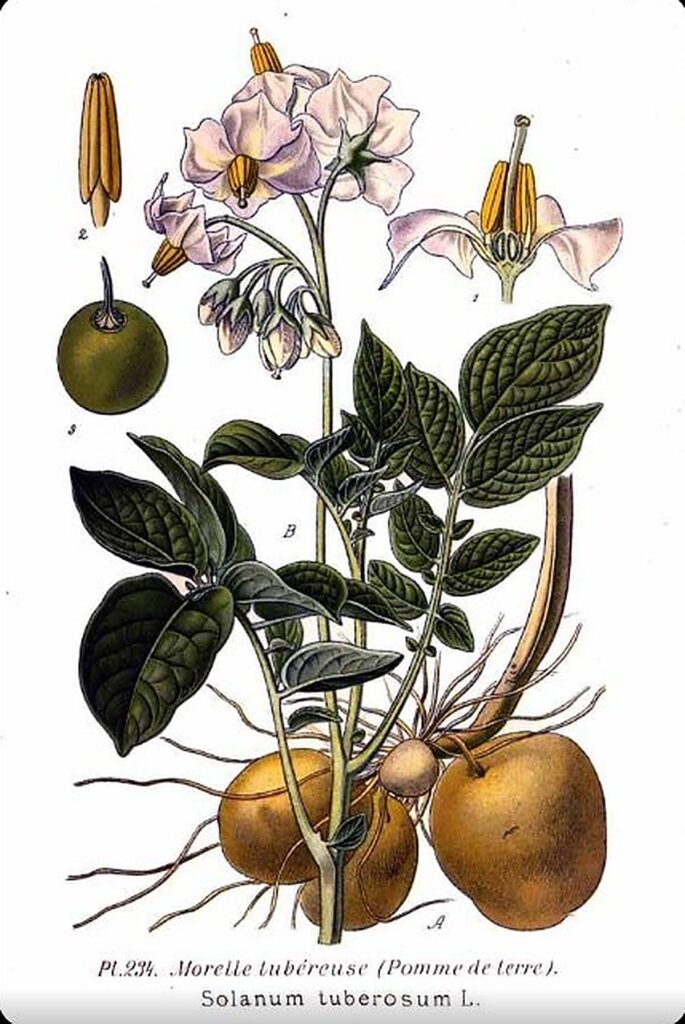
Solanum tuberosum L. is a herbaceous perennial of the family Solanaceae (nightshade family), though it is cultivated as an annual. The plant grows 30 to 100 cm tall with angular, branching stems bearing alternate, pinnately compound leaves composed of 2 to 4 pairs of leaflets with small interjected leaflets between the main pinnae. Flowers are white, lavender, or purple with five fused petals and prominent yellow stamens, borne in terminal cymes. The fruit is a small, green, tomato-like berry containing numerous seeds, though commercial propagation is vegetative via tuber pieces.1
The defining feature of the species is the tuber: a swollen underground stem (stolon) that serves as a starch storage organ. Tubers develop in response to short day length and cool temperatures, though modern cultivars have been bred to minimize photoperiod sensitivity. Each plant produces several to more than 20 tubers, typically weighing 50 to 300 grams. The tuber surface bears lenticels (breathing pores) and eyes (axillary buds) capable of sprouting new plants. Fresh tuber composition is approximately 80% water, 15 to 20% carbohydrates (primarily starch), 2 to 3% protein, and less than 0.1% fat, along with minerals and vitamins.1
Geographic Distribution & Habitat
Solanum tuberosum was domesticated 7,000 to 10,000 years ago in the highlands of southern Peru and extreme northwestern Bolivia from wild species in the Solanum brevicaule complex. Indigenous potato populations extend from western Venezuela south to northern Argentina, with the greatest diversity concentrated in Peru, Bolivia, Ecuador, and Chile, where approximately 3,000 landrace varieties persist. Spanish explorers introduced the potato to Europe in the second half of the sixteenth century, and subsequent colonial maritime networks distributed it to every inhabited continent. It is now the world’s fourth most important food crop after maize, rice, and wheat, cultivated in over 100 countries.2
In Northern New England, the potato has been cultivated since 1719, when Scotch-Irish settlers established the first permanent patches near Londonderry (now Derry), New Hampshire. Maine’s Aroostook County became one of the premier potato-growing regions in North America. The crop thrives in the region’s cool summers (optimal growth slightly below 70°F), acidic soils (pH 5.3 to 6.0), and well-drained loams. The growing season runs from late April through September, with harvest triggered by vine senescence or first hard frost in late September to mid-October.3
Active Compounds
Glycoalkaloids. The steroidal glycoalkaloids α-solanine and α-chaconine account for more than 95% of total glycoalkaloid content in cultivated potatoes. Both share the aglycone solanidine (a C27 cholesterol-derived steroid) but differ in their trisaccharide side chains. Concentrations are highest in sprouts, peel, and the tissue surrounding eyes, with 30 to 80% of total glycoalkaloids localized in the outer peel layer. Typical cultivated tuber levels range from 0.02 to 0.15 mg/g fresh weight, well below the established safety limit of 0.2 mg/g.4
Phenolic compounds. Chlorogenic acid (5-caffeoylquinic acid) constitutes 50 to 70% of total phenolic content and contributes 28 to 45% of antioxidant activity. Additional phenolics include caffeic acid, ferulic acid, p-coumaric acid, gallic acid, and catechin. Pigmented cultivars contain anthocyanins: purple varieties are rich in petunidin-3-coumaroylrutinoside-5-glucoside, while red varieties accumulate pelargonidin-based anthocyanins, with concentrations reaching 1 g/kg in deeply colored cultivars.5
Carotenoids. Lutein and zeaxanthin are the primary xanthophyll carotenoids, with minor amounts of violaxanthin and neoxanthin. White-fleshed tubers contain 5 to 10 mg/kg fresh weight total carotenoids, yellow-fleshed varieties 10 to 35 mg/kg, and dark-yellow cultivars up to 100 mg/kg. These carotenoids are essential for retinal health and must be obtained from the diet.6
Vitamins and minerals. A medium boiled potato (150 g) provides approximately 27 mg vitamin C (about 30% of daily value), significant amounts of thiamine (B1), riboflavin (B2), vitamin B6, folate (B9), and niacin, along with potassium, magnesium, phosphorus, and iron. New potatoes contain roughly double the vitamin C of mature tubers.7
Resistant starch. Retrograded starch forms when cooked potatoes are cooled, producing a fraction resistant to enzymatic digestion in the small intestine. Content varies with cultivar and preparation but typically ranges from 3 to 12% of total starch in cooled cooked potatoes. Complexation with phenolic acids can increase resistant starch content further.8
Proteins and bioactive peptides. Patatin is the dominant storage protein in tubers, comprising 30 to 40% of total soluble protein, with demonstrated lipid acyl hydrolase activity. Protease inhibitors (Kunitz type, types I and II) exhibit antimicrobial properties. Bioactive peptides derived from potato proteins have shown inhibitory activity against TNF-α release, COX-2, and inducible nitric oxide synthase expression.9
Pharmacological Actions
Antioxidant activity. Potato phenolics, particularly chlorogenic acid and anthocyanins, demonstrate significant antioxidant capacity in cell culture, animal, and human studies. Potato peel contains 10 to 12 times greater antioxidant content than flesh. Purple-fleshed varieties show the highest total antioxidant activity among commercial cultivars, followed by red-fleshed and then yellow-fleshed types. Brown (2005) confirmed that specialty colored potato selections represent a meaningful dietary source of antioxidant phenolics.5
Anti-inflammatory effects. Potato-derived bioactive peptides significantly inhibit TNF-α release, COX-2 expression, and inducible nitric oxide synthase expression in intestinal cell models. Anthocyanin-rich purple potato extracts have been shown to prevent low-grade chronic inflammation associated with metabolic disorders. Flavonoid-mediated mechanisms include reduced neutrophil infiltration, macrophage modulation, and inhibition of NF-κB and AP-1 signaling pathways.9
Antimicrobial properties. Potato protease inhibitors reduce growth of pathogenic fungi including Phytophthora infestans, Rhizoctonia solani, and Botrytis cinerea. Kunitz family proteins inhibit Staphylococcus aureus, Listeria monocytogenes, Escherichia coli, and Candida albicans. Potato peel extracts also demonstrate effective inhibition of gram-positive and gram-negative bacteria, with flavonoids, anthocyanins, and steroidal alkaloids identified as active agents.10
Gastroprotective effects. Fresh potato juice has demonstrated protective effects on gastric mucosa in animal models, attributed to its alkaline buffering capacity, mucilage content, and phenolic compounds. Spray-dried potato juice preparations show potential as functional food ingredients for gastrointestinal support.11
Prebiotic activity. Resistant starch from cooled cooked potatoes is fermented by colonic microbiota, producing short-chain fatty acids (especially butyrate) that support intestinal barrier integrity and reduce inflammation. Potato-derived resistant starch produces the greatest butyrate increase compared to other dietary sources. Clinical trials show that approximately 5 grams per day of potato resistant starch improves gastrointestinal symptoms over 2 to 6 weeks.8
Safety & Interactions
Safety class: Use with Caution. The tuber as normally consumed (peeled or well-stored, not green or sprouted) has a long history of safe dietary use. However, all aerial parts of the plant (leaves, stems, flowers, unripe berries) are toxic, and tubers that have greened or sprouted accumulate dangerous levels of glycoalkaloids.4
Glycoalkaloid toxicity. Toxic symptoms appear at doses of 2 to 5 mg/kg body weight and include nausea, vomiting, diarrhea, abdominal cramps, burning throat sensation, and headache. Neurological effects at higher doses include hallucinations, loss of sensation, and paralysis. Lethal doses range from 3 to 6 mg/kg body weight. The primary mechanism is cell membrane disruption via interaction with membrane cholesterol, with secondary acetylcholinesterase inhibition contributing to systemic toxicity.4
Green and sprouted potatoes. Light exposure triggers chlorophyll and glycoalkaloid biosynthesis simultaneously. Sprouts may contain 5 to 50 times the normal glycoalkaloid concentration. The European Food Safety Authority (2020) established monitoring protocols and confirmed that glycoalkaloids in potatoes present a health concern when safety limits are exceeded. Peeling removes 30 to 80% of glycoalkaloids; boiling provides additional reduction. Potatoes with green discoloration, visible sprouts, or a bitter taste should be discarded.12
Interactions. No clinically significant drug interactions are documented for dietary potato consumption. However, individuals sensitive to solanaceous plants or with inflammatory bowel conditions may experience symptom exacerbation. Raw potato juice used therapeutically may interact with antacid medications by altering gastric pH.7
Growing in New England
Potatoes are among the most rewarding crops for New England gardens. The cool summers, acidic soils, and adequate rainfall of the region closely match the potato’s Andean highland origins. Plant seed pieces (cut to 40 to 50 grams with at least two eyes, cured 1 to 2 days) 4 to 5 inches deep in well-drained loam, spacing 12 inches within rows and 30 to 36 inches between rows. Timing is 2 to 4 weeks before the average last frost date: late April in southern New England, mid-May in northern Maine and Vermont.3
Soil should be slightly acidic (pH 5.3 to 6.0) with good organic matter content. Hill plants when stems reach 6 to 8 inches, mounding soil 4 to 6 inches high to prevent tuber greening. A second hilling two weeks later provides additional coverage. Provide 1 to 1.5 inches of water per week during active growth and tuber bulking (typically July through August).3
Recommended varieties for the region: Kennebec (white flesh, moderate late blight resistance, excellent all-purpose), Red Norland (red skin, early maturity, cold-tolerant), Irish Cobbler (white flesh, early, traditional New England favorite), and Adirondack Blue or Purple (pigmented flesh, high antioxidant content, novelty appeal).3
Pest and disease management: Late blight (Phytophthora infestans) is the primary fungal concern in the humid New England climate. Colorado potato beetle, aphids, and flea beetles are the most common insect pests. Crop rotation on a 3-year cycle reduces soilborne diseases. Harvest new potatoes 70 to 90 days after planting; mature potatoes at 120 to 150 days, after vine senescence or first hard frost. Cure harvested tubers at 55 to 60°F and 90 to 95% humidity for 7 to 10 days before storing at 38 to 40°F in complete darkness.3
Folk Wisdom
“Never eat a green potato.” This widespread folk warning is fully validated by modern toxicology. Green coloration indicates concurrent accumulation of chlorophyll and glycoalkaloids (solanine and chaconine) in light-exposed tubers. The EFSA’s 2020 risk assessment confirmed that glycoalkaloid levels in greened potatoes frequently exceed safe consumption thresholds.12
“The skin has all the nutrition.” Partially validated. Potato peel does contain 10 to 12 times the antioxidant content of flesh, along with concentrated fiber and phenolic acids. However, the flesh provides the majority of carbohydrates, protein, potassium, and B vitamins by mass. More accurately, the peel is disproportionately rich in certain protective phytochemicals relative to its weight.5
Pharmacological Actions: Anti-inflammatory, Antibacterial, Antifungal, Antimicrobial, Antioxidant
Traditional Herbalism Information
Energetics & Actions
Solanum tuberosum is cooling to neutral in temperature, moistening in quality, and sweet-starchy in taste. In Traditional Chinese Medicine, potato benefits the spleen and stomach, stops pain, and detoxifies while relieving swelling. Western herbal energetics recognize the tuber as demulcent, nutritive, anti-inflammatory (topically and internally), alkalizing, and mildly diuretic owing to its high potassium content. The raw juice is distinctly cooling and soothing to inflamed mucous membranes, while the cooked tuber acts as a gentle nutritive tonic.13
Parts Used & Their Applications
Tuber (raw). Freshly pressed juice used internally for gastric complaints; grated or sliced raw tuber applied topically as a cooling poultice for burns, inflammation, and skin conditions.
Tuber (cooked). The primary form of food medicine. Boiled, steamed, or baked potato serves as a nutritive tonic and gentle demulcent food. Cooled cooked potato provides resistant starch for gut health support.
Potato water. The starchy water remaining after boiling potatoes retains leached minerals and mucilaginous starch, used as a soothing digestive beverage or topical rinse.
Peel. Applied directly to warts in folk practice; concentrated source of protective phenolic compounds when consumed as part of skin-on preparations.
Leaves, stems, flowers, and berries: TOXIC. All aerial parts contain concentrated glycoalkaloids (solanine and chaconine) and must never be used herbally. Sprouted and green tubers are similarly dangerous.14
Traditional Uses
Digestive system. Raw potato juice has a long tradition of use for peptic ulcers, gastritis, and acid reflux across European and South American folk medicine. The high starch content forms a protective layer over irritated gastric mucosa while the alkaline compounds neutralize excess stomach acid. Mrs. Grieve documents the tuber’s use as a demulcent food for those with digestive weakness. The traditional dose is 1 to 2 tablespoons of freshly pressed raw juice taken before meals, 3 to 4 times weekly. Modern protocols sometimes recommend 1 to 3 ounces daily. Scientific research has confirmed gastroprotective effects of potato juice preparations in animal models.1113
Skin and external applications. Peeled, grated, or sliced raw potato applied as a cold poultice to minor burns, scalds, bruises, sprains, eczema, and psoriasis is documented across English, Indian, Korean, and Central American folk traditions. The poultice draws heat from burns and delivers a cooling, anti-inflammatory effect attributed to the starch, moisture, and kukoamine content. Potato peel dressings have been validated in clinical settings as a low-cost treatment for partial-thickness burns, providing a moist healing environment that prevents desiccation.15
Musculoskeletal. Fresh potato poultice applied to inflamed joints and rheumatic areas is a widespread folk remedy. Potato water (the cooled cooking liquid) was traditionally drunk for arthritis, based on the belief that its alkaline minerals neutralize the acid buildup thought to cause joint pain.15
Nutritive tonic. As perhaps the most complete single-food source of macronutrients and micronutrients among common crops, the potato has sustained entire populations. Its role as a tonic food for recovery from illness, weakness, and malnourishment is well established across herbal traditions.7
Preparations & Dosage
- Raw juice: Grate fresh, unblemished potato (organic preferred) and squeeze through cheesecloth. Use immediately to prevent oxidation. Dose: 1 to 2 tablespoons before meals, 3 to 4 times weekly; or 1 to 3 ounces daily in modern protocols. Inspect tubers carefully—discard any with green tints or sprouts.
- Poultice: Peel and grate raw potato; apply directly to affected skin or wrap in clean cloth. Replace every 1 to 2 hours as needed; apply 2 to 3 times daily. Most effective when applied cold.
- Potato water: Boil peeled, cubed potatoes in water; strain. Drink warm or cool, 1/2 to 1 cup, 2 to 3 times daily. A pinch of sea salt enhances mineral content.
- Food medicine (cooked): Boil, steam, or bake with skin on when possible. For maximum resistant starch, cook and cool overnight in the refrigerator before reheating or eating cold.
Modern Adaptations
Resistant starch and gut health. Contemporary nutritional herbalism recognizes cooled cooked potato as a prebiotic food. When resistant starch reaches the colon undigested, beneficial bacteria ferment it, producing short-chain fatty acids—especially butyrate—that reduce inflammation and support intestinal barrier integrity. Research shows potato-derived resistant starch produces the greatest butyrate increase compared to other dietary sources, with approximately 5 grams daily improving gastrointestinal symptoms over 2 to 6 weeks.8
Purple and colored potato nutrition. Modern herbalists increasingly recommend pigmented potato varieties (purple, blue, red-fleshed) for their significantly higher anthocyanin and phenolic content, treating them as functional foods that bridge the gap between nutrition and herbal medicine.5
Topical formulations. Contemporary herbalists have developed stabilized potato poultice preparations—combining raw potato extract with carrier oils and beeswax—for eczema, psoriasis, and inflammatory skin conditions, building on the traditional raw poultice with improved shelf stability.15
New England Specific
The potato arrived in New England in 1719 with Scotch-Irish immigrants who established the first permanent patches near Londonderry, New Hampshire. From this origin, the crop spread throughout the region and became foundational to New England agriculture and diet. Maine’s Aroostook County developed into one of the most productive potato-growing regions on the continent, and potato cultivation remains culturally significant across northern New England.16
In the region’s cool, damp climate, potatoes served as the reliable caloric staple that sustained farming families through long winters. Local kitchen medicine traditions incorporated potato poultices for burns and farm injuries (common in agricultural communities), raw juice for digestive complaints, and warming potato broths for recovery from illness. The plant’s tolerance for acidic New England soils and short growing seasons made it uniquely suited to the region.3
Sourcing & Ethics
Conventional potatoes are among the most heavily sprayed commercial crops, treated with pesticides, fungicides, and the desiccant diquat. For any medicinal application—especially raw juice—organic potatoes are strongly preferred. Heirloom and pigmented varieties (pink, red, purple) contain higher levels of protective antioxidants and were traditionally preferred for gastric remedies.
For raw juice preparation, inspect tubers carefully: discard any with green discoloration, visible sprouts, soft spots, or bitter taste. Store potatoes at 45 to 50°F in complete darkness to prevent glycoalkaloid accumulation. Never use aged, damaged, or questionable specimens for medicinal purposes. Use fresh potatoes promptly; do not rely on long-stored tubers for therapeutic applications.14
Folk Wisdom
Potato in the sock. A widespread grandmother remedy calls for placing raw potato slices in socks worn overnight during a cold or flu, believed to draw out toxins and reduce fever. While no scientific evidence supports transdermal absorption of potato compounds through the feet, the practice persists in folk traditions across English-speaking countries. Its continued popularity likely reflects the comfort of active caregiving ritual rather than pharmacological action.15
Raw potato on warts. Folk tradition across Swedish, English, and Appalachian cultures prescribes rubbing a wart daily with raw potato peel or a fresh-cut slice. Some versions require burying the used potato piece, with the belief that as it decays the wart will vanish. While scientifically unproven as a direct treatment, the repeated mild mechanical irritation may contribute to immune recognition of the wart virus in some cases.15
Pocket potato for rheumatism. Carrying a raw potato in one’s pocket was believed to cure rheumatism as the potato hardened and shrank, supposedly absorbing the inflammatory compounds from the body. The Pitt Rivers Museum at Oxford maintains a collection of withered therapeutic potatoes as evidence of this once-widespread British and American folk practice. A stolen potato was traditionally considered more effective than one obtained freely.15
Traditional Uses: Anti-inflammatory, Demulcent, Digestive Support
Magical Correspondences Information
Planetary Ruler & Elemental Association
Planet: Moon. Element: Earth. Gender: Feminine.
The potato’s lunar rulership reflects its hidden growth beneath the soil, its connection to cycles of dormancy and renewal, and its association with nourishment, fertility, and the domestic sphere. As a tuber that swells underground in response to seasonal rhythms, the potato embodies the Moon’s governance over growth, moisture, and the unseen. Its Earth element correspondence is self-evident: the potato is born of, sustained by, and returned to the earth. This pairing follows the classification system established by Cunningham for root vegetables and tubers of the nightshade family.17
Magical Intentions & Uses
Grounding and stability. The potato is among the most powerful grounding agents in kitchen witchery and practical magic. Eating potatoes before ritual work anchors the practitioner’s energy and amplifies stored reserves. Carrying a whole potato establishes physical and energetic stability throughout the day.18
Protection. Potatoes ward against illness, hexes, and negative energy. Burying a potato at each of the four corners of a property, each carved with a protective sigil or charged with a personal chant, creates a boundary against incoming harm. The potato’s eyes are traditionally believed to ward against the evil eye.18
Prosperity and abundance. As the crop that sustained entire nations through famine and hardship, the potato carries deep associations with material security and basic sustenance. It is used in spells for financial stability, provision, and the steady abundance of having enough rather than extravagant wealth.19
Fertility and growth. The potato’s prolific reproduction—a single tuber yields many—makes it a potent fertility symbol. It is associated with earth fertility, generative power, and the multiplication of resources.18
Healing. Used in sympathetic magic for healing, particularly for conditions associated with cold, damp, and stagnation. The potato’s demulcent, nourishing qualities translate into magical workings for physical restoration and recovery.17
Image magic. Potatoes serve as natural poppets for sympathetic magic, easily carved into human form and filled with personal concerns or targeted herbs. This application draws on the European tradition of the potato as a substitute for the costly and scarce mandrake root, inheriting much of mandrake’s sympathetic magic reputation.20
Deity Associations
Pachamama. The great Andean earth goddess, whose name means “Mother Earth” or “Mother Cosmos” in Quechua, is intimately associated with the potato. Traditional Andean iconography depicts Pachamama bearing harvests of potatoes and coca leaves. She represents material and spiritual sustenance, fertility, and the nurturing of all crops. Whenever potatoes are harvested, Andean communities invoke Pachamama’s permission and make offerings of food, candies, or burned incense in reciprocity.21
Axomamma. An Incan goddess specifically venerated as the divine guardian and protector of potato harvests. Her name reflects the centrality of the potato in Inca cosmology, where the tuber was considered sacred sustenance provided by the divine feminine.22
In European folk traditions, the potato carries general associations with earth mother figures and harvest deities, though no specific European deity claim matches the depth of the Andean connections.
Ritual & Spellwork Applications
Protection boundaries. Carve a protective sigil into a raw potato and bury it at each of the four corners of your home or property. As the potatoes slowly decompose, they release their protective charge into the earth, creating a grounded barrier against incoming illness, curses, or negative energy. Renew seasonally at the autumn equinox.18
Prosperity grounding. Before performing any prosperity or abundance spell, consume a dish of potatoes prepared with intention. Visualize the potato’s energy as stored wealth from the earth, grounding your desire into material reality. Alternatively, bury a potato with a written wish or coin to ground the intention into manifestation.19
Sympathetic magic with potato poppets. Peel and carve a raw potato into a rough human form. Add personal concerns (hair, a written name, a photograph) and herbs aligned with your intention. The potato’s natural eyes serve as the poppet’s eyes, adding protective watchfulness. Bury the finished poppet in earth to connect the working to the Earth element’s grounding power. For healing work, carve the poppet and anoint with healing herbs; as the potato returns to the earth, the illness is absorbed and transformed.20
Wart and illness transfer (sympathetic magic). Rub a wart or afflicted area with a cut potato, then bury the piece. As the potato decays, the condition diminishes. This is one of the most widely documented sympathetic magic practices in European folk tradition, operating on the principle of magical contagion: the ailment transfers to the potato and is destroyed as it rots.23
Traditional Lore & Folk Magic
The pocket potato. Across Britain and rural America, carrying a raw potato in one’s pocket was believed to cure rheumatism. As the potato withered and hardened over weeks, it supposedly absorbed the inflammatory substances from the body. The Pitt Rivers Museum at the University of Oxford holds a historical collection of shrunken, blackened therapeutic potatoes as material evidence of this once-widespread practice. Folk tradition held that a stolen potato worked more powerfully than one obtained honestly.23
Nightshade family magic. For centuries, Europeans regarded potatoes with suspicion because they belong to the Solanaceae, the same family as deadly nightshade, henbane, and mandrake. This association linked potatoes to witchcraft and the uncanny. Some folklorists, including Andrew Lang, theorized that the potato inherited the magical reputation of the mandrake root after that plant became scarce and expensive, serving as a common person’s substitute in sympathetic magic.23
Andean sacred traditions. In Quechua communities, potato cultivation is governed by spiritual protocols transmitted by the papa arariwa (potato guardian), who carries oral traditions, planting calendars, and ceremonial procedures for each variety. The planting ceremony (quintu) involves placing coca leaves combined with llama fat into the first planting hole, and traditionally llama blood was poured over seed potatoes to ensure a bountiful harvest. Communities consider the spirit of the potato sacred, existing in the entire tuber down to its skin.21
Timing
Moon phase: Plant literal and metaphorical potato magic during the waxing moon for growth, prosperity, and increase. The new moon suits planting new intentions (write desires on biodegradable paper and bury with a seed potato). The full moon amplifies any potato-based working. Monday (Moon-day) is the ideal day of the week for potato magic, aligning with the tuber’s lunar rulership and supporting intentions of intuition, healing, fertility, and emotional balance.24
Seasonal associations: Late spring (planting) through autumn harvest aligns potato magic with the agricultural cycle. The Andean Pachamama ceremony on August 1st marks the beginning of the agricultural year and offers a meaningful date for honoring potato magic and earth fertility. Samhain (October 31) and the autumn equinox are appropriate times for potato protection workings and gratitude rituals for earth’s bounty.21
Working with Potato in Practice
Potato is the quintessential kitchen witch’s ally. Its magic is humble, practical, and deeply grounded—concerned with the real necessities of life rather than dramatic transformation. Include potatoes in meals prepared with magical intention to infuse food with grounding, protective, and stabilizing energy. A simple potato broth (cooking water with sea salt and herbs) serves as both a healing food and a ritual offering to earth spirits.
For daily grounding practice, carry a small raw potato in your pocket or bag. Replace it before it sprouts or softens. Use potato in meditation as a focal object for earth element work, holding it in your hands while visualizing roots growing deep into the soil beneath you. In garden magic, plant potatoes with spoken blessings for each tuber piece, naming what you wish to multiply in your life as you set each one in the earth.18
Combining with Other Plants
Protection: Potato pairs well with sage (Air element), rosemary (Sun/Fire), and salt for a grounded protection working that covers all four elements. Bury carved potato pieces alongside rosemary sprigs at property boundaries.
Prosperity: Combine potato with basil (prosperity), rice (abundance), and bay leaf (success) in charm bags or kitchen magic recipes for material stability.
Healing poppets: Fill carved potato poppets with dried herbs matching the healing intention—lavender for peace, chamomile for calm, comfrey for bone and tissue repair, calendula for skin healing.
Grounding blends: Pair potato in meals with other Earth-element foods: root vegetables (carrots, beets, turnips), mushrooms, and grains for deeply grounding ritual feasts.18
Cautions for Magical Use
Never use green or sprouted potatoes in magic that involves consumption, anointing near the mouth, or any practice where the potato might contact mucous membranes. Green potatoes contain toxic glycoalkaloids (solanine and chaconine) that cause serious illness. Only use fresh, unblemished tubers for any magical work involving ingestion or skin contact.
The potato’s membership in the nightshade family carries associations with baneful magic and hexing traditions. While the potato itself is not traditionally used for harmful workings, be aware of this energetic lineage. When creating potato poppets, ensure your intentions align with healing and positive outcomes. Discard any magical potato working that begins to sprout, mold, or smell—the working is complete and the material should be returned to the earth through composting or burial.18
Folk Wisdom
“A stolen potato cures best.” This British and Appalachian folk saying held that a potato taken without permission carried stronger healing magic than one freely given, particularly for rheumatism cures. The belief draws on the widespread magical principle that stolen objects carry greater sympathetic power because the act of theft transfers the thief’s vital energy into the object. While ethically problematic, the tradition reflects deep folk understanding of intentionality and energy transfer in sympathetic magic.23
Planetary Rulers: Moon
Magical Intentions: Fertility, Grounding, Healing, Prosperity, Protection
Elemental Associations: Earth
- Spooner, D.M., McLean, K., Ramsay, G., Waugh, R., & Bryan, G.J. (2005). A single domestication for potato based on multilocus amplified fragment length polymorphism genotyping. Proceedings of the National Academy of Sciences, 102(41), 14694-14699.
- Hawkes, J.G. (1990). The Potato: Evolution, Biodiversity and Genetic Resources. Belhaven Press.
- University of Maine Cooperative Extension. (2024). Growing Potatoes. Bulletin #2077. University of Maine.
- Friedman, M. (2006). Potato Glycoalkaloids and Metabolites: Roles in the Plant and in the Diet. Journal of Agricultural and Food Chemistry, 54(23), 8655-8681.
- Brown, C.R. (2005). Antioxidants in Potato. American Journal of Potato Research, 82(2), 163-172.
- Brown, C.R., Edwards, C.G., Yang, C.P., & Dean, B.B. (1993). Orange Flesh Trait in Potato: Inheritance and Carotenoid Content. Journal of the American Society for Horticultural Science, 118(1), 145-150.
- Visvanathan, R., Jayathilake, C., Jayawardana, B.C., & Liyanage, R. (2016). Health-beneficial properties of potato and compounds of interest. Journal of the Science of Food and Agriculture, 96(15), 4850-4860.
- Bush, J.R., Baiber, L., & Engelen, M.P. (2022). Additional Resistant Starch from One Potato Side Dish per Day Alters the Gut Microbiota. Nutrients, 14(3), 721.
- Kud, J., Kopisch-Obuch, F.J., Kessler, N., & Guenther, R. (2019). Anti-Inflammatory and Antioxidant Properties of Dehydrated Potato-Derived Bioactive Compounds in Intestinal Cells. International Journal of Molecular Sciences, 20(23), 6087.
- Poulin, M.J., Bel-Rhlid, R., Piche, Y., & Chenevert, R. (1993). Antifungal and antimicrobial proteins and peptides of potato (Solanum tuberosum L.) tubers and their applications. Applied Microbiology and Biotechnology, 39(4-5), 451-459.
- Kotunia, A., Pietrzak, M., & Gumulka, M. (2018). Spray-Dried Potato Juice as a Potential Functional Food Component with Gastrointestinal Protective Effects. Molecules, 23(7), 1800.
- European Food Safety Authority (EFSA). (2020). Risk assessment of glycoalkaloids in feed and food, in particular in potatoes and potato-derived products. EFSA Journal, 18(8), 6222.
- Grieve, M. (1931). A Modern Herbal. Dover Publications (1971 reprint). Potato entry.
- Mount Sinai Health System. Potato Plant Poisoning – Green Tubers and Sprouts. Poison Control reference. Michigan State University Extension. (2023). Solanine Poisoning – How Does It Happen?
- Seymour, F.I., & West, K.S. (2007). The use of potato peel as a wound dressing in burns. Burns, review of clinical applications. Atlas Obscura. Why an English Museum Has a Collection of Magic Potatoes.
- Earle, A.M. (1898). Home Life in Colonial Days. Macmillan. Cambridge University Press. Feeding the People: Immigrant Potatoes, Chapter 1.
- Cunningham, S. (1985). Cunningham’s Encyclopedia of Magical Herbs. Llewellyn Publications.
- Magickal Spot. Potato: Folklore, Healing & Magical Attributes. Hearthlight. Potato: Earth Magic, Stability, and Practical Manifestation.
- The Magick Kitchen. The Magickal Aspects of Potato. Witches Cabinet. Vegetables Magical Properties and Ritual Uses.
- Patterson, R. Working Magic: Creating a Poppet. Patheos/Beneath the Moon. Arcana Wiki. Poppet Magic.
- Inca Medicine School. The Sacred Root: Potato in Andean Culture. Earth Island Journal. The Potato Guardians. University of South Dakota Honors Thesis. Cultivation, Culture, and Cuisine: The Andean Potato’s Domestication and Role in Traditional Rituals and Practices.
- Mythlok. Axomamma: The Divine Protector of Potato Harvests.
- Tyler, E. The Folklore of Potatoes. RTE Brainstorm. The strange world of Irish folk cures and faith healers. Pitt Rivers Museum, University of Oxford. Therapeutic potato collection.
- Pagan Grimoire. Moon Phases and Their Meanings: How to Work With the Lunar Cycle in Witchcraft. Grove and Grotto. Magical Timing: Choosing the Right Day of the Week for Your Spell.