Rose
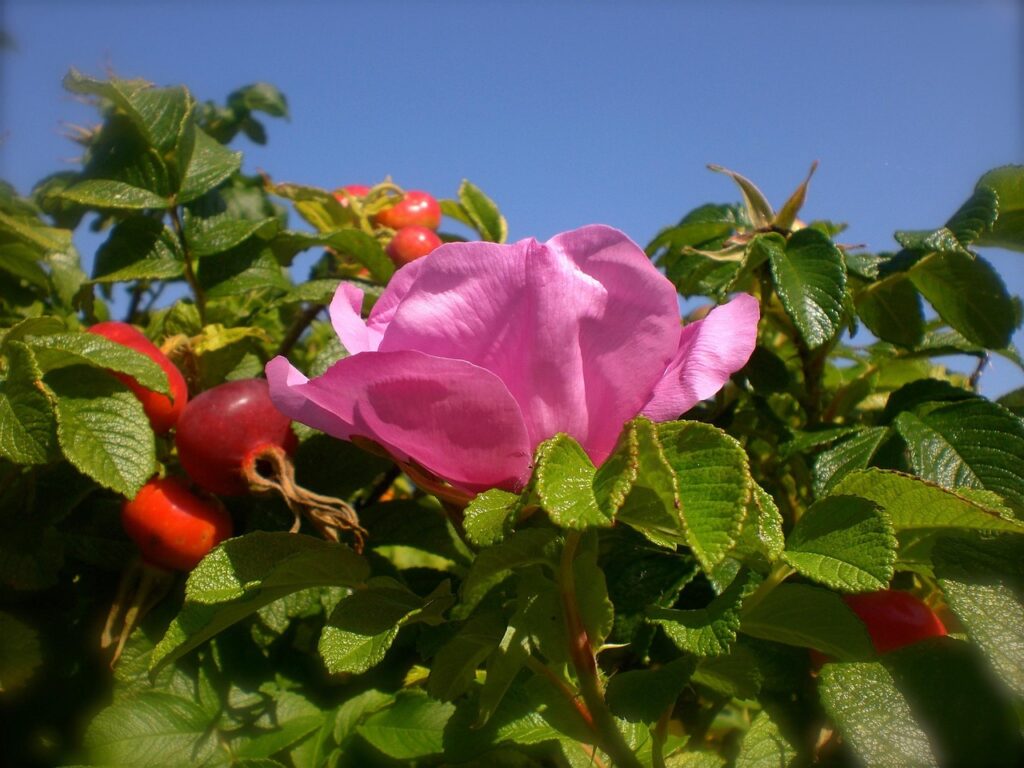
Basic Information
Scientific Name: Rosa spp., R. damascena, R. canina, R. rugosa
Plant Family: Rosaceae
Conservation / Invasive Status: Naturalized - Monitor
Geographic Range: Global where planted
Safety Level: Generally Safe
Harvest Season: Fall, Summer
Parts Used: Flower, Hip, Leaves, Petals, Roots
Scientific & Botanical Information
Botanical & Scientific
Active Compounds
- Essential oils: Citronellol and geraniol as primary components, along with nerol and phenylethyl alcohol¹ ²
- Vitamin C: Rose hips contain 274-1700 mg/100g fresh weight depending on species, with some varieties reaching 3000-4000 mg/100g³ ⁴ ⁵
- Polyphenols: Including quercetin, kaempferol, gallic acid, and syringic acid with antioxidant activity¹ ⁶
- Flavonoids: Anti-inflammatory compounds including rutin and catechin⁷
- Tannins: Astringent properties⁸
- Anthocyanins: Contributing to color and antioxidant activity⁹
What Science Shows
Anti-inflammatory: Multiple studies confirm anti-inflammatory effects through polyphenols and flavonoids reducing inflammation markers, particularly beneficial for osteoarthritis and joint pain¹ ¹⁰ ¹¹
Antioxidant: High vitamin C content combined with polyphenols provides robust cellular protection against oxidative damage. Rose hips demonstrate potent antioxidant activity in both in vitro and in vivo studies² ⁶ ⁹
Anxiolytic (mild): Rose essential oil (particularly R. damascena) demonstrates calming and relaxing effects in aromatherapy research, with significant hypnotic effects observed in animal studies¹² ¹³
Skin healing: Rose hip oil shows promise for wound healing, scar reduction, and anti-aging properties. Clinical studies demonstrate improvements in skin wrinkles, moisture content, and elasticity with topical application¹⁴ ¹⁵
Astringent: Tannin content provides tissue-tightening properties useful for minor wounds, digestive complaints, and topical skin applications⁸
Cardiovascular support: Studies indicate potential benefits for blood pressure and cholesterol management¹⁶
Growing in New England
Hardiness: Most rose species hardy to USDA Zones 2-7, well-suited to New England climate
Soil: Adaptable to various soil types; well-drained preferred
Sun: Full sun to partial shade depending on species
Special notes:
- Rosa rugosa (beach rose) extremely salt-tolerant, thrives on coast but considered invasive in New England¹⁷
- Native species (R. carolina, R. virginiana) support native pollinators
- Most species drought-tolerant once established
- Cold hardy and low-maintenance in New England conditions
Safety & Interactions
Generally regarded as safe: Extensive history of safe use in food, medicine, and cosmetics across multiple cultures¹⁸
Cautions:
- Very high doses of vitamin C from rose hips may cause nausea, upset stomach, or interact with certain medications¹⁹
- Theoretically could affect those with recurring kidney stones, sickle cell anemia, or hemochromatosis due to high vitamin C content¹⁹
- Potential allergen – contact dermatitis possible in sensitive individuals
- Cultivated ornamental roses often heavily sprayed with pesticides – source organically grown or wild specimens
Pregnancy/Nursing: Safe in culinary amounts; traditional use during pregnancy for nutritional support. Insufficient data for large medicinal doses – consult healthcare provider¹⁸
Pharmacological Actions: Anti-inflammatory, Antioxidant, Astringent, Mild Anxiolytic, Skin Healing, Vitamin C Source
Traditional Herbalism Information
Traditional Herbalism
Parts Used & Their Applications
Petals:
- Gentle astringent tea for emotional support and “heart opening”²⁰
- Skin washes for inflammation and minor irritation
- Rose water for cosmetic and ritual use
- Mood support and grief processing
Hips (fruit):
- Exceptional vitamin C source for immune support, historically used to prevent scurvy²¹
- Winter wellness teas, syrups, jams
- Nourishing food source rich in vitamins and minerals
Leaves:
- Mild astringent tea (less commonly used in modern practice)
- Can substitute for other tea leaves in some preparations
Roots:
- Traditional strong astringent for severe diarrhea
- Rarely used in contemporary herbalism due to higher alkaloid content
Preparation Methods
Rose Petal Infusion
1-2 tsp dried petals per cup boiling water. Steep covered 5-10 minutes (longer steeping increases astringency and bitterness). Use for gentle mood support, sore throat gargle, or as cooling skin wash²⁰ ²²
Rose Hip Decoction
Simmer dried rose hips 15-20 minutes to extract vitamin C and nutrients. Strain well (internal hairs can be irritating). Best brewing temperature 84-86°C for 6-8 minutes to preserve vitamin C while maximizing phenolic extraction²³ Sweeten with honey for traditional immune support syrup
Rose Petal Glycerite
Macerate dried petals in vegetable glycerin 4-6 weeks. Shelf-stable and naturally sweet. Use for emotional support and heart-centered work²²
Rose Water
Steam distillation of fresh petals produces fragrant hydrosol. Use as skin toner, ritual spray, or culinary ingredient. Solar-infused rose water is less concentrated alternative
Rose-Infused Oil
Dried petals (or wilted fresh) in jojoba or sweet almond oil. Solar infusion 2-4 weeks or gentle heat method. Always use dried/wilted petals to prevent mold. Use for facial oil, massage oil, or salve base²²
Traditional Applications
Heart tonic (emotional): Perhaps rose’s most honored traditional use – supporting grief processing, heartbreak recovery, and opening closed hearts. The “signature” of the thorny stem protecting the tender blossom reflects its protective yet opening nature²⁰ ²²
Heart tonic (physical): Traditional gentle cardiovascular support, though primary use remains emotional/spiritual
Respiratory support: Rose hip syrup for coughs and upper respiratory complaints. Gentle expectorant while soothing inflamed tissues²¹
Skin inflammations: Cooling astringent wash for irritation, rashes, minor wounds. Rose water particularly soothing for sensitive skin
Digestive support: Mild astringent for loose stools, gentle enough for children in appropriate doses
Sore throat: Petal infusion as gargle for throat irritation
Immune support: Rose hip preparations for vitamin C supplementation, particularly during winter months. Historical use during WWII to prevent scurvy in British children when citrus unavailable²¹
Grief and loss: Cross-cultural traditional use for processing grief, heartbreak, and emotional pain
Traditional Uses: Digestive Support, Eye Wash, Grief/ Heartbreak, Heart Tonic, Immune Support, Skin Inflammation, Sore Throat
Magical Correspondences Information
Magical Correspondences
Planetary Ruler: Venus – planet of love, beauty, harmony, pleasure, and attraction¹
Element: Water – emotions, intuition, fluidity, the subconscious, healing²
Gender: Feminine (traditional classification)²
Deities: Aphrodite/Venus (love, beauty), Eros (desire, passion), Adonis (beauty, rebirth), Virgin Mary (Christian syncretism – rose without thorns symbolism), Isis (ancient Egyptian associations)³ ⁴
Magical Intentions
Love & Romance:
- Attracting romantic love and deepening existing relationships
- Self-love and self-acceptance work
- Healing from heartbreak and opening closed hearts
- Friendship and platonic bonds
- Drawing love of all kinds into one’s life¹ ²
Beauty & Glamour:
- Enhancing physical attractiveness and confidence
- Beauty magic and self-image work
- Cultivating inner and outer radiance
- Presence and charisma enhancement²
Emotional Healing:
- Heartbreak recovery and grief processing
- Opening emotionally closed or defended hearts
- Forgiveness work (self and others)
- Healing emotional wounds
- Releasing old pain and resentment¹ ⁵
Divination:
- Rose petal scrying (floating in water)
- Dream work and prophetic dreams
- Psychic opening and intuitive development
- Love divination (will they/won’t they questions)²
Protection:
- Especially white roses for psychic protection
- Creating sacred space and boundaries
- Warding negativity while maintaining love
- Protecting the heart while staying open¹ ²
Peace & Harmony:
- Calming household tension and conflict
- Promoting cooperation and understanding
- Soothing anger and resentment
- Creating peaceful environment
- Family harmony work²
Luck & Blessings:
- Rose hips carried as luck charm
- Drawing positive opportunities
- General blessing and good fortune
- Abundance work (combined with love focus)²
Color Correspondences
Red Roses:
- Passionate romantic love and sexual desire
- Courage, vitality, and life force
- Deep commitment and devotion
- Strength and willpower
- Used in passionate love spells and attraction work¹ ²
Pink Roses:
- Gentle love, affection, and tenderness
- Friendship and platonic bonds
- Self-love and self-care magic
- Emotional healing and heart opening
- New love and romance (softer than red)
- Most versatile for love work¹ ²
White Roses:
- Purity, innocence, and new beginnings
- Psychic work and spiritual protection
- Peace, calm, and blessing
- Spiritual love and devotion
- Purification and cleansing
- Luna/Moon magic associations²
Yellow Roses:
- Joy, happiness, and celebration
- Friendship and platonic love
- New beginnings and fresh starts
- Mental clarity and communication
- Caution: Some traditions associate with jealousy or infidelity – use with clear intention¹ ²
Ritual Uses
Rose Water:
- Cleanse ritual tools and sacred objects
- Anoint candles for love, healing, or peace work
- Add to ritual baths (especially Venus day/Friday)
- Spray to clear and bless space
- Use in floor washes for home blessing² ⁶
Petal Baths:
- Self-love and beauty magic
- Preparing for romance or important social events
- Venus day (Friday) rituals
- Full moon emotional healing baths
- Draw bath, add fresh or dried petals, soak with intention⁶
Rose Hip Charms:
- Carried in pocket or purse for luck and protection
- Love attraction sachets
- Prosperity work (combined with other herbs)
- Protection during travel
- Strung as beads for love rosaries²
Dried Petals:
- Love spells and attraction sachets
- Dream pillows for romantic dreams
- Loose incense blends (burn on charcoal)
- Altar offerings to Venus/Aphrodite
- Sprinkle in corners of home for peace
- Paper love letters or spell papers² ⁶
Rose Thorns:
- “Pins” for protective magic and boundary setting
- Banishing unwanted attention or energy
- Binding spells (use ethically and carefully)
- Protecting love from interference
- Use with respect and caution – powerful tool for defensive magic¹ ²
Fresh Roses:
- Altar offerings to Venus/Aphrodite and love deities
- Decorating ritual space for love/beauty work
- Relationship ceremonies and handfastings
- Anniversary and commitment rituals
- Gift to beloved as magical act³
Sabbat Associations
Beltane (May 1):
- Peak bloom time in many temperate regions
- Fertility, love, and passion magic
- Sacred to May Queen celebrations
- Weaving into May crowns and garlands
- Love divination traditional this night⁷
Litha/Midsummer (June 21):
- Wild roses in full glory
- Love, abundance, and solar energy
- Rose petals scattered for blessings
- Peak time for gathering petals for year’s magic⁷
Mabon (September 21):
- Rose hip harvest begins
- Gratitude and abundance focus
- Preserving love and beauty for winter
- Gathering hips for protection charms⁷
Venus Days (Fridays):
- Any Friday auspicious for rose magic
- Venus hour calculations for precise timing
- Weekly rose offering practice possible¹
Traditional Lore & Folk Magic
Planting and Home:
- Plant roses by your door for home protection and to invite love
- Rose garden attracts love and beauty into life
- Tending roses mindfully is act of self-love magic⁸
Blooming Omens:
- Rose blooming out of season signals significant change approaching
- Unseasonable bloom can indicate coming love or major life shift
- Pay attention to which color blooms unexpectedly⁸
- *Victorian Language of Flowers:**⁹
- Red rose = passionate declaration of love (“I love you”)
- Deep red = mourning, grief for lost love
- Pink rose = grace, gentility, admiration
- Light pink = joy, gratitude
- White rose = innocence, purity, “I am worthy of you”
- Yellow rose = friendship, joy, caring (or jealousy in some traditions)
- Rose with thorns removed = love at first sight
- Single rose = simplicity, “I still love you”
- Dozen roses = complete love, “be mine”
Symbolism Across Cultures:
- Wild five-petaled rose = natural pentacle symbol, used for protection magic²
- Rose hips kept in pocket attract luck and good fortune
- Dried rose petals under pillow promote prophetic dreams of future love²
- Rose water sprinkled in home promotes peace and harmony
- White rose on grave shows remembrance and eternal love
- Red and white roses together = unity, joining of opposites, balance³
Historical Magical Associations:
- Ancient Greeks and Romans associated rose with Aphrodite/Venus – created from sea foam or Adonis’s blood (myths vary)³
- Egyptians associated with Isis and used in love magic and embalming⁴
- Medieval era: rose used in love philtres and divinations
- Renaissance: rose essential oil considered powerful love attractant
- Rose gardens considered places where veils between worlds thin
- Sub rosa (“under the rose”) = in confidence, secrets kept – rose hung above council tables⁸
Divination Practices:
- Rose petal scrying: Float petals in bowl of water, read patterns for love questions
- Rose leaf oracle: Write yes/no on two rose leaves, place on still water, whichever sinks first is answer
- Midsummer’s Eve: Sleep with rose under pillow to dream of future love
- Counting petals: “They love me, they love me not” – ancient divination
- Rose hip divination: Number of seeds inside hip said to predict number of children (folk tradition)² ⁸
Astrological Timing
Venus Rulership:
- Work rose magic during Venus hours for amplification¹⁰
- Friday (Venus day) most auspicious
- Venus retrograde: introspective love work, healing past relationships
- When Venus in Taurus or Libra: particularly powerful for rose magic
Lunar Phases:
- New Moon: new love, fresh starts, planting seeds of love
- Waxing Moon: drawing love, increasing beauty and attraction
- Full Moon: culmination of love work, charging rose water, emotional healing
- Waning Moon: releasing old love, banishing unwanted attention, cleansing heartbreak¹⁰
Spell Components & Combinations
Rose pairs well with:
- Lavender: for calming love, peace in relationships
- Jasmine: for sensual, passionate love
- Yarrow: for lasting love, marriage magic
- Damiana: for sexual attraction, desire
- Honey: for sweetening, attraction
- Cinnamon: for quick action, passionate results
- Vanilla: for comfort, gentle love
- Violet: for humble, modest love² ⁶
Common spell formats:
- Love sachets: dried rose petals + intention herbs in pink/red cloth
- Attraction oils: rose-infused oil base + essential oils
- Bath rituals: rose petals + salt + intention
- Candle magic: anoint candles with rose oil, surround with petals
- Honey jars: rose petals in honey to sweeten specific situation⁶
Modern Adaptations
While traditional rose magic focused heavily on heterosexual romantic love, contemporary practice recognizes:
- Self-love as primary and most important rose magic
- Love in all forms: platonic, familial, romantic (all orientations)
- Beauty magic as self-acceptance rather than conforming to standards
- Emotional healing and therapy support (rose as gentle ally)
- Relationship magic for all relationship structures
Rose’s essential energy remains: opening the heart, attracting love in its many forms, healing emotional wounds, and celebrating beauty and pleasure as sacred.² ⁵
Planetary Rulers: Venus
Magical Intentions: Beauty, Divination, Emotional Healing, Love, Peace, Psychic Work
Elemental Associations: Water
References
¹ Cunningham, S. (1985). Cunningham’s Encyclopedia of Magical Herbs. Llewellyn Publications, pp. 214-216.
² Beyerl, P. (1984). The Master Book of Herbalism. Phoenix Publishing, pp. 287-289.
³ Illes, J. (2009). Encyclopedia of Spirits: The Ultimate Guide to the Magic of Fairies, Genies, Demons, Ghosts, Gods & Goddesses. HarperOne, pp. 41-43, 856-858.
⁴ Budge, E.A.W. (1904). The Gods of the Egyptians, Volume 2. Methuen & Co., pp. 202-221.
⁵ Dugan, E. (2009). The Natural Psychic: How to Unlock the Magic That Resides Within You. Llewellyn Publications, pp. 156-158.
⁶ Murphy-Hiscock, A. (2017). The Green Witch: Your Complete Guide to the Natural Magic of Herbs, Flowers, Essential Oils, and More. Adams Media, pp. 194-196.
⁷ Gallagher, A.M. (2005). The Wicca Bible: The Definitive Guide to Magic and the Craft. Sterling Publishing, pp. 234-236.
⁸ Folkard, R. (1884). Plant Lore, Legends, and Lyrics. S. Low, Marston, Searle, & Rivington, pp. 523-531.
⁹ Greenaway, K. (1884). Language of Flowers. George Routledge and Sons, pp. 78-79.
¹⁰ Dugan, E. (2011). Practical Planetary Magic. Llewellyn Publications, pp. 89-94.
Harvest Notes
Petals:
- Harvest morning after dew dries, before heat of day
- Pick flowers just as fully open
- Dry quickly to preserve color and volatile oils – spread thin on screens in dark, well-ventilated space
- Properly dried petals keep 1 year in airtight containers away from light
Hips:
- Harvest September through November in New England
- Sweetest after first frost when sugars concentrate⁵
- Before they shrivel or deteriorate
- Wear thick leather gloves – thorns formidable
- Slice in half to speed drying and remove irritating internal hairs, or dry whole and process later
References
¹ Boskabady, M.H., Shafei, M.N., Saberi, Z., & Amini, S. (2011). Pharmacological Effects of Rosa Damascena. Iranian Journal of Basic Medical Sciences, 14(4), 295-307. https://www.ncbi.nlm.nih.gov/pmc/articles/PMC3586833/
² Mahboubi, M. (2016). Rosa damascena as holy ancient herb with novel applications. Journal of Traditional and Complementary Medicine, 6(1), 10-16. https://www.sciencedirect.com/science/article/pii/S2225411015000954
³ Bucur, L., et al. (2015). Ascorbic Acid Content of Rose Hip Fruit Depending on Altitude. AgroLife Scientific Journal, 4(1), 34-39. https://www.ncbi.nlm.nih.gov/pmc/articles/PMC4450003/
⁴ Tuba, J., Hunter, G., Hutchinson, M.J., & Kennedy, L.L. (1943). On Sources of Vitamin C: I. Rose Hips. Canadian Journal of Research, 21c(12), 363-373. https://cdnsciencepub.com/doi/10.1139/cjr43c-031
⁵ Pinakin, D.J., et al. (2024). Comparative Study of Bioactive Compounds and Biological Activities of Five Rose Hip Species Grown in Sicily. Plants, 13(1). https://www.ncbi.nlm.nih.gov/pmc/articles/PMC10780848/
⁶ Kaviyan, P., et al. (2025). A comprehensive review on phytochemistry, pharmacology and therapeutic applications of Rosa damascena Mill. Plant Science Today, 12(3), 1-9. https://doi.org/10.14719/pst.8344
⁷ Lalovski, I., et al. (2025). Safety of active substances derived from Rosa damascena and their potential biological activity in humans: a systematic review. Pharmacia, 72(3). https://pharmacia.pensoft.net/article/165898/
⁸ Wiart, C. (2012). Medicinal Plants of Asia and the Pacific. CRC Press.
⁹ Cenusa, R., et al. (2021). Microwave Hydrodiffusion and Gravity Extraction of Vitamin C and Antioxidant Compounds from Rosehips (Rosa canina L.). Antioxidants, 10(9). https://www.ncbi.nlm.nih.gov/pmc/articles/PMC10453430/
¹⁰ Christensen, R., et al. (2008). Does the hip powder of Rosa canina (rosehip) reduce pain in osteoarthritis patients? A meta-analysis of randomized controlled trials. Osteoarthritis and Cartilage, 16(9), 965-972.
¹¹ Winther, K., et al. (2005). A powder made from seeds and shells of a rose-hip subspecies (Rosa canina) reduces symptoms of knee and hip osteoarthritis: a randomized, double-blind, placebo-controlled clinical trial. Scandinavian Journal of Rheumatology, 34(4), 302-308.
¹² Hongratanaworakit, T. (2009). Relaxing effect of rose oil on humans. Natural Product Communications, 4(2), 291-296.
¹³ Mohebitabar, S., et al. (2017). Therapeutic efficacy of rose oil: A comprehensive review of clinical evidence. Avicenna Journal of Phytomedicine, 7(3), 206-213. https://www.ncbi.nlm.nih.gov/pmc/articles/PMC5511972/
¹⁴ Phetcharat, L., et al. (2015). The effectiveness of a standardized rose hip powder, containing seeds and shells of Rosa canina, on cell longevity, skin wrinkles, moisture, and elasticity. Clinical Interventions in Aging, 10, 1849-1856.
¹⁵ Guimarães, R., et al. (2013). Rosehip extracts’ biological activities: focus on dermatological applications. Journal of Medicinal Plants Research, 7(35), 2587-2595.
¹⁶ Nagatomo, A., et al. (2015). Daily intake of rosehip extract decreases abdominal visceral fat in preobese subjects: a randomized, double-blind, placebo-controlled clinical trial. Diabetes, Metabolic Syndrome and Obesity: Targets and Therapy, 8, 147-156.
¹⁷ Invasive Plant Atlas of New England. Rosa rugosa (Rugosa Rose, Beach Rose). University of Connecticut. https://www.eddmaps.org/ipane/
¹⁸ European Medicines Agency. (2012). Assessment report on Rosa canina L. and other Rosa species, fructus and pseudo-fructus. EMA/HMPC/136583/2010.
¹⁹ National Institutes of Health Office of Dietary Supplements. (2021). Vitamin C: Fact Sheet for Health Professionals. https://ods.od.nih.gov/factsheets/VitaminC-HealthProfessional/
²⁰ Wood, M. (2008). The Earthwise Herbal: A Complete Guide to Old World Medicinal Plants. North Atlantic Books, pp. 487-491.
²¹ Grieve, M. (1931). A Modern Herbal. Dover Publications (1971 reprint). Rose entry.
²² Green, J. (2000). The Herbal Medicine-Maker’s Handbook: A Home Manual. Crossing Press, pp. 156-159.
²³ Ulusoy, S., & Boşgelmez-Tinaz, G. (2017). Effect of brewing conditions on antioxidant properties of rosehip tea beverage: study by response surface methodology. Journal of Food Science and Technology, 54(11), 3737-3743. https://www.ncbi.nlm.nih.gov/pmc/articles/PMC5629151/