Smooth Shadbush
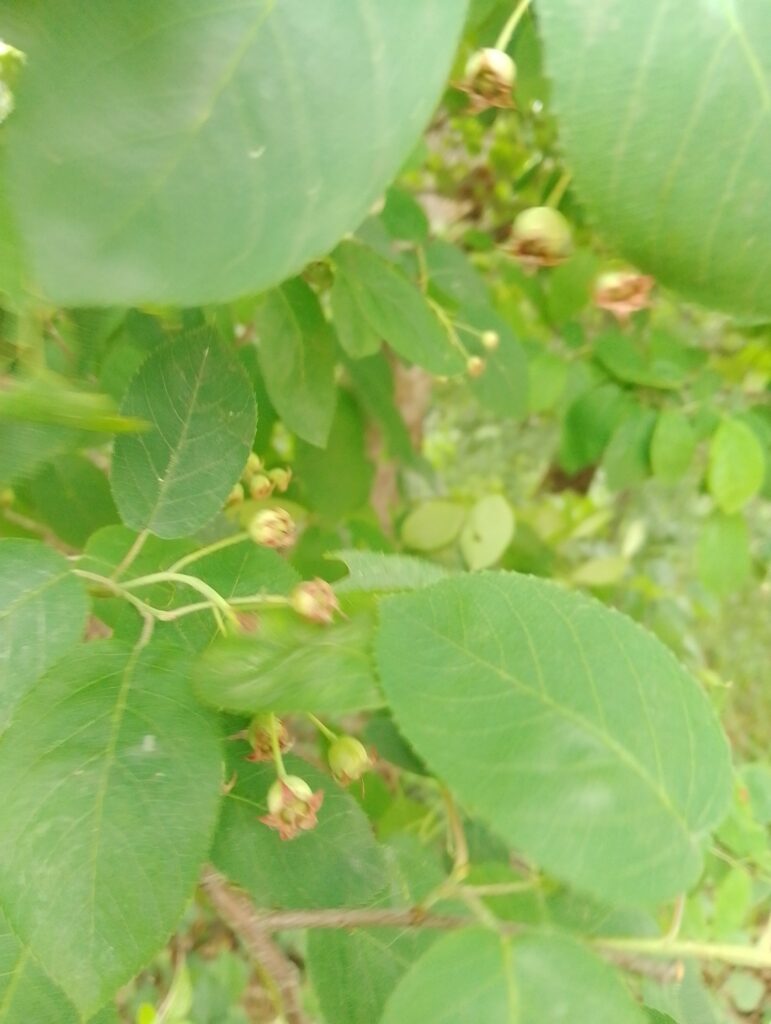
Basic Information
Scientific Name: Amelanchier laevis
Plant Family: Rosaceae
Conservation / Invasive Status: Least Concern
Geographic Range: Eastern North America, Northeast US, Northern New England
Safety Level: Generally Safe
Harvest Season: Spring, Summer
Parts Used: Bark, Berries, Leaves
Scientific & Botanical Information
Active Compounds
Smooth shadbush berries (serviceberries) contain anthocyanins, vitamin C, and polyphenols. Anthocyanins provide potent antioxidant activity and are responsible for the dark blue-purple color of ripe fruit1. Vitamin C content supports immune function and collagen synthesis. Polyphenolic compounds contribute to anti-inflammatory properties. Total antioxidant capacity is comparable to or exceeds that of blueberries2.
What Science Shows
Limited clinical research exists specifically for Amelanchier laevis, though related serviceberry species have been studied. Recent research highlights potential cardiovascular benefits from anthocyanins and polyphenols. The USDA recognizes serviceberries as nutritionally significant wild fruits. Commission E monographs do not specifically address Amelanchier, but nutritional profiles support traditional food use and suggest potential health applications1,2.
Growing in New England
Smooth shadbush thrives in well-drained soils in full sun to partial shade. It prefers slightly acidic conditions and is extremely hardy to USDA Zone 3. Native to New England woodlands and understory. Grows as a multi-stemmed shrub or small tree (15-25 feet). Establishes readily from seed or root cuttings. Low-maintenance once established with minimal pest or disease issues2.
Safety & Interactions
No documented toxicity; berries are safe for consumption in quantity. The cyanogenic glycosides present in seeds are minimal and pose no risk from normal consumption of whole berries. No documented interactions with medications. Generally recognized as safe (GRAS) for consumption as food and food supplement1.
New England Specific
Amelanchier laevis is native throughout New England in woodlands, forest edges, and rocky slopes. Blooms early (April-May) with characteristic white flowers appearing before leaf emergence. Berries ripen June-July and are rapidly consumed by birds if not harvested early. Found from sea level to 3000+ feet; particularly abundant in northern New England2.
Pharmacological Actions: Anti-inflammatory, Antioxidant, Astringent, Mild diuretic, Nutritive
Traditional Herbalism Information
Parts Used & Their Applications
Ripe berries are the primary traditional food and medicinal part. Moerman documents use by multiple indigenous nations as dried food, particularly in pemmican preparations. Fresh berries provide immediate nutritional support. Leaves have been brewed into minor medicinal teas. Bark and roots were used in some traditions, though less commonly1. Fruit is the focus of modern preparation.
Preparation Methods
Fresh berry consumption: Eat ripe berries directly from the plant or within hours of harvesting. Dried berries: Spread fresh berries on screens and dry completely (7-10 days), store in paper bags. Pemmican: Mix dried berries with rendered animal fat and dried meat (traditional preparation). Infusion: Dried berries or leaves steeped 10 minutes in hot water. Tincture: 1:5 ratio in 40% alcohol, though less common than food use1.
Traditional Applications
Serviceberries were staple food for many northeastern indigenous nations, providing essential nutrition in spring and early summer. Dried berries sustained populations through winter when combined with other foods. Moerman documents general nutritional and strength-building uses. Colonial traditions adopted serviceberries into preserves and dried fruit preparations. The berries supported overall wellness rather than targeting specific conditions1.
Modern Adaptations
Contemporary herbalists and nutritionists recognize serviceberries as nutrient-dense superfoods. Modern applications focus on antioxidant and cardiovascular support. Used in herbal supplement formulas emphasizing whole-food nutrition. Artisanal jam, syrup, and dried fruit preparations preserve traditional value while adapting to contemporary food culture. Growing interest in native New England foods drives increased cultivation1.
New England Specific
Smooth shadbush is thoroughly integrated into New England ecology and food history. Local foragers recognize it as a reliable, abundant wild edible. Regional herbalists and nutritionists increasingly promote serviceberries as local alternative to imported superfruits. Farmers’ markets in New England feature fresh and processed serviceberries in spring and early summer2.
Harvest Notes
Harvest in June-July when berries turn fully dark purple-black (indicating peak ripeness and anthocyanin content). Pick early morning after dew dries. Berries ripen rapidly within 7-10 day window; multiple harvests may be needed. Fresh consumption preferred for highest nutritional value. Drying extends season; hang branches with berries or remove and spread on screens. Yields improve with biennial bearing patterns; some trees fruit heavily one year, lightly the next1.
Traditional Uses: Anti-inflammatory, Digestive Support, Nutritive, Tonic
Magical Correspondences Information
Magical Correspondences
Planetary association: Venus. Element: Earth. Gender: Feminine. Powers: Abundance, nourishment, gratitude, grounding, community1.
Magical Intentions
Smooth shadbush carries Venus energy of abundance and nourishment. Its early spring blooming connects it to new beginnings and hope. The generous berry production symbolizes gratitude and sharing within community. Use in workings that draw abundance, strengthen community bonds, and ground spiritual practice in physical nourishment2.
Ritual Uses
Fresh or dried berries offered at altars during spring celebrations invoke abundance. Branches with blossoms included in Beltane and Lughnasadh arrangements. Serviceberries consumed in ritual meals honor reciprocity with earth and plant allies. Used in gratitude practices acknowledging gifts received1.
Color Correspondences
White spring blossoms connect to purity, new beginnings, and divine feminine. Deep purple-black berries carry earth grounding and abundance. The color transformation from white to black mirrors sacred cycle of death and rebirth2.
Sabbat Associations
Beltane celebrations honor flowering stage and fertile potential. Lughnasadh (first harvest festival) directly corresponds with ripening berries. Samhain remembers the dark berries and cycle’s completion. Imbolc and Ostara acknowledge spring emergence and renewal1.
Traditional Lore & Folk Magic
Native North American traditions honored shadbush as gift from the plant world, providing essential nutrition in spring. Grateful harvest practices ensured continued abundance. Some traditions recognized it as messenger between seasons, announcing spring’s arrival through early blooming2.
Combining with Other Plants
Pairs with oak in grounding and abundance work. Combines with mint for community and shared meals. Blends with lavender in gratitude practices. Mixed with bee balm in fertility and manifestation work; synergizes through shared pollinator relationships1.
Planetary Rulers: Sun, Venus
Magical Intentions: Healing, Love, New beginnings, Prosperity, Spring Magic
Elemental Associations: Air, Water
1 Moerman, D. E. (1998). Native American Ethnobotany. Timber Press. 2 Hoffmann, D. (2003). Medical Herbalism: The Science and Practice of Herbal Medicine. Healing Arts Press.