Southern Arrowwood
Basic Information
Scientific Name: Viburnum dentatum
Plant Family: Adoxaceae
Conservation / Invasive Status: Least Concern
Geographic Range: Eastern North America, Northeast US, Northern New England
Safety Level: Generally Safe
Harvest Season: Fall, Summer
Parts Used: Bark, Berries, Leaves
Scientific & Botanical Information
Active Compounds
Southern arrowwood contains compounds similar to related Viburnum species, likely including iridoid glycosides and tannins responsible for antispasmodic effects1. The compound profile mirrors that of cramp bark (Viburnum opulus) and other Adoxaceae family members, though specific chemical analysis of Viburnum dentatum is limited. Flavonoids and phenolic compounds contribute to antioxidant activity2.
What Science Shows
Direct pharmacological research specifically on Viburnum dentatum is minimal. Commission E monographs document related Viburnum species but not Southern arrowwood specifically. The compound profile suggests antispasmodic properties comparable to cramp bark, but this remains theoretical without direct clinical studies. Ethnobotanical evidence (Moerman 1998) documents traditional use with general efficacy implied but not proven1,2.
Growing in New England
Southern arrowwood thrives in moist to wet woodlands, woodland edges, and riparian zones. Prefers full sun to partial shade and well-drained to moist soil. Hardy to USDA Zone 4. Native throughout New England; one of the more common Viburnum species in the region. Establishes readily from seed or cuttings. Low-maintenance with minimal pest problems once established2.
Safety & Interactions
No documented toxicity or adverse effects from traditional bark preparations. Safe for internal use in traditional decoction preparations. No documented interactions with common medications. The tannin content may reduce absorption of certain nutrients if taken in excessive quantities, though normal therapeutic doses pose no known risk1.
New England Specific
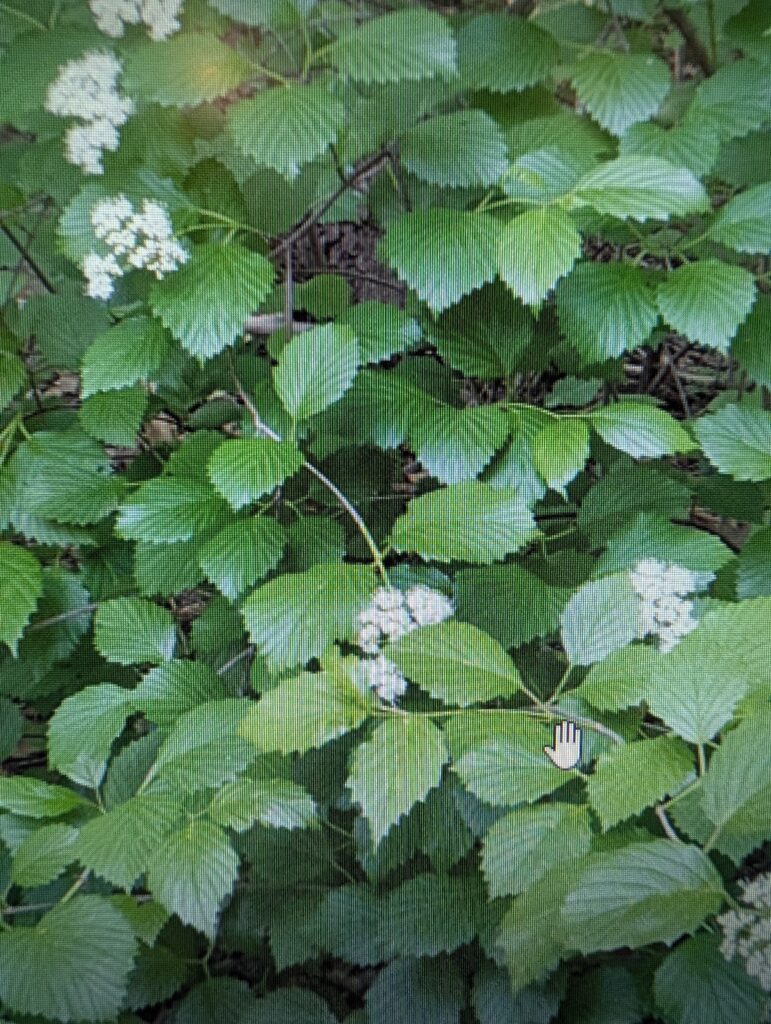
Viburnum dentatum is native throughout New England in woodlands and wetland margins. One of the more abundant and reliably available Viburnum species in the region. Blooms May-June with white flowers in flat-topped clusters; berries ripen August-September in dark blue-black color. Fruits important for wildlife; heavily browsed by birds2.
Pharmacological Actions: Anti-inflammatory, Antimicrobial, Antioxidant, Antispasmodic, Astringent, Uterine Relaxant
Traditional Herbalism Information
Parts Used & Their Applications
The inner bark is the primary medicinal part, traditionally harvested in spring when sap flow facilitates separation. Root bark was also used in some traditions. Berries have minor nutritional but not medicinal significance in traditional preparations. All harvesting should follow sustainable practices to preserve tree health1.
Preparation Methods
Decoction: 1 ounce dried bark per pint water, simmered 15-20 minutes, taken in quarter-cup doses 2-3 times daily. Tincture: 1:5 ratio in 60% alcohol, 20-40 drops 2-3 times daily. Infusion: Less suitable due to bark composition; decoction is preferred method. Cold infusion: Bark steeped overnight in room-temperature water for light extraction1.
Traditional Applications
Moerman documents indigenous use for arrow-straightening (source of common name) and general medicinal purposes. Traditional use pattern suggests antispasmodic applications similar to cramp bark, though specific conditions are not well-documented. Some traditions incorporated it into women’s health formulations. General tonic use appears in various indigenous accounts1.
Modern Adaptations
Contemporary herbalists use Southern arrowwood primarily in formulations addressing muscle tension and menstrual cramping. As a more locally abundant alternative to cramp bark (Viburnum opulus), it serves similar functions in practice. Often combined with other antispasmodic herbs like black cohosh or angelica. Modern preparation emphasizes its reliability and sustainability compared to other Viburnum species1.
New England Specific
Southern arrowwood is recognized by regional herbalists as a reliable, sustainably harvestable local species. Its abundance throughout New England makes it accessible for practitioners and students. Regional herbalism traditions incorporate it into local formularies developed by experienced herbalists2.
Harvest Notes
Best harvested in spring (April-May) when sap flow facilitates bark separation. Harvest from young saplings (2-3 inches diameter) or branches using sustainable practices that preserve tree health and regeneration. Dry bark thoroughly on screens in well-ventilated areas (2-3 weeks). Store in paper bags away from light and moisture. Multiple harvests possible from mature plants when done sustainably1.
Traditional Uses: Anti-inflammatory, Antispasmodic, Nutritive (berries), Tonic, Uterine Support
Magical Correspondences Information
Magical Correspondences
Planetary association: Venus. Element: Water. Gender: Feminine. Powers: Ease, flow, women’s support, straightening paths, grounding1.
Magical Intentions
Southern arrowwood carries Venus energy of ease and smooth flow. The historical arrow-straightening use suggests work with clarifying intention and correcting course. Use in workings that ease tension, support women’s bodies, and straighten paths that have become twisted or blocked2.
Ritual Uses
Bark included in bath rituals for physical and emotional ease. Fresh or dried branches used in hand-fasting ceremonies acknowledging straightforward commitment and clear intention. Bark tea consumed before ritual work grounding and centering personal power. Added to formulas supporting women’s monthly cycles1.
Color Correspondences
White flowering clusters suggest clarity and purity of intention. Deep blue-black berries carry grounding and protective energy. The bark’s lighter inner layer contrasts with darker outer bark, reflecting the journey from surface to depth2.
Sabbat Associations
Particularly potent at Lupercalia and Imbolc when straightening and clarifying work align with winter’s end. Beltane celebrations honor its flowering and fertility. Lughnasadh acknowledges the maturing berry crop. Ostara rituals welcome its spring emergence and directional clarity1.
Traditional Lore & Folk Magic
Indigenous traditions honored arrowwood for crafting and straightening work, understanding the physical and magical aspects as inseparable. The plant’s association with arrow-making connected it to direction, aim, and intentional action. Witchcraft traditions valued it for straightening tangled situations2.
Combining with Other Plants
Pairs with black cohosh for women’s support and easing work. Combines with ginger for warming and activation. Mixed with mint for clarity and directional focus. Synergizes with other water-element plants like willow for flexibility within stability1.
Planetary Rulers: Moon, Saturn
Magical Intentions: Direction, Grounding, Healing, Protection, Strength
Elemental Associations: Earth, Water
1 Moerman, D. E. (1998). Native American Ethnobotany. Timber Press. 2 Hoffmann, D. (2003). Medical Herbalism: The Science and Practice of Herbal Medicine. Healing Arts Press.