Timothy Grass
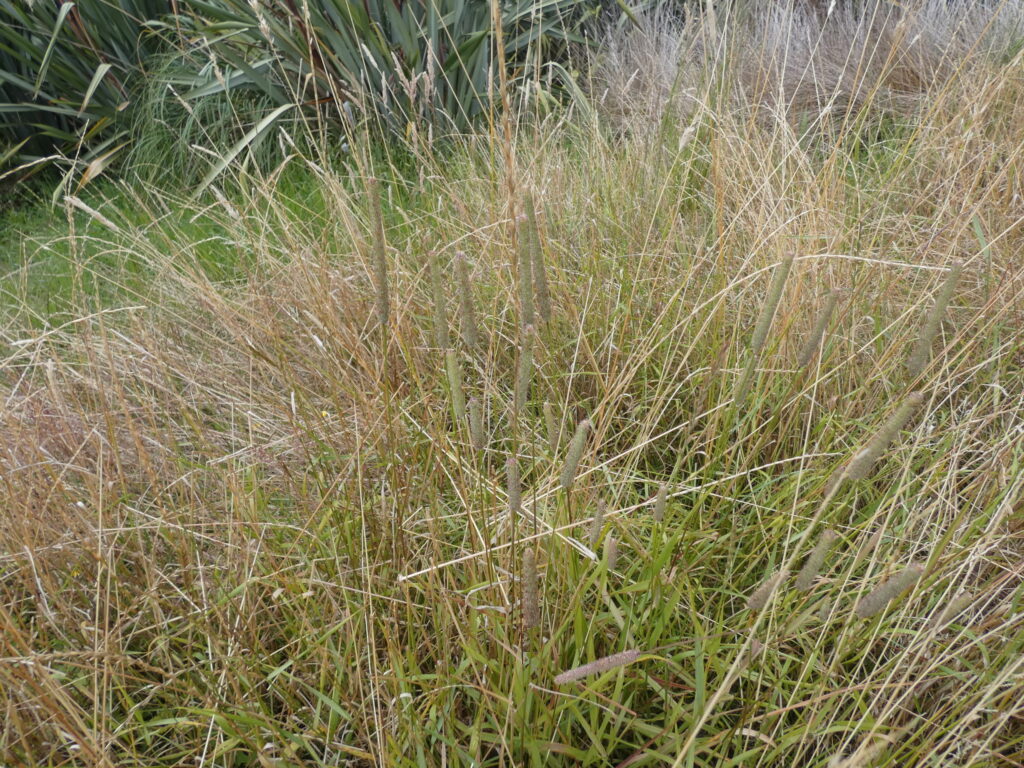
Basic Information
Scientific Name: Phleum pratense
Plant Family: Poaceae
Conservation / Invasive Status: Least Concern
Safety Level: Generally Safe
Scientific & Botanical Information
Botanical Classification
Timothy grass belongs to the Poaceae family and was introduced to North America from Europe. It is now ubiquitous in cultivated grasslands and meadows across temperate regions.
Primary Use: Forage Crop
Timothy grass is cultivated principally as a forage crop for livestock. Its high nutritional value and digestibility make it one of the most important hay grasses in temperate agriculture.
Allergenic Properties
Phleum pratense is recognized as a major allergen source, particularly its pollen. It is one of the most significant triggers of seasonal allergic rhinitis (hay fever) and allergic asthma in temperate regions where it is widely cultivated.
Medicinal Use
Timothy grass is NOT a primary medicinal plant. Contemporary herbalism does not employ this species therapeutically. No significant traditional medicinal use is documented in ethnobotanical literature, and no phytochemical research suggests medicinal applications.
Traditional Herbalism Information
Not a Medicinal Plant
Timothy grass does not appear in historical herbalism texts as a therapeutic agent. Its role in human culture has been exclusively agricultural as a forage crop. Unlike other grasses such as oat straw or rice bran, which carry established medicinal applications, timothy lacks both traditional and contemporary herbalism documentation.
Why This Matters
Including timothy grass in a botanical medicine database serves an important clarifying function: not all plants are medicinal, and some widely cultivated plants are notable precisely for their lack of therapeutic application. Honest herbalism requires distinguishing between plants with genuine traditional use and those without it.
Magical Correspondences Information
Planetary Association
Timothy grass is traditionally assigned to Saturn, reflecting its earthing, grounding properties and its role in the material, physical cultivation of the land. Saturn rules agriculture, harvest, and the passage of seasons.
Not a Magical Plant
From a magical herbalism perspective, timothy grass has minimal correspondence system. Its use in magical practice is limited to representation of agricultural cycles, harvest, and material prosperity rather than medicinal or energetic application.
[1] USDA PLANTS Database. (n.d.). Phleum pratense. https://plants.usda.gov/
[2] Allergen information: D’Amato, G., Cecchi, L., Bonini, S., et al. (2007). Allergenic pollen and pollen allergy in Europe. Allergy, 62(10), 976–990.
[3] Agricultural use: Hanson, A. A., Barnes, D. K., & Hill, R. R. (Eds.). (1988). Alfalfa and the alfalfa improvement. American Society of Agronomy.