Violet
Basic Information
Scientific Name: Viola spp., V. odorata, V. sororia, V. tricolor
Plant Family: Violaceae
Conservation / Invasive Status: Least Concern
Safety Level: Generally Safe
Harvest Season: Spring, Summer
Parts Used: Flower, Leaves, Roots
Scientific & Botanical Information
Botanical & Scientific
Active Compounds
- Saponins: Triterpene saponins (approximately 5.2%) including ursolic acid as aglycone, responsible for expectorant and lymphatic properties¹ ² ³
- Mucilage: Demulcent polysaccharides that soothe irritated mucous membranes⁴
- Salicylic acid (methyl salicylate): Anti-inflammatory compound similar to aspirin⁵ ⁶
- Flavonoids: Including rutin, quercetin, and other antioxidant compounds⁷ ⁸
- Alkaloids: Including viola-odoratine and related compounds⁹
- Phenolic compounds: Gallic acid, caffeic acid, protocatechuic acid contributing to antioxidant activity¹⁰
- Vitamins: Vitamin C and vitamin A in significant amounts¹¹
- Cyclotides: Cyclic peptides with demonstrated antibacterial and cytotoxic properties¹²
What Science Shows
Anti-inflammatory: Multiple studies demonstrate significant anti-inflammatory effects. Aqueous extracts of V. odorata proved as effective as hydrocortisone in preventing formalin-induced lung damage in rats, with potential as safer alternative to corticosteroids for inflammatory lung conditions¹³ ¹⁴
Expectorant: Saponin content provides gastropulmonary reflex stimulation, increasing bronchial secretions and reducing mucus viscosity. Saponins act as surfactants on thick mucus, facilitating expectoration¹⁵ ¹⁶ Traditional use in whooping cough and acute bronchitis supported by British Herbal Pharmacopoeia⁴
Lymphatic support: Violet demonstrates alterative and lymphatic properties, promoting lymphatic drainage and softening hardened lymph nodes. In vitro studies show inhibition of activated lymphocyte cell proliferation, suggesting potential anticancer properties¹⁷ ¹⁸
Antioxidant: Robust antioxidant activity attributed to flavonoid content, particularly rutin, which addresses capillary fragility and demonstrates free radical scavenging capacity⁷ ¹⁹
Antihypertensive and cardiovascular: Hydromethanolic extracts cause dose-dependent blood pressure reduction in animal studies. Mechanism involves multiple pathways including calcium channel blockade and nitric oxide-mediated vasodilation. Also demonstrates antidyslipidemic effects with reduction in total cholesterol, LDL, and atherogenic index²⁰ ²¹
Demulcent: Mucilage content soothes irritated tissues in respiratory, digestive, and urinary systems⁴
Antimicrobial and antifungal: Studies demonstrate antibacterial activity against various pathogens including respiratory bacteria. Cyclotides show strong antimicrobial properties¹² ²²
Growing in New England
Hardiness: Zones 3-8, extremely cold-hardy for New England
Soil: Prefers rich, moist, slightly acidic soil but highly adaptable
Sun: Part shade to full shade preferred; tolerates sun if soil stays moist
Water: Appreciates consistent moisture
Special notes:
- Viola sororia (common blue violet) native and spreads prolifically – considered “lawn weed” by some, valuable medicinal by others
- Viola odorata (sweet violet) naturalized from Europe, very fragrant
- Self-seeds prolifically and spreads by runners/rhizomes
- Excellent ground cover in shade gardens
- Important early nectar source for native pollinators
- Can become aggressive in garden settings due to prolific self-seeding
Safety & Interactions
Generally regarded as safe: Extensive history of safe use as both food and medicine across multiple cultures²³
Cautions:
- Very high doses may cause nausea or vomiting due to saponin content²⁴
- Roots contain higher alkaloid content and have purgative/emetic properties – use leaf and flower primarily⁶
- Theoretically could interact with blood thinners due to salicylic acid content, though amount is relatively low
- Yellow-flowered species may have higher saponin content and be less palatable²⁵
Pregnancy/Nursing: Safe as food. Traditionally used during pregnancy and nursing for nutritional support. Insufficient data for large medicinal doses – consult healthcare provider²³
Traditional warnings: Not recommended for patients with gastritis or gastric ulcer due to potential gastric mucosa irritation from saponins¹⁶
New England Specific
Wild Species in This Region
Viola sororia (Common Blue Violet)
Where found: Lawns, gardens, meadows, woodland edges throughout New England – extremely abundant
Status: Native species
Identification:
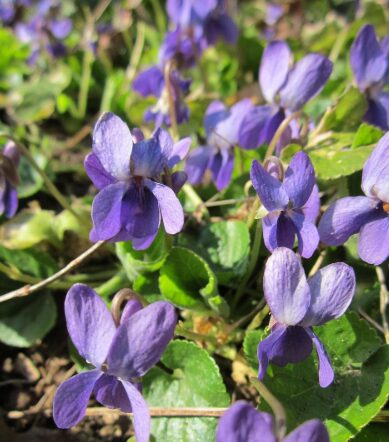
- Purple-blue flowers with white centers (occasionally all-white form)
- Heart-shaped leaves on separate stems from flowers
- Grows in clumps via rhizomes
- 4-8 inches tall
- Blooms April-June depending on location
- Self-seeds prolifically
Ethical harvest: Extremely abundant native – sustainable harvest very easy. Many people actively try to remove from lawns and welcome harvesting. Can be considered invasive in garden settings due to aggressive self-seeding. Excellent plant for beginning foragers
Viola odorata (Sweet Violet)
Where found: Gardens, naturalized in some areas of New England, less common than V. sororia
Status: Introduced from Europe, naturalized
Identification:
- Very fragrant purple or white flowers (distinctive sweet scent)
- Heart-shaped leaves
- Spreads by runners
- Traditional variety used in perfumery and cuisine
- Smaller plant than common blue violet
Ethical harvest: Naturalized species, generally appropriate to harvest where found. Less common than native violets – don’t assume abundance
Viola pubescens (Downy Yellow Violet)
Where found: Rich woods, shaded areas, forest understory
Status: Native woodland species
Identification:
- Yellow flowers
- Slightly hairy (pubescent) leaves
- Woodland indicator species
- Less common than blue violets
Ethical harvest: Less abundant than common blue violet – sustainable harvest only where plentiful. Prefer common blue violet for bulk harvest. Appreciate in place when possible
Viola canadensis (Canada Violet)
Where found: Rich moist woods, stream banks, shaded areas
Status: Native
Identification:
- White flowers with yellow center and purple veining
- Taller plant (6-16 inches)
- Beautiful woodland species
- Less common, prefers specific habitat
Ethical harvest: Native woodland species – appreciate and photograph rather than harvest unless very abundant. Leave for ecosystem support
Seasonal Timing for New England
Early April: First violet leaves emerge, flowers beginning in warmest microclimates and southern New England
Mid-April through May: Peak bloom season for V. sororia (common blue violet). This is the traditional “first violet” time for wish magic
May into June: Continued flowering, late-season violets in northern areas and shaded locations
Summer: Leaves continue growing robustly, can harvest for medicine throughout
Fall: Some species produce cleistogamous flowers (closed, self-pollinating flowers) hidden under leaves. These produce seeds without opening
Winter: Dormant, though sometimes semi-evergreen in mildest winters under snow cover
Growing Considerations for Our Climate
Hardiness: Native species hardy to Zone 3 – perfectly suited for all of New England
Advantages:
- Extremely low maintenance, nearly indestructible
- Thrives in shade where many plants struggle
- Self-seeds freely (too freely for some gardeners!)
- Early bloom provides crucial early nectar for native bees
- Edible and medicinal – free food and medicine
- Beautiful ground cover alternative to grass in shade
- Tolerates foot traffic reasonably well
- Deer resistant
“Challenges” (depending on perspective):
- Can become “weedy” in lawns and formal gardens
- Spreads very aggressively by seed and runners
- Some gardeners spend significant effort trying to eliminate
- Once established, difficult to remove completely
- Can outcompete desired plants in garden beds
Cultural shift: Violets increasingly accepted as valuable “lawn alternative” in ecological gardening movement. Reframing from “weed” to “resource” growing in popularity³⁸
Garden tips:
- Encourage in shaded areas as intentional ground cover
- Allow to naturalize under trees and shrubs (creates living mulch)
- Mow after flowering if you want to reduce spread in lawn
- Or embrace the “violet lawn” – beautiful in spring, feeds pollinators, provides medicine
- Divide clumps in spring or fall to spread faster in desired areas
- Excellent for erosion control on shaded slopes
Sourcing & Ethics
Wild Harvest
Abundant and appropriate to harvest:
- Common blue violet (V. sororia) – ubiquitous in lawns, gardens, edges
- Many people actively try to remove – offer to harvest from their yards (often enthusiastically accepted)
- Naturalized sweet violet where found in abundance
Harvest sustainably:
- Leave woodland species alone unless very abundant
- Take leaves and flowers, leave roots for plant survival and reproduction
- Never harvest more than 1/3 from any area
- Spread harvest across multiple patches
- First violet of spring has magical significance – consider leaving for wildlife and taking second/third violets
Best locations for harvest:
- Yards and gardens (with permission – people often delighted to share)
- Woodland edges where abundant
- Your own property – encourage to spread intentionally
- Avoid roadsides (car pollution, road salt contamination)
- Avoid chemically treated lawns (herbicides, pesticides)
“Weed” reframing: Common blue violet often labeled “lawn weed” by conventional turf industry. Actually:
- Valuable early pollinator plant (blooms when few else do)
- Edible and medicinal (free food/medicine in most yards)
- Nitrogen-fixing properties benefit soil
- Beautiful when in bloom
- Ecological gardening increasingly values violet lawns
Cultivated
- Sweet violet (V. odorata) available from nurseries for fragrant garden addition
- Native violets sold by native plant nurseries for pollinator gardens
- Or simply allow lawn violets to spread – they require no cultivation
- Violet is one of easiest plants to “cultivate” – merely refraining from removing it
Growing your own:
- Incredibly easy – almost too easy to establish
- Plant in part shade
- Keep soil moist until established (then quite drought-tolerant)
- Will self-seed everywhere once happy
- Divide clumps to spread intentionally to new areas
- Good edging plant, ground cover, or “lawn alternative” in shade
- Deer resistant – good for problematic areas
Regional Considerations
Violets and New England lawns:
- Common blue violet extremely widespread in lawns throughout region
- Often labeled “lawn weed” requiring herbicide treatment
- Ecological movement reframing as valuable native plant
- Provides early spring food for native bees when little else blooming
- Violet lawns becoming more accepted in sustainable landscaping
First food of spring:
- Among earliest edible greens available in New England (late March-April)
- Violet leaves provide vitamin C and other nutrients after winter
- Traditional spring tonic addressing vitamin deficiency
- Free food accessible in most yards – no foraging skill required
- Important cultural practice in homesteading/self-sufficiency communities
Medicinal accessibility:
- Unlike many medicinal plants requiring specialized knowledge or wilderness access, violet accessible to nearly all New Englanders
- Growing in yards, parks, edges throughout region
- No need to purchase from suppliers
- Excellent beginner foraging plant – easy identification, no toxic lookalikes, abundant
- Enables medicine-making for people without access to wild lands
Climate considerations:
- New England’s cold winters no barrier – violet extremely cold-hardy
- Spring moisture ideal for violet growth
- Shade from deciduous forests perfect violet habitat
- Well-adapted to regional conditions (native species)
Pharmacological Actions: Anti-inflammatory, Antifungal, Antihypertensive, Antimicrobial, Antioxidant, Demulcent, Expectorant, Lymphatic support
Traditional Herbalism Information
Traditional Herbalism
Parts Used & Their Applications
Leaves:
- Primary medicinal part in modern practice
- High in vitamins and minerals (nutritive spring green)
- Lymphatic support via poultice or infusion
- Edible in salads or cooked as greens
Flowers:
- Respiratory support (syrup most traditional)
- Beautiful addition to preparations
- Edible garnish, salad ingredient
- Candied flowers traditional
Roots:
- Stronger emetic/purgative action
- Higher alkaloid content
- Rarely used in modern herbalism
- Traditional use for stubborn constipation
Preparation Methods
Violet Leaf Infusion
1-2 tsp dried leaves (or 2-3 tsp fresh) per cup boiling water. Steep covered 10-15 minutes. For respiratory support, lymphatic congestion, or as nutritive tea. Can drink 2-3 cups daily during acute illness²⁶
Violet Flower Syrup
Traditional spring tonic and cough remedy. Fresh violet flowers steeped in hot water, strained, combined with honey or sugar in 1:1 ratio. Produces beautiful purple syrup used for coughs, sore throat, respiratory complaints. Store refrigerated, use within 6 months²⁷
Violet Leaf Poultice
Fresh leaves crushed (traditionally chewed to release compounds) and applied directly to skin eruptions, swollen lymph nodes, minor wounds, insect bites. Can also use strong infusion as compress²⁸
Violet Infused Oil
Fresh wilted leaves (wilt 12-24 hours to reduce moisture and prevent mold) in olive oil. Folk method: solar infusion 2-4 weeks. Use for massage oil over swollen lymph nodes or breast tissue, or as salve base for skin conditions. Particularly indicated for hardened lymph nodes in breast, underarm, groin, and neck²⁵
Violet Vinegar
Fresh flowers in apple cider vinegar for 2-4 weeks produces beautiful pink color. Use in salad dressings or dilute as refreshing shrub drink²⁷
Fresh Eating
Both leaves and flowers edible raw – among first spring greens available. Add to salads, sandwiches, blend in smoothies. Leaves can be cooked like spinach. Excellent source of vitamins A and C after winter⁴
Traditional Applications
Respiratory support: Violet syrup primary traditional use for coughs, especially dry irritated coughs. Gentle expectorant helps bring up mucus while soothing inflamed throat tissues. British Herbal Pharmacopoeia specifically indicates for whooping cough and acute bronchitis⁴ ²⁶
Lymphatic congestion: Perhaps violet’s most distinctive traditional application – for swollen lymph nodes especially in neck, breast, and groin. Used as tea internally, poultice or oil massage externally. The lymphatic system requires movement and manual manipulation to circulate; violet helps increase drainage and soften hardened nodes²⁵ ²⁸
Mastitis and breast health: Traditional poultice of fresh leaves applied to inflamed breast tissue. Gentle lymphatic action supports during breastfeeding. Also used for fibrous breast tissue and cysts when combined with gentle massage²⁵ ²⁹
Skin conditions: External use for eczema (particularly with serous exudate), psoriasis, dry irritated skin, minor wounds, bruising, broken capillaries. Violet’s alterative, lymphatic, and diaphoretic actions support detoxification through skin⁴ ²⁸
Spring tonic: Traditional nutritive spring green – one of first plants available after winter. Vitamin-rich food and gentle detoxification support. Addresses vitamin deficiency after months without fresh greens¹¹
Gentle laxative: Mild action suitable for children and elders when needed (larger doses). Leaves have mild laxative effect; roots stronger purgative⁶
Headache: Traditionally used for headaches and migraine, possibly related to salicylic acid content (aspirin-like compound)⁵ ³⁰
Heart tonic: Both emotional (soothing, calming) and physical (cardiovascular support) in traditional systems⁶ ²⁰
Harvest Notes
Leaves:
- Spring through summer harvest possible
- Best when young and tender (early-mid spring for flavor)
- Can harvest throughout growing season for medicine
- Cut leaves leaving roots intact for regrowth
- Never take more than 1/3 from any patch
- Dry well spread thin on screens, 2-3 days
- Freezing fresh leaves works well for later poultice use
Flowers:
- Early to mid-spring (April-May in New England)
- Pick when fully open on dry morning after dew evaporates
- Stems can be included
- Use fresh immediately or dry quickly in single layer
- Very delicate – handle gently to preserve color
- Traditional first violet of spring carries special significance for wish magic
Storage: Dried leaves and flowers in airtight containers away from light. Use within 1 year for best potency and color retention
Traditional Uses: Cough, Gentle Laxative, Lymphatic Congestion, Mastitis, Respiratory Support, Skin Conditions
Magical Correspondences Information
Magical Correspondences
Planetary Ruler: Venus – love, beauty, gentleness, harmony, pleasure
Element: Water – emotions, intuition, healing, dreams, flow
Gender: Feminine (traditional classification)
Deities: Venus/Aphrodite (love, beauty), Persephone (spring return, underworld journey), Io (Greek mythology – transformed to violet by Zeus), Fairy realm associations (liminal spaces, hidden magic)
Magical Intentions
Love:
- Attracting gentle, tender love (not passionate/fiery)
- Sweetening existing relationships
- Self-love and self-acceptance work
- Platonic love and deep friendship
- Love that honors vulnerability
Protection:
- Gentle protective energy (not aggressive/martial)
- Protection through invisibility or “blending in”
- Shielding from anger and harsh energy
- Children’s protection charms
- Protection during sleep and dreams
Peace & Calm:
- Soothing anger and conflict
- Promoting gentleness in communication
- Easing household tension
- Creating peaceful environment
- Calming anxious energy
Healing:
- Emotional healing and heart opening
- Gentle physical healing work
- Supporting recovery and convalescence
- Nurturing wounded spirits
- Grief processing
Dreams & Sleep:
- Promoting restful, peaceful sleep
- Dream pillows for gentle dreams
- Prophetic dreams (especially first violet of spring)
- Protection during sleep and astral travel
- Dream recall
Fairy Magic:
- Strong traditional association with fairy realm
- Used in fairy offerings and altar decorations
- Fairy communication and petition work
- Liminal space work (thresholds, dawn/dusk)
- Hidden magic, secret knowledge
Wishes:
- Traditional wish magic (first violet of spring)
- Gentle manifestation work
- Planting wishes to “grow” them
- Drawing opportunities through humility
Modesty & Humility:
- Victorian language of flowers meaning
- Staying humble and grounded
- Recognizing beauty in small, hidden things
- Honoring the overlooked and undervalued
Ritual Uses
Love sachets: Dried violets in gentle love magic – for lasting, tender love rather than passionate affairs. Especially appropriate for self-love work and friendship deepening
Dream pillows: Dried flowers and leaves sewn into small pillows placed under regular pillow or near head of bed for peaceful, prophetic dreams and nightmare protection³¹
Bath magic: Fresh or dried violets in ritual baths for self-love, healing, peace work. Particularly effective for calming after conflict or stress
Wish magic:
- Find first violet of spring in your area
- Hold while making wish with clear intention
- Plant the violet (or leave as offering) to “grow” the wish
- Carry dried violet for ongoing manifestation
- Traditional practice across multiple cultures³²
Protection sachets: Violet leaves and flowers for gentle protection, especially for children, sensitive people, or protection during sleep. Not aggressive warding – more like energetic camouflage
Fairy offerings: Leave fresh violets at bases of trees, fairy rings, garden corners, or liminal spaces as offerings to fairy realm. Traditional practice for gaining favor or asking assistance³³
Peace work: Scatter dried violet petals in home to promote harmony. Sprinkle around candles in peace spells. Place under doormat or threshold to calm energy entering home
Altar decorations: Fresh violets as offerings to Venus, spring deities (Persephone, Flora), or fairy realm. Particularly appropriate for Ostara/spring equinox altars
Invisibility magic: Traditional folk magic – carrying violet helps you “blend in” or go unnoticed when needed. Not literal invisibility but energetic subtlety. Useful for avoiding confrontation or moving through spaces discreetly
Color Correspondences
Purple/Blue violets (most common):
- Spiritual connection and intuition
- Psychic work and divination
- Peace, calm, tranquility
- Emotional healing and gentleness
White violets:
- Purity and innocence
- Protection (especially psychic)
- New beginnings and fresh starts
- Peace and blessing work
Yellow violets (less common):
- Joy and happiness
- Friendship and social bonds
- Mental clarity and communication
- Note: Higher saponin content in some yellow species
Sabbat Associations
Imbolc (February 1): Early spring stirring – first violet leaves emerge in milder climates, anticipation of spring
Ostara (March 21): Spring equinox – violets among very first flowers, perfect symbol of renewal, rebirth, gentle fertility. Peak violet time in many areas
Beltane (May 1): Continued bloom in New England, love magic, fairy realm most accessible. Traditional time for fairy offerings and wish magic
Traditional Lore & Folk Magic
- “Violet” derives from Latin viola, possibly connected to Greek myth of Io transformed into violet flower by Zeus to protect her³⁴
- First violet of spring grants a wish if found and planted (not picked). Traditional across European and American folk magic³²
- Violets in home promote peace and protect against evil spirits or negative energy
- Wearing violets attracts love and wards off bad luck
- Dream of violets = change in fortune approaching (usually positive)
- Violets growing on graves = the deceased is at peace and content³⁵
- *Victorian language of flowers:**³⁶
- Purple/blue violets = “you occupy my thoughts”
- White violets = “let’s take a chance on happiness”
- Giving violets = “I return your love” or declaration of faithfulness
- Associated with humility and modesty – small, low-growing, often hidden in grass yet beautiful
- Traditional fairy flower – leave offerings to gain fairy favor or request assistance. Fairies particularly fond of violets according to folklore³³
- Welsh tradition: first child to find violet in spring has good luck all year
- If violets bloom in autumn, epidemic expected in following year (old superstition, no basis)
- Napoleon Bonaparte called “Corporal Violet” by supporters – violets native to his Corsica, he loved their scent. Used as secret symbol during exile³⁷
- In some traditions, violet represents faithfulness lasting beyond death
Regional Magical Timing
First violet of spring:
- Watch for earliest blooms (late March-April in southern NE, May in northern areas and mountains)
- Traditional wish magic most potent with genuinely first violet found in your specific location
- Mark the spot for future years – violet colonies persist
- Return for harvest when abundant (second and third weeks of bloom)
- Connection to place through seasonal observation
Peak fairy season:
- May (Beltane time) when violets carpet shaded areas
- Liminal spring season when veil thin
- Leave offerings of violets in garden corners, under trees, at thresholds
- Traditional fairy offerings include violets, cream, honey
Seasonal magical availability:
- Fresh violet work: Spring (April-May primarily)
- Dried violet work: Year-round (preserve spring harvest)
- Time violet magic with actual local bloom, not calendar dates
- Different timing in different microclimates even within same region
Bioregional practice:
- Using local native V. sororia connects magic to actual place
- Sweet violet (V. odorata) naturalized, part of regional flora for centuries
- Cultivated ornamental violets less connected to land and local ecology
- Consider which violet species aligns with your practice intentions
Planetary Rulers: Venus
Magical Intentions: Dreams, Fairy Magic, Healing, Love, Peace, Protection, Wishes
Elemental Associations: Water
References
¹ Mittal, P., Gupta, V., Goswami, M., Thakur, N., & Bansal, P. (2015). Phytochemical and pharmacological potential of Viola odorata. International Journal of Pharmacognosy, 2(5), 215-220.
² Amujoyegbe, O.O., Aderibigbe, A., Nwachukwu, I.D., & Oladejo, O. (2023). A Systematic Review of Phytochemistry, Nutritional Composition, and Pharmacologic Application of Species of the Genus Viola in Noncommunicable Diseases (NCDs). BioMed Research International. https://www.ncbi.nlm.nih.gov/pmc/articles/PMC10630019/
³ Zhang, Q., Wang, Q., & Chen, S. (2023). A comprehensive review of phytochemistry, pharmacology and quality control of plants from the genus Viola. Journal of Pharmacy and Pharmacology, 75(1), 1-32. https://doi.org/10.1093/jpp/rgac041
⁴ British Herbal Medicine Association. (1983). British Herbal Pharmacopoeia. BHMA, Bournemouth.
⁵ Toiu, A., Vlase, L., Gheldiu, A.M., Vodnar, D., & Oniga, I. (2019). Viola odorata – Phytochemistry, Pharmacology, and Therapeutic Applications. Phytochemistry Reviews.
⁶ Singh, A., & Navneet, D. (2018). Traditional uses, Antimicrobial potential, Pharmacological properties and Phytochemistry of Viola odorata: A Mini Review. International Journal of Ayurveda and Pharma Research, 6(3), 44-54.
⁷ Aslam, L., Kaur, R., Kapoor, N., & Mahajan, R. (2020). Phytochemical composition and antioxidant activities of leaf extracts of Viola odorata from Kishtwar, Jammu and Kashmir. Journal of Herbs, Spices & Medicinal Plants, 26(1), 77-88.
⁸ Gokbulut, A., & Ozhan, O. (2018). Chemical constituents and biological activities of Viola odorata. Phytochemistry Reviews.
⁹ Kumar, R., & Prabhu, A. (2017). Alkaloids from Viola odorata and Their Biological Activities. Phytochemistry Reviews, 16(2), 215-227.
¹⁰ Waghmare, N., Zode, D., Wankhade, P., Rathod, K., Gautam, S., & Kediya, A. (2025). Phytochemistry, Pharmacology, and Therapeutic Applications of Viola odorata: A Comprehensive Review. International Journal of Pharmaceutical Sciences, 3(5), 3046-3055.
¹¹ Hoffman, D. (2003). Medical Herbalism: The Science and Practice of Herbal Medicine. Healing Arts Press, pp. 574-575.
¹² Parsley, N.C., Sadecki, P.W., Hartmann, C.J., & Hicks, L.M. (2019). Viola “inconspicua” No More: An Analysis of Antibacterial Cyclotides. Journal of Natural Products, 82(9), 2537-2543.
¹³ Qureshi, S., Shah, A.H., & Ageel, A.M. (1989). Anti-inflammatory and biochemical studies on Viola odorata. Fitoterapia, 60(5), 463-465.
¹⁴ Jabeen, Q., Bashir, S., Lyoussi, B., & Gilani, A.H. (2017). Coriander fruit exhibits gut modulatory, blood pressure lowering and diuretic activities. Journal of Ethnopharmacology, 192, 9-16.
¹⁵ Petrović, M., Arsenijević, J., & Kostić, M. (2022). Significance and efficacy of triterpene saponin herbal drugs with expectorant action in cough therapy. Arhiv za farmaciju, 72(5), 379-395. https://www.researchgate.net/publication/364054135
¹⁶ Heinrich, M., Appendino, G., Efferth, T., Fürst, R., Izzo, A.A., Kayser, O., Pezzuto, J.M., & Viljoen, A. (2020). Best practice in research – Overcoming common challenges in phytopharmacological research. Journal of Ethnopharmacology, 246, 112230.
¹⁷ Svangård, E., Göransson, U., Hocaoglu, Z., Gullbo, J., Larsson, R., Claeson, P., & Bohlin, L. (2004). Cytotoxic cyclotides from Viola tricolor. Journal of Natural Products, 67(2), 144-147.
¹⁸ Young, D. (2019). The Backyard Herbal Apothecary. Page Street Publishing Co., pp. 185-187.
¹⁹ Tumbas, V.T., Canadanovic-Brunet, J.M., Cetojevic-Simin, D.D., & Gille, L. (2012). Effect of rosehip (Rosa canina L.) phytochemicals on stable free radicals and human cancer cells. Journal of the Science of Food and Agriculture, 92(6), 1273-1278.
²⁰ Janbaz, K.H., Hamid, I., Gilani, A.H., & Zaman, M. (2013). Pharmacological basis for the medicinal use of Viola odorata in cardiovascular disorders. Bangladesh Journal of Pharmacology, 8, 1-8.
²¹ Mehmood, M.H., Munir, S., Khalid, U.A., Asrar, M., & Gilani, A.H. (2012). Antidiarrhoeal, antisecretory and antispasmodic activities of Viola odorata. Phytotherapy Research, 26(4), 567-573.
²² Salwan, R., Rana, A., Saini, R., Sharma, A., Sharma, M., & Sharma, V. (2023). Diversity analysis of endophytes with antimicrobial and antioxidant potential from Viola odorata. Brazilian Journal of Microbiology, 54(3), 2361-2374.
²³ European Medicines Agency. (2014). Assessment report on Viola tricolor L. and/or Viola arvensis Murray, herba. EMA/HMPC/709143/2013.
²⁴ McGuffin, M., Hobbs, C., Upton, R., & Goldberg, A. (1997). American Herbal Products Association’s Botanical Safety Handbook. CRC Press.
²⁵ Adamant Living. (2023). Violet Skin Cream (for Lymphatic Health). https://adamantliving.com/violet-skin-cream/
²⁶ Grieve, M. (1931). A Modern Herbal. Dover Publications (1971 reprint). Violet entry, pp. 835-838.
²⁷ Gladstar, R. (2012). Rosemary Gladstar’s Medicinal Herbs: A Beginner’s Guide. Storey Publishing, pp. 158-161.
²⁸ Wood, M. (2008). The Earthwise Herbal: A Complete Guide to Old World Medicinal Plants. North Atlantic Books, pp. 547-550.
²⁹ Romm, A. (2010). Botanical Medicine for Women’s Health. Churchill Livingstone, pp. 392-394.
³⁰ Kamali, M., Seifaddini, R., Kamali, H., Mehrabani, M., Jahani, Y., & Tajadini, H. (2017). Study of effect of Persian traditional medicine product of banafsha on migraine. Kerman University of Medical Sciences.
³¹ Tierra, M. (1998). The Way of Herbs. Pocket Books, pp. 261-262.
³² Vickery, R. (1995). A Dictionary of Plant-Lore. Oxford University Press, pp. 385-387.
³³ Franklin, A. (2006). The Illustrated Encyclopedia of Fairies. Paper Tiger, pp. 178-179.
³⁴ Graves, R. (1955). The Greek Myths. Penguin Books, Vol. 1, pp. 189-190.
³⁵ Folkard, R. (1884). Plant Lore, Legends, and Lyrics. S. Low, Marston, Searle, & Rivington, pp. 607-610.
³⁶ Greenaway, K. (1884). Language of Flowers. George Routledge and Sons, pp. 45-46.
³⁷ Kane, K. (2015). The Return of Corporal Violet. Regency Redingote Blog. https://regencyredingote.wordpress.com/2015/03/06/the-return-of-corporal-violet/
³⁸ Tallamy, D.W. (2007). Bringing Nature Home. Timber Press, pp. 125-127.
Last updated: January 2026