Waterpepper
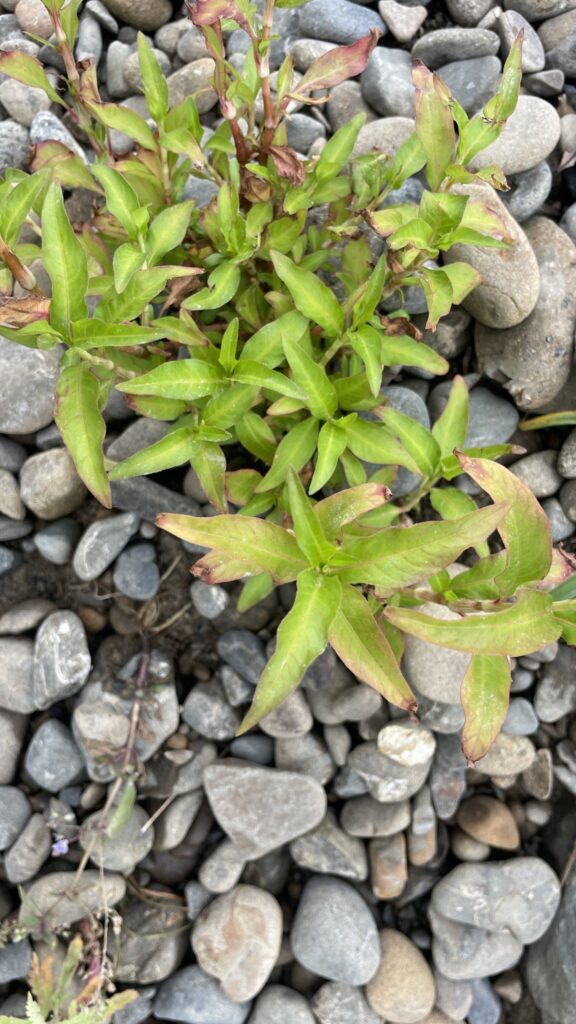
Basic Information
Scientific Name: Persicaria hydropiper
Plant Family: Polygonaceae
Conservation / Invasive Status: Stable; non-native adventive but not listed as invasive in New England
Geographic Range: Cosmopolitan - Temperate Zones, Eastern North America, Eurasia, Northeast US, Northern New England
Safety Level: Use with Caution
Harvest Season: Fall, Summer
Parts Used: Aerial Parts, Leaves, Seeds, Whole Plant
Scientific & Botanical Information
Botanical Classification
Waterpepper is a member of the Polygonaceae family and is native to North America. The plant has undergone taxonomic revision; it was historically classified as Polygonum hydropiper and is currently recognized as Persicaria hydropiper. It grows in moist disturbed areas, wetland margins, and along water courses.
Phytochemistry
Persicaria hydropiper contains tadeonal (a sesquiterpene dialdehyde responsible for the peppery taste), flavonoids including rutin, and polygodial compounds. The characteristic peppery taste of the plant is directly attributable to tadeonal, which comprises a significant portion of the essential oil.
Pharmacological Research
Research on waterpepper constituents demonstrates anti-inflammatory, antifungal, and platelet aggregation inhibition properties. Tadeonal exhibits antimicrobial activity in vitro. The flavonoid content contributes to antioxidant and circulatory support properties. While pharmacological research on the whole plant extract is limited compared to isolated constituents, the documented mechanisms of individual constituents support traditional hemostatic use.
Botanical Relationships
The Polygonaceae family contains numerous therapeutically valuable plants including sorrel, rhubarb, and fo-ti. Waterpepper represents a distinctive member with unique sesquiterpene chemistry distinguishing it from other family members.
Pharmacological Actions: Analgesic, Anti-inflammatory, Antibacterial, Antifungal, Antimicrobial, Antioxidant, Antispasmodic, Astringent, Diuretic, Emmenagogue
Traditional Herbalism Information
Historical Hemostatic Application
Waterpepper was traditionally employed as a hemostatic agent to support healthy bleeding response. The plant was used in both internal and external preparations to address conditions of excessive bleeding or sluggish circulation.
Preparation and Use
Traditional preparation involved fresh plant infusion or decoction, with dosage carefully modulated due to the plant’s strong peppery nature. External application as a poultice or wash was common for wound support. The plant’s intensity limited its use in long-term applications.
Contemporary Herbalism
Modern herbalists recognize waterpepper as a circulatory and hemostatic support plant. The antimicrobial and anti-inflammatory properties documented through pharmacological research have expanded its use beyond traditional hemostasis to include support for inflammatory conditions and wound healing.
Energetics and Actions
In traditional herbalism language, waterpepper is classified as warming and drying, reflecting its peppery nature and its traditional hemostatic function. Modern herbalists note the stimulating effect on circulation and the plant’s affinity for the blood.
Traditional Uses: Anti-inflammatory, Astringent, Circulatory Support, Digestive Support, Diuretic, Emmenagogue, Stimulant, Wound Healing
Magical Correspondences Information
Planetary Association
Waterpepper is traditionally assigned to Mars, reflecting its warming, stimulating nature and its association with blood, courage, and vital force. The peppery taste directly connects to Mars’s fiery, stimulating energy. Mars rules circulation, vitality, and assertive action.
Elemental Correspondence
Fire is the primary elemental association, reflecting the warming, stimulating, and circulatory properties of the plant. The peppery taste intensely activates the fire element in both physical and magical terms.
Magical Application
In magical herbalism, waterpepper is used for protection, vitality enhancement, and clearing of stagnation. The plant’s stimulating properties are valued for activating change and assertive magical work.
Planetary Rulers: Mars
Magical Intentions: Banishing, Heating, Protection, Purification, Stimulation, Strength
Elemental Associations: Fire, Water
[1] Moerman, D. E. (1998). Native American ethnobotany. Timber Press.
[2] Hoffmann, D. (2003). Medical herbalism: The science and practice of herbal medicine. Healing Arts Press.
[3] Mills, S. Y., & Bone, K. (2005). The essential guide to herbal safety. Elsevier.
[4] Tadeonal and sesquiterpene dialdehyde research: Pharmacological studies on essential oil constituents of Polygonaceae species.
[5] USDA PLANTS Database. (n.d.). Persicaria hydropiper. https://plants.usda.gov/